

Xiaomi 17 Review: A Compact High Performer
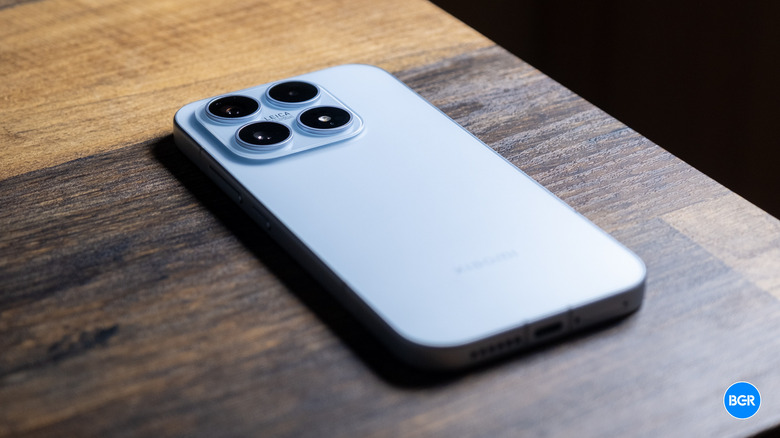
The Xiaomi 17 Ultra is getting all the attention, as a camera-focused device with among the best-of-the-best specs. As a result, the standard Xiaomi 17 has been somewhat lost in the shuffle.
But perhaps it shouldn't be. The Xiaomi 17 Ultra also happens to be ultra-expensive, making it really only for true enthusiasts. Everyone else, however, is likely considering something closer in price to the standard Xiaomi 17. It also sits alongside the Xiaomi 17 Pro and Xiaomi 17 Pro Max, though those devices are bound only for China, and I was unable to get my hands on them.
So, how does the Xiaomi 17 actually perform? Does it even get close to its Ultra-branded sibling? I've been using it for a while now to find out.
Design
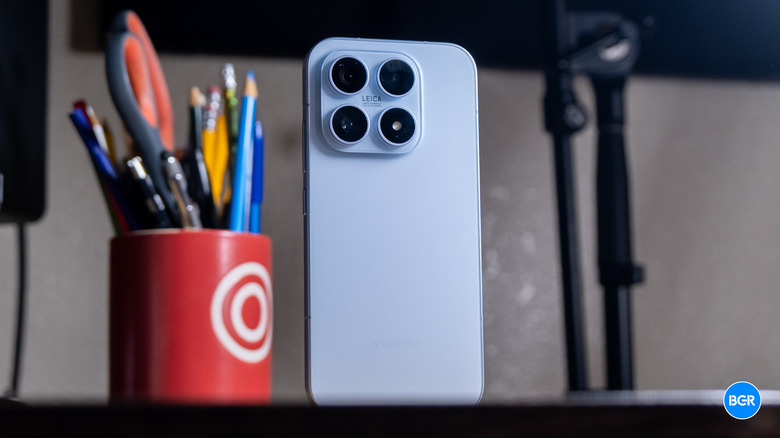
This year, the base iPhone looks less like the top-tier iPhone Pro than it has in years, but something about the iPhone lineup still makes everything feel cohesive — and more so than the Xiaomi 17 does with the Xiaomi 17 Ultra. Maybe it's the giant circular camera module on the Xiaomi 17 Ultra, though the iPhone 17 Pro's plateau is nothing like the iPhone 17's camera array. Or, maybe it's the traditional volume rocker on the edge, instead of the unique and clicky small circular buttons. Maybe it's a combination of these and other differences.
Regardless, cohesion only really matters if you wish your phone looked more like the expensive one. That's kind of how I feel. I'm fine with the square camera bump on the back of the standard Xiaomi 17, but when moving to it from the Xiaomi 17 Ultra, I did miss those volume buttons.
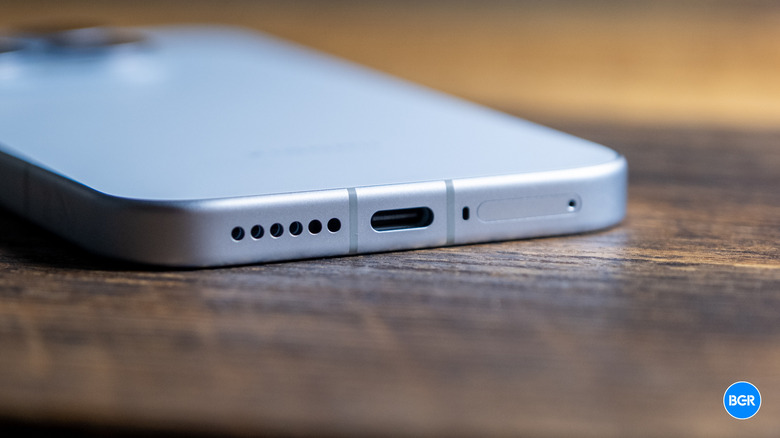
For the most part, the design of the device is predictable. It has flat edges like most other phones these days, buttons on the right edge, and a USB-C port on the bottom. There's no extra button to be found — whether it be an AI button, camera button, or anything else. While I don't love everyone's implementation of these extra buttons, I do love that customizable buttons are becoming more common.
Xiaomi's included an IP68 rating, so you're covered for dust and submersion in up to 1.5 meters of water for 30 minutes. It's not at the same level is the IP69-rated Xiaomi 17 Ultra, which is a little disappointing. But, IP68 is still better than most.
The phone comes in a range of colors, and I'm reviewing the Ice Blue model. I like the subtle blue shade — it's colorful without being over the top. Of course, I don't mind over-the-top colors. As a whole, the Xiaomi 17 looks and feels great. It's compact enough to be easy to hold and premium enough to feel durable.
Display
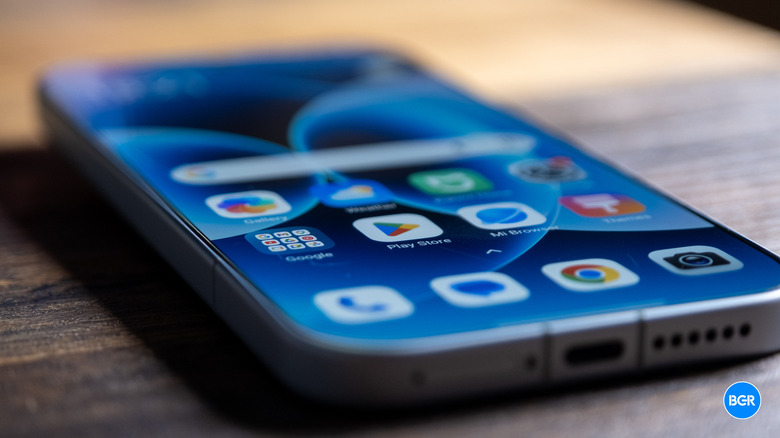
On the front of the phone is a 6.3-inch LTPO AMOLED display with a maximum refresh rate of 120Hz and a peak brightness of 3,500 nits. There's nothing about it that I dislike. It's smooth, vibrant, and colorful — though display tech has kind of stagnated at the high-end in a way that I'd be surprised if it didn't have these specifications.
Samsung is finally bringing something new to the table with its Privacy Display, but I don't expect that to come to other phones for a while. Regardless of that, the display does indeed look very good. Colors pop, and importantly, the phone sustains brightness well. And with the ability to vary between 1Hz and 120Hz, it's relatively efficient too.
Performance
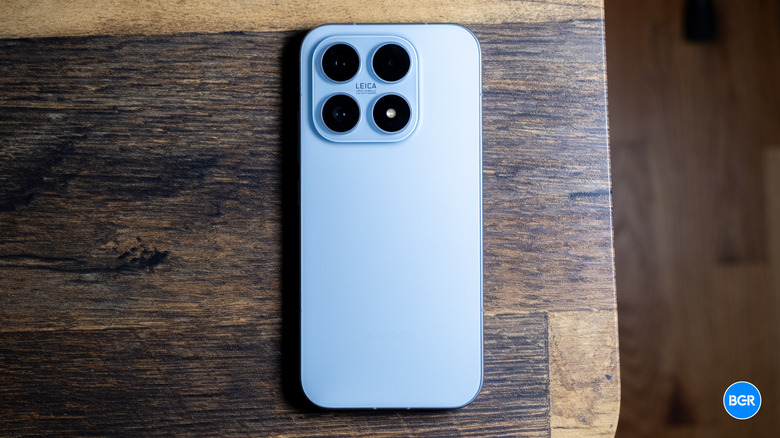
Powering the Xiaomi 17 is a Qualcomm Snapdragon 8 Elite Gen 5 processor, coupled with either 12GB or 16GB of RAM, depending on the model you get. Our review unit has 16GB.
With Qualcomm's best chip, the Xiaomi 17 is more than powerful enough to handle anything you can throw at it in 2026. It handles games with ease, never skips a beat when multitasking, and felt smooth the whole time I used it. It also handled graphics performance very well. While its cooling isn't as good as larger devices like the Xiaomi 17 Ultra, resulting in technically worse graphics performance, most won't notice that apart from the fact that a device like the Xiaomi 17 might heat up quicker.
At this point, the top phones more or less always perform excellently, and this phone is no exception. The differences really come towards the end of the lifespan, rather than at the beginning. Regardless, whether you're into mobile gaming or just want a phone that will last, expect this one to have you covered.
Battery and charging
The Xiaomi 17 gets a huge 7,000mAh battery in China, but the global variant caps out at 6,330mAh. That's still pretty huge — and it's able to hit that with the new silicon-carbon battery tech.
I found the phone to easily last through a full day of even heavier use, and many users will be able to stretch it to two days of use. If you're good at keeping your phone charged up, you shouldn't have to worry about battery life, unless you play extremely demanding games on a regular basis, for example.
It charges quickly too. The phone has 100W wired charging, and it hits those speeds with USB-PD, which is great considering it means you don't have to buy a propriety charger. The device hits 50W wireless charging speeds, though you will need Xiaomi's charger to hit those speeds.
Camera
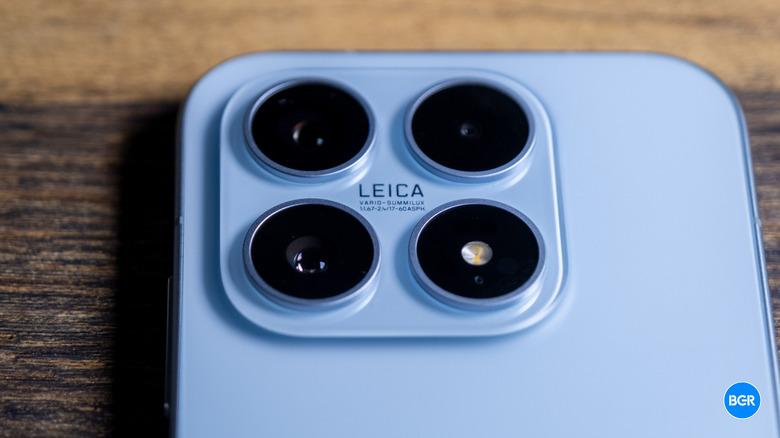
While the Xiaomi 17 Ultra is built to be the camera champion, the standard model isn't quite so advanced. Still, it has solid camera tech overall. There's a 50-megapixel main camera, a 50-megapixel ultrawide camera, and a 50-megapixel telephoto camera with 2.6x optical zoom.
The main camera performs well overall, though it's not without quirks. Detail in good lighting is solid, and fine textures come through cleanly. Dynamic range is strong too, with the phone holding onto shadow detail and recovering highlights better than a lot of phones in this price range. Xiaomi leans toward a punchy, vibrant look with the color tuning, which most people will like.
The ultrawide captures excellent images too. In good lighting, it also captures very detailed images. That said, its color-tuning isn't quite the same as the main camera. In good lighting, colors are a little more saturated. It's not overly noticeable, but it is there.
The telephoto is a 2.6x lens, which means it doesn't have the same optical reach as most other phones that offer at least 3x, even if that difference is minor. That said, even with a little digital zoom in the mix I found that it still retained great detail, and I couldn't tell that there was digital zoom at all on the smaller phone screen — though I could on a larger desktop monitor. Obviously, at higher levels of zoom, details start to take a dive, but it's barely noticeable until around 8x or so.
The 50-megapixel front camera is fine. It is good at capturing accurate colors, but it's not as sharp or detailed as the other cameras, nor does it capture as much dynamic range. It struggles in low light, too. Overall, however, the camera system on the Xiaomi 17 is reasonably versatile. It's not as impressive as the more expensive Xiaomi 17 Ultra, but we wouldn't expect it to be.
Software
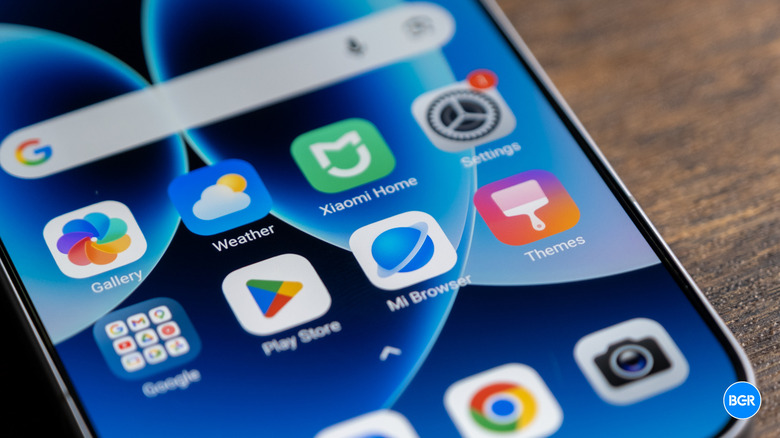
The Xiaomi 17 runs HyperOS 3, Xiaomi's custom skin built on Android 16. The software isn't terrible, and for the most part, it's responsive and easy to navigate, though of course nowhere near as clean as what you might find on a Pixel, for example.
As you would expect, the device does have some bloat. There are plenty of duplicate Xiaomi apps to those Google builds, along with plenty of others like WPS Office and TikTok. It's frustrating to see all these extra apps out of the box.
There are lots of AI features built in too, which again, is to be expected. There's an AI writing assistant, AI interpreter, and more. They work fine, but they're not something I used much in my daily life. Again, HyperOS is good enough, and if you've used it before, there are no surprises. It's relatively easy to navigate. It will come with four years of operating system updates and six years of security updates, which isn't bad, but doesn't set a new high bar. Plenty of top-tier phones offer six or seven years of OS updates these days, and I'd like to see that become the norm soon.
Conclusions
The Xiaomi 17 may not get as much attention as its more expensive sibling, but it should. Sure, it's not as flashy, but for the price, it's hard to beat. With a solid design, good display, great camera, and long-lasting battery, those looking for a high-end device in this price range should seriously consider the Xiaomi 17.
The competition
While the Xiaomi 17 is a great phone, it does face tough competition, and some of that competition is actually cheaper than it. I find the OnePlus 15 to be a better overall device. The display on the Xiaomi 17 is brighter, but the OnePlus 15 performs better and has a better battery. The camera systems are similar, though I think the Xiaomi 17's is slightly ahead.
That said, the Xiaomi 17 is still an excellent phone overall.
Should I buy the Xiaomi 17?
Yes. It's a great phone at a solid price.