

Ditch Your Google One Subscription For These Cheaper Alternatives
If you're looking to ditch your Google One subscription and find a cheaper alternative, know that several solid options exist. The plan has clear value, since it offers access to Gemini, more cloud storage for Google Photos, and, depending on where you live, even YouTube Premium. But its price keeps rising with monthly fees, which can quickly make other options more appealing.
Right now, the cloud storage market gives you plenty of options to choose from. Even if none of them offer the same perks as Google One, they still bring some advantages, such as zero-knowledge encryption, which works well for anyone who wants more privacy for their files. Some services also offer lifetime subscriptions, so you can make one payment for life and avoid recurring charges.
Finally, some of these services go beyond standard cloud storage and offer extra tools, much like Google One does. With a single subscription, you can also get services that provide a complete cloud ecosystem, such as email, VPN, and a password manager. So if you want to save money on cloud storage and more, these are the best options for ditching your Google One subscription.
Microsoft OneDrive
One of the best alternatives to Google One, especially for Windows users, is Microsoft's OneDrive. It syncs everything you want to your computer, and you don't need external programs to do it. Microsoft's service plans also come with some useful perks. Depending on your subscription tier, such as Microsoft 365 Personal, you can get cloud storage plus access to Word, Excel, and PowerPoint.
Microsoft 365 Personal also comes with Copilot built in and costs about $99 per year. If you're not interested in Microsoft's AI services, one option is to try canceling the plan after you subscribe to see whether the Microsoft Office Personal Classic plan appears, which lowers the price from $99 to $69 per year.
If you're looking for a plan that will cover your whole family, OneDrive offers that option too. Microsoft 365 Family costs about $129 per year and lets up to six people use the service at the same time, each with 1 TB of individual storage, for a total of 6 TB of cloud space. It is a good way to spread out the cost and save even more on your subscriptions.
Mega
Mega is a service that offers more space for a price similar to Google One. So if you need more storage but don't want to pay more, Mega's plans may fit your needs better. For example, even its free version already gives users 20 GB of storage, which is 5 GB more than Google's free tier offers.
Another major advantage of Mega is the privacy it gives its users. While Google One encrypts files in transit and at rest, it does process content stored on Google Drive for spam filtering and malware protection. On the other hand, Mega uses zero-knowledge encryption. In practice, that means the company cannot see what you store, even on the service's free plans. It is a strong option for anyone who cares a lot about data privacy.
Mega also works well for people who like to store a large number of files at once. While its entry-level paid plans offer a value similar to Google One at the same price, Mega usually scales better at higher tiers. Pro II, for example, costs about €16.67, which comes to around $20 for 10 TB of storage. Google's alternative, the AI Pro tier, offers only 5 TB for the same cost, making Mega one of the best cloud storage alternatives at that price point.
Proton Drive
If you're looking to leave Google's ecosystem for good — not just its cloud storage subscription, but its other services too — Proton Drive is an alternative worth considering. In addition to offering 500 GB of storage for $9.99 per month on the annual plan, the service also includes private email with up to 15 addresses, a VPN, and the Proton Pass password manager.
Proton's biggest strength is the extra services it gives users. Even though its cloud storage is a bit smaller than what other alternatives offer, you still gain access to a new email account and other tools that may prove useful. Also, the company behind Proton is based in Switzerland, a country with some of the strictest data privacy laws in the world.
A Proton subscription makes more sense for people who want to store a few of their more important files in the cloud while also getting access to other services. For example, if you have separate subscriptions for a VPN, password manager, and secure email, the total cost ends up well above what Proton alone would charge. That makes it a more situational option, but still a useful one for people who handle sensitive data.
Internxt
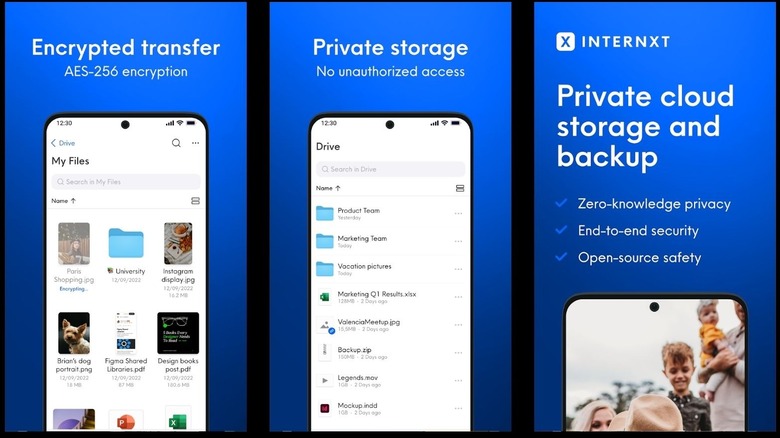
One of Internxt's biggest strengths is that the company offers lifetime cloud storage plans. So, if you don't want to renew your subscription every year and would rather make a one-time payment, you can do that. Prices can vary based on promotions, but you can find a lifetime Ultimate subscription for €585 when the company runs deeper discounts.
It may cost more up front, but it can pay off over the long term. Google One and other cloud storage services remain subject to sudden price increases, so in comparison, a lifetime Internxt plan can be viewed as a long-term investment. It works well for anyone who wants more peace of mind with their files and does not want surprises from one month to the next.
Beyond the value, Internxt also stands out for privacy. The Spanish company uses zero-knowledge encryption with AES-256 and post-quantum cryptography by default across all plans. The platform's code is open source and has gone through independent audits. Paid plans also include a VPN and antivirus, which makes Internxt one of the most complete options for anyone who wants to leave Google without spending too much in the long run.
pCloud
Although it offers monthly and annual subscription options, one of pCloud's biggest highlights is its selection of lifetime cloud storage plans. Even though the up-front cost is higher than any other option, the plans can pay for themselves over time. After five or six years, pCloud's 10 TB plan becomes far more affordable than equivalent options from competitors, and that value only improves as time goes on.
The Ultra plan, with 10 TB of storage, costs $1,190 as a one-time payment. For comparison, Google One charges $239.88 per year for its full-price 5 TB plan, which offers less than half the storage. Anyone who wants to start smaller can choose the Premium Plus plan with 2 TB for $399, which pays for itself in less than four years compared to Google One's $99.99 yearly plan at the same capacity, with no future renewals.
Beyond its lifetime plans, pCloud also stands out for the flexibility to choose where your data is stored, either in the U.S. or Europe. The service works on Windows, macOS, Linux, iOS, and Android, includes automatic backup and a built-in media player, and also offers pCloud Crypto as an add-on, ranking among the best cloud storage apps for privacy-focused users.
How we chose these Google One alternatives

One of the first factors we considered for this list was the value of the service — what you pay and what you get in return. There are cheaper options than the ones we landed on, but in general, these don't offer a truly large amount of space to store your files. We also considered lifetime plans because the cost becomes more diluted over the years you keep using the product.
Some services, while not as appealing when viewed only as cloud storage, offer extra tools in a similar vein as Google One. So we included some of these for anyone who is looking to get more from a subscription than just cloud storage space. In this regard, some services stand out even more — that ended up being the case with Microsoft OneDrive and Proton Drive.
Finally, another factor that was also important when choosing these services was each company's reputation and the way it handles user privacy. We gave preference to services that offer end-to-end or zero-knowledge encryption, as file security plays an important role in cloud storage and is a top consideration for many users.