

3D Printing Safety: The Health Risks Nobody Talks About
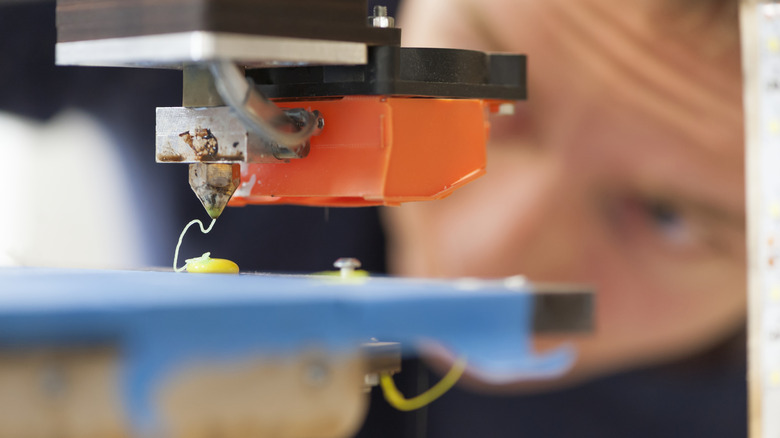
3D printers allow you to create pretty much anything you can think of. They work from digital blueprints, so even if you're not good at modeling your own stuff, you can find dozens of websites and communities that share models for printing. But in order to create those items, you feed various materials into the printer as filament — namely polylactic acid (PLA) or acrylonitrile butadiene styrene (ABS) — to be melted or molded. Studies by the Environmental Protection Agency have found that printers release gases and harmful particulates during the printing process from these materials and how they are handled. Without proper ventilation or safety equipment, exposure to these contaminants can be harmful to your health.
Particularly, 3D printers release something called volatile organic compounds (VOC). To put it simply, VOCs are gases released from certain solids or liquids, sometimes under specific conditions, that can be harmful in great concentrations. Paints, strong chemicals, glues or adhesives are common examples. But 3D printers and the different filaments used can also release these, which is why proper ventilation is always recommended for 3D printers.
Unfortunately, that's not the only safety hazard associated with modern 3D printers. During operation, they may also release ultrafine particles that can enter the body and cause further health problems. If they make it into the lungs, for example, they can cause inflammation, asthma, headaches, coughing, and other ailments. Depending on the type of filament, those health problems could be exacerbated.
How do you prevent exposure to these contaminants?
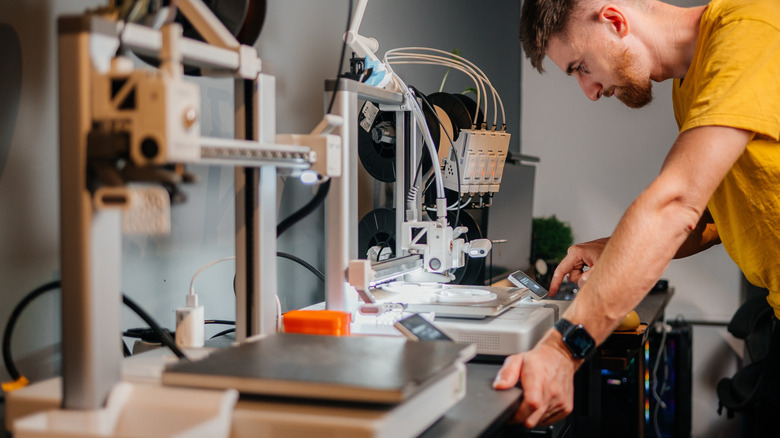
More studies are being conducted, and are probably necessary, for understanding the hazards related to 3D printers and the related materials. However, some of the more prominent hazards are relatively well-known, like microscopic dust exposure and VOC emissions. Another concern is the toxicity of the materials or resins used and how they react when exposed to UV light or lasers — some 3D printers use concentrated light to manipulate the materials. PLA is viewed as risk-free by many because it's made from natural and renewable materials and is said to be biodegradable and environmentally-friendly. But it, too, releases ultrafine potentially harmful particles, as does ABS.
The best way to deal with these issues is to ensure proper ventilation before doing any prints. Make sure the printer is located in a room with plenty of space and exhaust. It's also not a bad idea to install an air purification system with high-efficiency particulate air (HEPA) filtration to help remove the VOCs, dust, and other particles. It may also be wise to choose a closed versus open-air printer depending on the environment. It's not a cost-exclusive problem, either, as these hazards can come from the cheap 3D printers you can buy to the most expensive models. Personal protective equipment is something else to look into. You should wear gloves, safety glasses or goggles, cover most of your skin with longer clothing, and wear a respirator if the space is confined or small.
Understand the risks and protect yourself accordingly
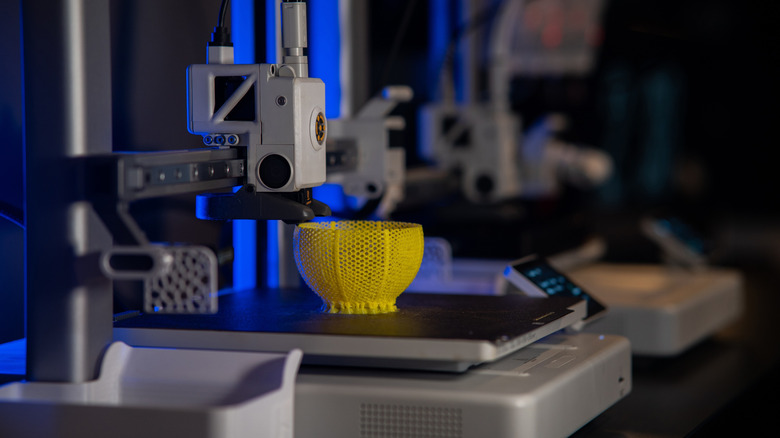
Ultimately, the goal of this article isn't to frighten anyone away from using a 3D printer. They're excellent pieces of technology and highly useful tools when used appropriately. It's more about being cautious with the potential dangers and ensuring you have a proper way to mitigate exposure before you come into contact with anything harmful. This is especially important to remember for 3D printers used in classrooms, educational settings, and wherever else children and younger users may be exposed. Children are more vulnerable, so it's best to reduce their exposure as much as possible and keep them a safe distance away from any 3D printers in operation.
Before you install one of these printers in your home, office, or workshop, understand the risks, and do your due diligence about improving overall safety. Take breaks, wear protective equipment, keep the ventilation running, install an air purification system, and maybe avoid running the 3D printer all night. Moreover, if you are thinking of buying a 3D printer and don't have one already, there are some other things you need to know first. For example, they're not a plug-and-play experience, and you will need to do some fiddling and troubleshooting nearly every time you plan a print. You'll also need to store the filament and materials properly, and with the knowledge of their potential toxicity, that might inform your storage decisions further.