

Meta's New Smart Glasses Feature Could Be A Privacy Nightmare, According To Advocates

Meta has been trying to work facial recognition systems into its social media environment for what seems like forever. Not only is the company planning to add this feature to its line of smart glasses, but The New York Times got its hands on an internal memo about how the project carries "safety and privacy risks." On April 13, the ACLU sent a letter to Mark Zuckerberg, claiming the upcoming facial recognition system, dubbed "Name Tag," poses a threat to "vulnerable communities."
These include religious minorities, people of color, LGBTQ+ people, and survivors of stalking and sexual harassment. In fact, anyone with an online presence (which is basically everyone) is vulnerable, from children to the CEOs of major companies. The ACLU is concerned that since the smart glasses look like your run-of-the-mill prescription glasses, users could "surveil and profile" everyone they see covertly to "identify and stalk" potential victims. The organization is also concerned that members of police forces could wear the smart glasses and use Name Tag to violate the Fourth Amendment.
The letter cites a 2024 incident where Harvard students used smart glasses equipped with facial recognition software to "identify strangers on the Boston subway in real time," as well as studies that demonstrate attacks (physical and otherwise) against members of the LGBTQ+ community have increased in recent years. Name Tag is a definite concern. Luckily, there are glasses with specialized lenses that fool facial recognition software and apps that act as anti-smart glasses radar to help combat such features.
Meta couldn't have picked a worse time, and it did so intentionally
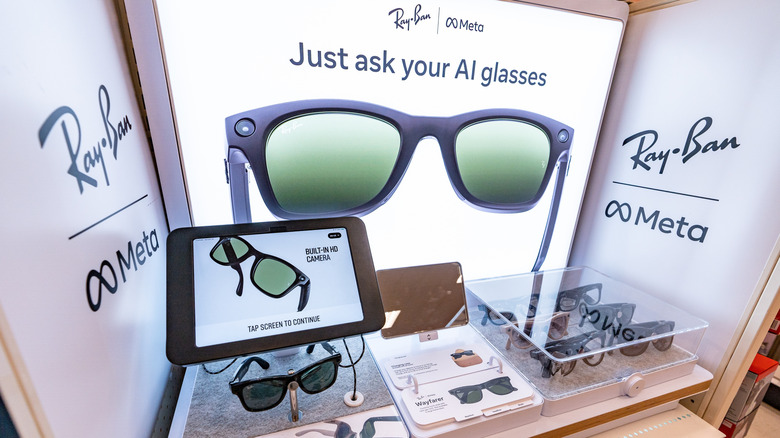
When a company discusses such matters as "safety and privacy risks," it's usually under the purview of how to minimize them. That's certainly true for Name Tag, but instead of convincing people that Name Tag is beneficial, Meta is waiting for its detractors to become otherwise preoccupied. According to The New York Times, Meta wants to release Name Tag "during a dynamic political environment where many civil society groups that we would expect to attack [it] would have their resources focused on other concerns."
Assuming this claim is accurate, the statement reads like Meta's higher-ups know ACLU's concerns are valid but are going to release Name Tag anyway. Ironically, the memo and several of The New York Times' sources list ways Meta can convince the general public that Name Tag is a beneficial tool — or at least mitigate some of the ACLU's points. For instance, according to "people familiar" with the facial recognition software, Name Tag can help users who are blind or who have low vision.
In fact, Meta plans to release Name Tag at a "conference for the blind" before rolling it out to the general public. Moreover, the smart glasses will allegedly advertise that someone is recording via a white LED on a corner of the frames, and the facial recognition suite will supposedly limit the faces people can profile, such as only allowing them to tag friends on Facebook. Although The New York Times was quick to note several of Facebook's data privacy gaffes, don't expect the system to be as airtight as Meta claims.