

Offshore Windfarms Are Having An Unexpected Effect On Local Wildlife
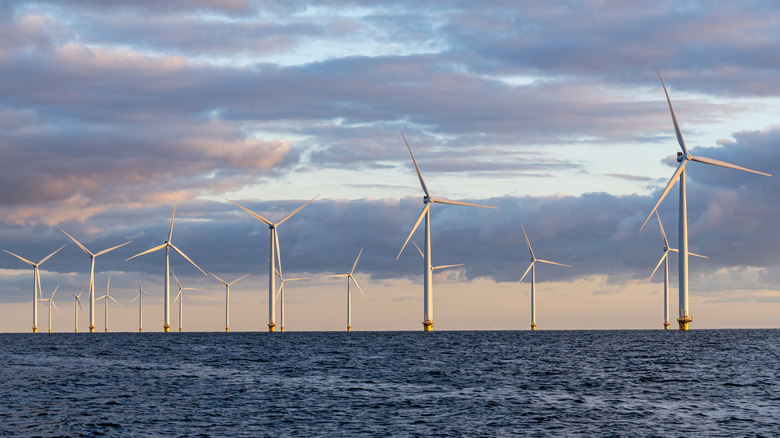
Offshore wind farms offer a ton of potential for clean energy efforts. Not only can they help cut reliance on fossil fuels, which can help lower emissions, but offshore wind farms also appear to have another advantage based on scientific research and observations. Some older reports suggest that some offshore farms might be causing a bit more of a stir than first expected. In fact, during construction, research shows that they could be driving animals that call the area home, like seals, away.
However, once the hammering and noise fade, life around these farms returns even stronger than before, and with that, some predators also return. Based on a paper published in the journal Current Biology in 2014, the seals not only returned to the wind farm area, but they also took advantage of a unique migration pattern that researchers hadn't seen before. The driving force behind this migration is the way that the environment around these wind farms changes.
Because they aren't susceptible to human intervention like fishing, the area around the wind turbines becomes ideal for mollusks, schools of fish, and hosts of other creatures. In fact, there has been talk about using the construction of new offshore wind farms to help promote more consistency throughout the marine ecosystem by creating these protected ecosystems. Which is a nice change of pace from other environmental-related news, like the accusations that Tesla is dumping black wastewater in ditches.
Migratory changes
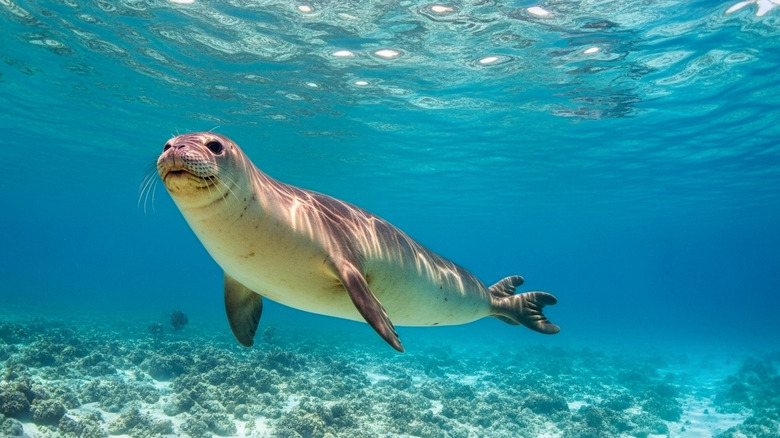
While the explosion of the ecosystem around the wind farms isn't exactly that unexpected — there is a project to turn decommissioned oil rigs into artificial reefs — but the pattern the seals follow is. Instead of hunting as usual and simply moving to where they find food, the seals hunt in an organized and grid-like sequence. This is a migration pattern that scientists have never documented in the wild before, and it raises some interesting questions about how these seals might be evolving as they spend more time in these artificial environments.
While this might sound like a win, there are some concerns about what this could mean in the long term. With seals finding so much prey around these turbines, is there a possibility for some kind of disruption across the board? For example, scientists aren't sure whether seals spending this time around the turbines will cause them to ignore other areas, or if it will lead to other marine species also competing for the same prey in the same areas.
There's also a wider question to answer, about how reliant the seals might become on human intervention to provide them with these kinds of feeding environments. If farms like this consistently provide environments where prey gather for these kinds of predators to take easy advantage of, then it could lead to wider changes in the natural migration routes. Of course, none of this negates the positives of offshore wind farms, but it does add some credibility to the growing list of concerns surrounding them.