

SpaceX Will Have To Pay A Fee For Any Future Rocket Launches - Here's Why
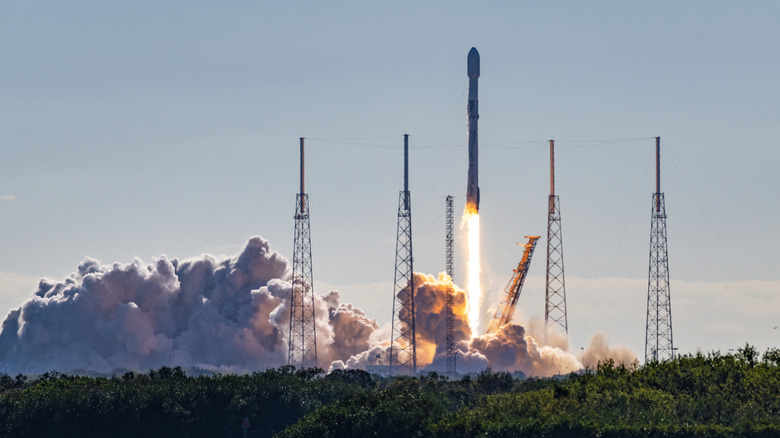
Pretty soon, there will be taxes and fees to launch a rocket to space. The good news is that most of us back on Earth will never have to deal with those fees, but companies like SpaceX sure will. The Federal Aviation Administration (FAA) is moving forward with a fee schedule for rocket launches and reentries, according to a new notice that was published. The fees will complement the size of each payload, from $0.25 per pound starting in 2026, gradually ramping up by $0.10 increments each year. By 2033, the total fees will be about $1.50 per pound, and will eventually be capped at $30,000 per launch or reentry. The money will go to the Office of Commercial Space Transportation (AST), overseen by the FAA, to deal with space industry activities.
This really isn't out of the ordinary, as airlines already pay fees like this to the FAA to help sustain the flight industry. The new launch and reentry fees follow a similar approach, which, initially, the FAA waived to help sustain the growth of the current space age. The funds will support the FAA licensing department to help manage rocket launches, which is something sorely needed, according to industry proponents. Continual launches from SpaceX and Blue Origin could help increase financial resources, while possibly another company, Rocket Labs, may join in, launching a hypersonic rocket series that could compete with the rest of the industry.
Why the FAA needs these fees for licensing and management
A record number of objects went into space in 2025 — 4,510 objects to be precise — with a vast majority intended to grow satellite constellations. Those numbers are expected to grow exponentially in the coming years. Meanwhile, SpaceX has become one of the most valuable private companies after merging with xAI. That's all part of a plan to develop, launch, and establish space-based data centers as a means to go above and beyond "terrestrial solutions." Moreover, the Bezos-owned Blue Origin will soon catch up with SpaceX after launching more than 5,000 satellites in orbit, beginning at the end of 2027.
In short, it means there will be lots of space launches and reentries, further burdening the FAA with potential management duties. Licensing for flights "often takes longer than rocket development," per William Gerstenmaier, SpaceX's Vice President. That holds back a burgeoning industry which "should never happen," and is "only getting worse." The new fee structure is aimed at giving the FAA the necessary resources to handle these duties efficiently, and with so many launches on the horizon, it's coming right on time.