

Smart Plug Vs. Smart Bulb: Which Is Better For Upgrading Your Lamps?
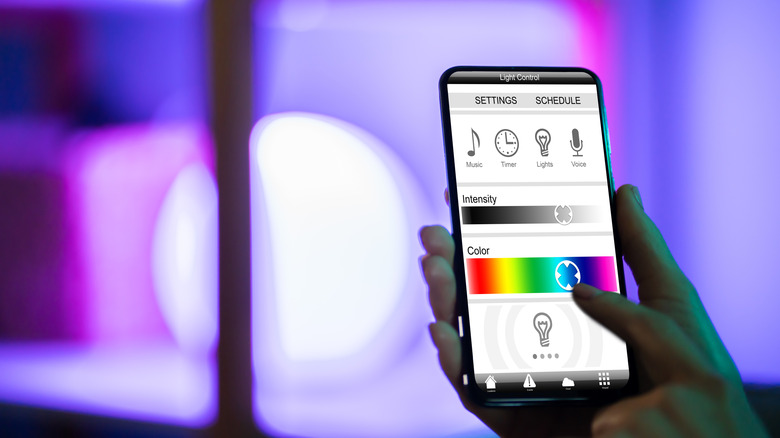
If you are planning to modernize your house, it is likely that you have thought about comparing smart plugs vs. smart bulbs for your room lamps. As the names suggest, both are great products if you are trying to build a smart home, and these two devices can be seen as the gateway products into this segment. Both solutions allow you to remotely operate and manage the lighting inside a room, but deciding if smart bulbs are worth it will vary depending on your preferences.
For instance, by having a smart light bulb, you not only manage to automate this task but get a personalized experience as well. In contrast to this, smart plugs are quite straightforward and lack the personalization that you might get by buying a smart light bulb. Both products make it easier and more convenient to turn on lights and devices in your house, but, ultimately, knowing how each device works and the respective strong and weak points is the best way to find a solution for your home. Some extra factors may play into your choice, as well, such as the cost of each item, how many rooms you want to upgrade, and compatibility with other gadgets.
Smart bulbs are a great choice if you like customization
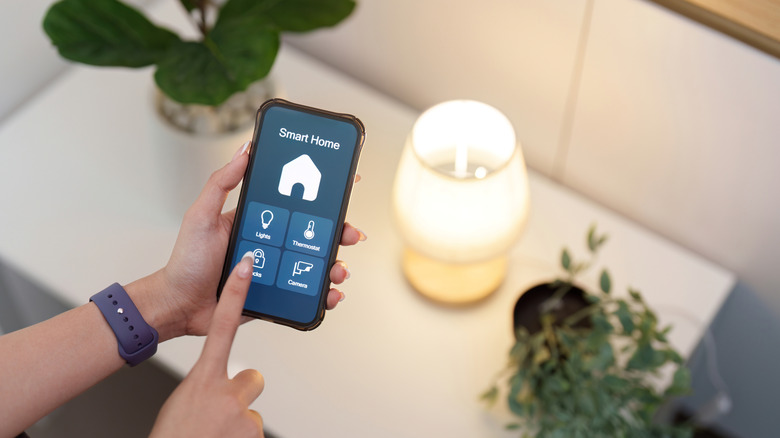
Smart bulbs connect to your home's Wi-Fi, making it possible to manage everything through your smartphone or even your voice assistants. Besides the ability to control your lights remotely, another advantage of using these bulbs lies in their features. Some smart bulbs offer the option to choose between several temperatures of light that can be selected according to how comfortable you want to feel or how good you want the environment for reading to be. Furthermore, if you invest a bit more, you can buy some smart bulbs with RGB that offer millions of color combinations and even more automation. In this case, it means that you could program the system to turn off the lights after a certain period or change the color.
Although these unique features are what attract many users, smart bulbs do come with some disadvantages. First of all, this type of device is relatively expensive, both in up-front costs and in utility costs as smart bulbs use more electricity than traditional bulbs. Secondly, while the bulb itself is smart, it still requires power, so turning off the lamp or wall switch negates all of the device's smart functions.
Smart plugs are cheaper and more versatile
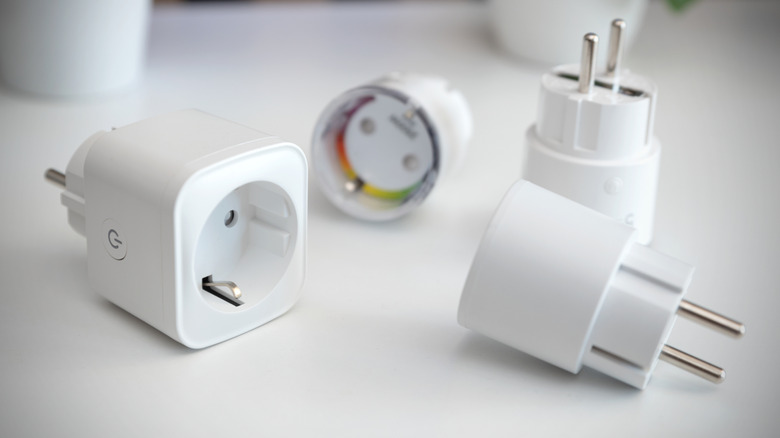
Only having the ability to turn devices on and off, smart plugs don't offer the same level of customization as smart bulbs, but unlike bulbs, you can use smart plugs on a variety of devices — not just lamps. There are certain devices that you should never connect to a smart plug (such as high-wattage appliances and medical equipment), but there are plenty of "dumb" devices that you can make smart, including room fans, small kitchen appliances, dehumidifiers, and more.
In addition to convenience, customization, and versatility, value can play into your decision when choosing smart plugs vs. smart bulbs. Some smart bulbs can be over than $29 each, but a good smart plug will generally be less than $10 and still offer good automation features via voice assistants and scheduled routines. But for things like dimming and color control, smart bulbs are still the best option.