

The Nostalgic Software That Made Microsoft Huge Is Now Open Source For Anyone To Use
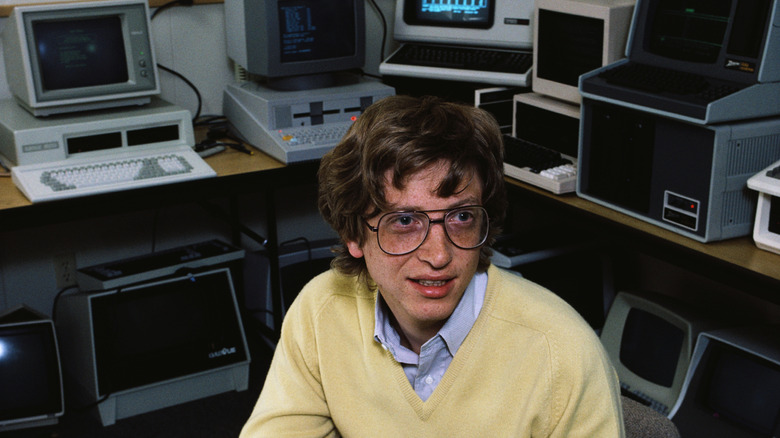
Microsoft has published the earliest-discovered version of the DOS operating system on an open-source GitHub repo. This comes after MS-DOS 1.25 and 2.x were open-sourced in 2018 and the source for MS-DOS 4.0 was released in 2024. The version being published in 2026 actually predates the MS-DOS branding — it's 86-DOS 1.00, and the release was timed to coincide with the software's 45th anniversary. That naming disparity hints at the fact that Microsoft didn't write MS-DOS entirely on its own — rather, it purchased the rights to 86-DOS (which was originally called "QD-DOS," for "Quick and Dirty") and hired its creator, Tim Paterson, in the process.
After purchasing the rights to 86-DOS, Microsoft rebranded the software and MS-DOS was born in July 1981. That became the basis of PC DOS 1.0, which Microsoft adapted for the IBM Personal Computer 5150 that debuted in August 1981. Microsoft would then go on to license MS-DOS to other IBM-compatible PC makers like Compaq and Zenith. These versions of DOS (disk operating system) are what came before Windows, and until Windows XP, served as the brains behind the operation. Windows would effectively run on top of MS-DOS or PC DOS, acting as a graphical user interface for the system's functions, rather than requiring the use of the command line.
According to Scott Hanselman, who helped release these ancient operating systems for anyone to tinker with, the "earliest DOS source code" was found in Paterson's garage. These printouts had handwritten notes scrawled over them, giving a snapshot of how development worked in the '80s, long before Microsoft features started to become invasive. You could, in theory, rewrite all of this in assembly code and produce your own version of DOS.
86-DOS 1.00 helped kick off DOS domination
The legacy of 86-DOS 1.00 cannot be overstated. So many of the office machines that ruled the '80s would eventually adopt one of its derivatives: PC DOS on IBM-branded machines, or MS-DOS on computers marketed as "IBM-compatible." Ultimately, the latter became the more common disk operating system — even IBM itself ended up using MS-DOS in some capacity, despite having OS/2 and PC DOS.
Shortly after version 1.00, 86-DOS 1.10 added support for the EXE executable format. Following Microsoft's acquisition, the software was rebranded as MS-DOS 1.10, and the first release to not feature any "86" branding (MS-DOS 1.25) debuted in June 1982, adding the ability to use double-sided disks. By March 1983, MS-DOS 1.25 was superseded by MS-DOS 2.0, which brought about a groundbreaking concept still in use today: installable device drivers.
Those into PC gaming who remember using MS-DOS would have likely used a much later version. DOOM, released in 1993, would have been played on MS-DOS 6.0, which was released the same year. Starting with Windows 95, however, MS-DOS began to take a back seat. With prior versions, MS-DOS had served as the OS, while Windows was a GUI running on top of it. Windows 95 started taking some of the operating system-level responsibilities into its own hands, and Windows 98 took things further. The final version of MS-DOS, 8.0, came bundled with Windows Me, but by the release of Windows XP in 2001, MS-DOS was no more.