

Here's When You Should Be Replacing Your Phone's Screen Protector
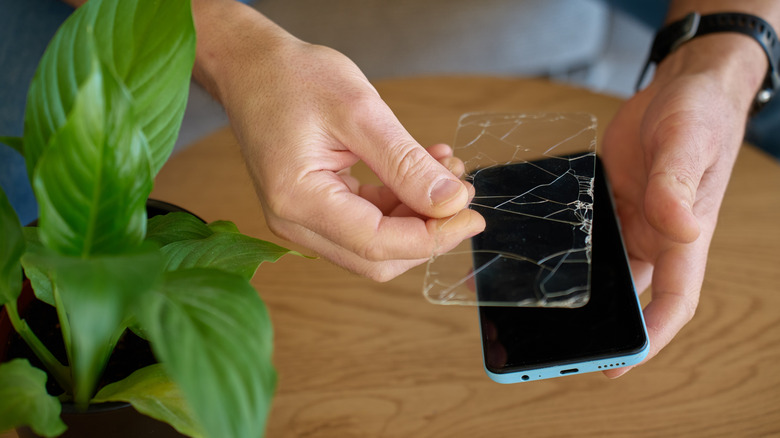
Whether you plan ahead or not, realistically, the screen protector on your smartphone will need to be replaced at some point. They're not designed to last forever. As one of the last lines of defense between the outside world and your phone or tablet's display, they need to be at the top of their game to repel just about anything from scratches and scuffs to potential liquids and particles — like sand. Over time, regular wear and tear and exposure to various elements, including even sunlight, can wear down their protective properties. In which case, it's time to replace the protector with a fresh one.
When you notice a screen protector is cracking, beat up, or coming loose, those are the obvious signs that it's time to swap it out for a new one. But some other, lesser-known signs include visible scratches, reduced sensitivity of the touchscreen when using the device, and lower visual clarity. In the latter case, you might see stains, a non-removable haze, or even yellowing. Peeling edges and the influx of air bubbles are further signs that it might be time to swap out the protector or film.
Choosing the proper replacement is also important. Comparing options, you might wonder if expensive screen protectors actually save your phone from damage more effectively. The better way to look at it, however, is whether the protector you choose fits your lifestyle. Plastic, tempered glass, and hybrid options are available, and all are suited to different purposes.
Which screen protector should I choose?
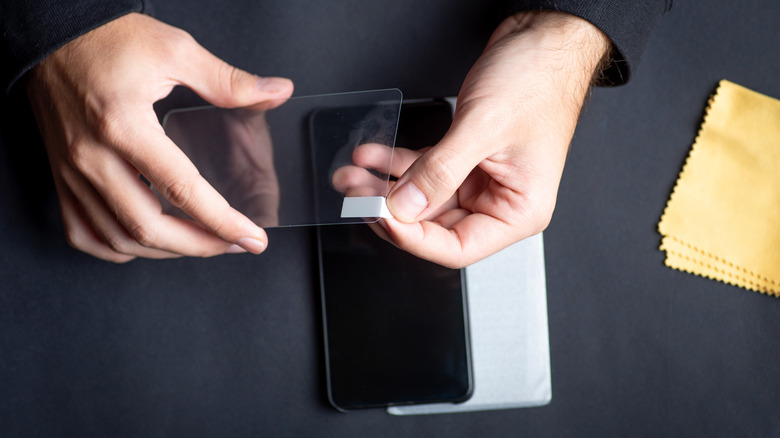
There are several types of screen protectors available, including thermoplastic polyurethane (TPU), polyethylene terephthalate (PET), tempered glass, etc. Tempered glass tends to be more expensive but offers superior durability for the most part, along with impact- and scratch-resistant properties. TPU protectors are relatively cheap, with decent durability — though not on the same level as tempered glass. They may also have self-healing properties to fend off minor scratches and scuffs. Finally, PET screen protectors have the least protection overall, but they're also the most cost-effective option. They're extremely thin compared to the other two options, making them virtually invisible to you when applied.
All three types can come with unique properties like extra privacy protection, anti-microbial treatments, and oleophobic coatings. The best way to choose is, honestly, to consider how much protection you want and how much you want the protector to "feel" like your original phone. Go with tempered glass for shatter and scratch protection, especially if you're accident-prone. Tempered glass also feels the closest to the real glass panel of your phone's screen. For extra impact protection, add a rugged case, as well.
Screen protectors offer more benefits than just damage prevention
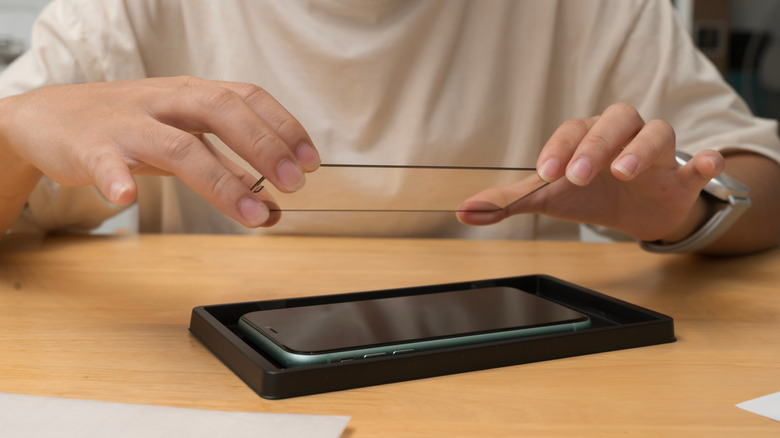
There's another reason to replace your screen protector regularly, and it has to do with germs. It's difficult to give a specific timeline because screen protectors break down differently, but annually is a good frequency.
Many screen protectors come with an anti-microbial layer that helps prevent germs and nasty buildup. After all, you're touching your device with unwashed hands after interacting with the world around you, so it's bound to pick up some gross stuff. But that coating can wear down like anything else. That's when germs really start to gather. Replacing the protector can help refresh that anti-microbial layer, as long as you choose one with it, thereby offering additional germ and grossness protection. Although the experts recommend avoiding buying antimicrobial phone cases for that benefit alone, and instead suggest regularly cleaning your phone with alcohol wipes. They might stave off germs, but are ineffective against pathogens.
Beyond the anti-microbial properties, they can also offer blue-light filtering, an anti-glare coating, and even privacy protection to shield onscreen content from would-be snoopers. In fact, one of the best tech gadgets to actually protect your privacy if you don't have the Samsung Galaxy S26 with the technology built in, is a privacy-forward screen protector. However, depending on how these coatings or traits are incorporated, such as a thin layer over the top of the material, they can wear down over time and lose effectiveness. When that happens, a replacement is a good idea, especially since they're relatively inexpensive and it only takes a few minutes to swap out the protector.