

AV Receiver Vs. Stereo Receiver: What's The Difference?
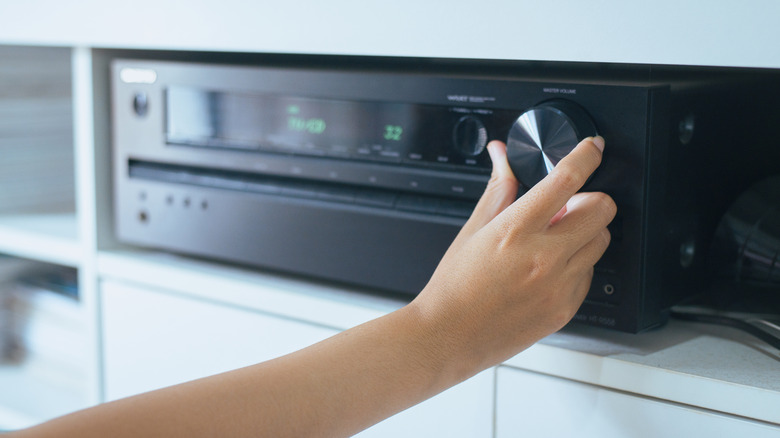
When you're shopping for a receiver, the choice comes down to two basic options: audio visual (AV) receivers and stereo receivers. To make the best choice, you need to figure out where your needs lie. Are you leaning more toward music or movies? Or do you need a receiver that can handle both? Stereo receivers feature two channels (for left and right speakers) optimized for listening to music played through media like vinyl, cassettes, CDs, or radio. AV receivers can handle those formats, but they also support home theater setups with five or more surround sound speakers. The basic answer is: AV is usually best for movies, while stereo is well-suited for music. But it's more complicated than that.
AV receivers are the better decision if you want a home theater setup or overall flexibility. They create immersive, multi-directional audio for movies and music. Formats like Dolby Atmos and DTS:X are mapped to specific speakers by sound engineers. The receivers feature room-correcting technology that measures your room's acoustics and adjusts your speaker output, meaning you don't have to deal with a tricky speaker setup. AV receivers also have dedicated stereo speaker outputs alongside their surround channels, letting you use two channels like stereo receivers. You can then select Direct and Pure Direct Mode to bypass the surround system's digital processing entirely for analog sources like vinyl and cassettes. Many AV receivers can also stream music services such as Tidal and Amazon Music HD in Dolby Atmos or classic 5.1 surround, which was previously only available on niche physical media like SACD and DVD-Audio.
When a stereo receiver is a better choice than an AV receiver
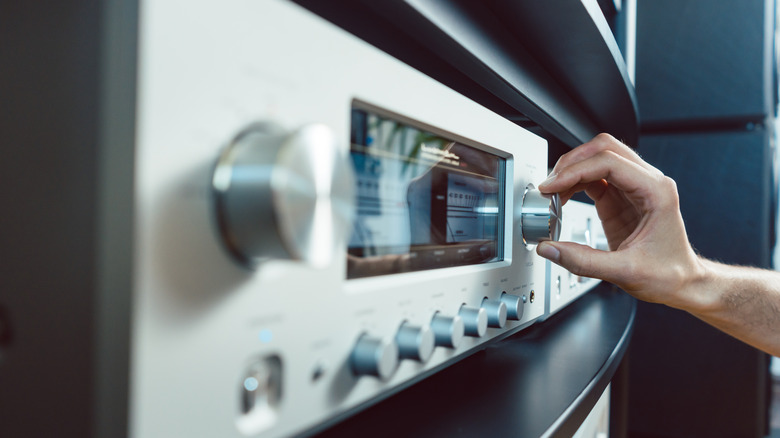
Despite the flexibility of AV receivers, stereo receivers have some advantages. If you plan to use your receiver almost exclusively to play music, a stereo receiver may be what you're looking for. AV receivers are programmed for video processing, surround decoding, and often have a hub of HDMI inputs. When you purchase an AV receiver, you're paying for those features. When buying a stereo receiver at the same cost, you're paying for focused amplifiers that improve sound quality by reducing distortion at higher volumes. There's also a clear path from the source to the speakers, which can deliver cleaner sound.
When sound engineers design stereo receivers, they know you're focused on high-quality audio for music. They can hand-select components and add premium connections like gold-plated terminals. Many stereo receivers can decode hi-resolution audio formats, letting you play SACD and DVD-Audio rather than relying on streaming services for hi-res music. Disc collectors love the feature, though an AV receiver is needed to fully experience any 5.1 surround mixes on those formats. Some of the best AV receivers, according to audiophiles, typically start around $400, with high-end models costing tens of thousands of dollars. High-quality stereo receivers, on the other hand, start at $200, while premium models can reach $1,000 to $3,500 or more.