

Roku And TCL Are Facing A Lawsuit Over Smart TV 'Software Defects'
Electronic devices can be expensive, especially if you want the best of the best. That said, there are ways to be frugal when buying electronics, and once you get your gadget, you expect it to meet your needs without a fuss. Unfortunately, for some TCL and Roku smart TV owners, that hasn't been the case, which has resulted in the two companies being sued recently in a class action lawsuit filed by a consumer named Terri Else. The class action lawsuit against Roku Inc. and TTE Technology Inc. (which trades in the U.S. as TCL North America) was filed in the U.S. District Court for the Central District of California.
According to the lawsuit, the plaintiff accuses both companies of selling smart TVs that become unusable due to "software defects". The lawsuit claims that the software updates released by Roku are "repetitively defective." It alleges that they materially impair the functionality, "rendering many consumers' televisions either entirely unusable ('bricked'), blacked out, or otherwise substantially degraded in terms of device performance." The reason why the lawsuit targets both companies is because of their partnership, in which some TVs from TCL — a major smart TV brand — run Roku's smart TV operating system, dubbed Roku OS, which is a major smart TV OS.
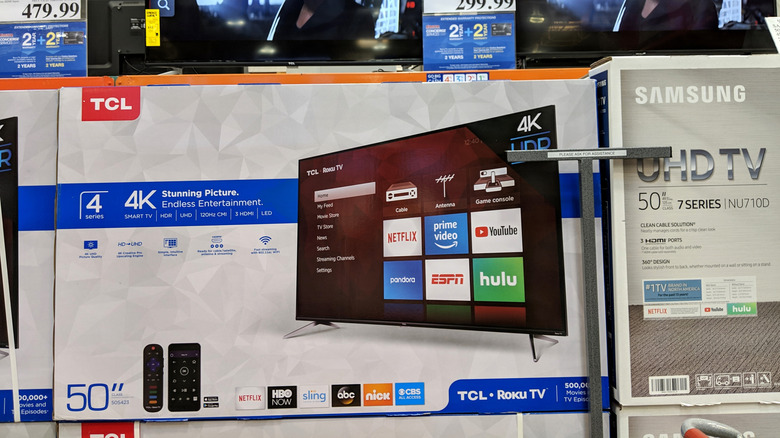
The lawsuit mentions several smart TV models that were purchased by users between December 16, 2024, and the present, including the Roku Select Series and Roku Plus Series. It also mentions TCL's 3, 4, 5, and 6 Series TV models that are powered by Roku's smart TV software. In the lawsuit, the plaintiff, together with members of the class action, demands a jury trial and seeks compensation for the damages they have suffered. They also request "declaratory and injunctive relief, restitution, and disgorgement of Defendants' ill-gotten gains."
The lawsuit highlights a variety of issues with Roku and TCL TVs
The word "software defect" is mentioned in the lawsuit over 30 times. Additionally, the lawsuit didn't shy away from giving examples of the various issues that some users have run into that have negatively affected the user experience. Some of the bugs mentioned include screen blackouts, the display flashing on and off, and loss of video — all of which "corrupts the user experience to the point of inoperability." It also mentions repeated restarts, the set entering recovery mode after an update, freezing, and even loss of video while audio continues to work.
Included in the lawsuit are examples of user complaints posted in Roku's community forum, where multiple users highlight the various problems they've run into as a result of a software update. One says an automatic update was installed on their Roku streaming stick, leading to distorted lines on the image and a cracking sound. Another complaint in the lawsuit concerns a TCL Roku TV user who experienced flickering after turning on the TV, after which it went black while continuing to play audio. The issue persisted despite the person trying different troubleshooting methods.
Lawsuit alleges Roku and TCL failed to fix TV bugs
The lawsuit claims that both companies are aware of the various alleged software defects that have been highlighted. However, the plaintiff says that the two companies have offered no solution so far despite "persistent complaints of repeated system failures," which is said to be "inconsistent with representations made in express warranties, which promise to repair, correct, or otherwise remediate the software defect." The plaintiff also raises concerns about the companies' failure to disclose these issues to consumers before they purchased their sets.
Instead, Roku-powered TVs have continued to be marketed as "reliable smart TVs" that improve as time goes by due to automatic updates. Tom's Guide reached out to both TCL and Roku, but only the latter had responded at the time of publication. A Roku spokesperson told the tech site that it believes "the claims are meritless." The lawsuit was filed on March 27, 2026, so it's still early in the process, and you'll probably have to wait for months before a resolution is reached. The two companies will likely fight back as they might have to pay up a good sum if found liable.