

3 Android Phones Under $200 That Are Actually Worth Buying

We may receive a commission on purchases made from links.
Whether you're on a tight budget or are looking for a secondary phone that doesn't need to be super powerful, major Android smartphone brands offer a slew of attractive options. Although these cheap phones can't match the features and processing power of their expensive cousins, they are sufficiently capable to handle everyday tasks. Moreover, as smartphone makers have started offering longer software support timelines, you don't have to worry about your budget phone going obsolete within a year.
That said, even if you follow all the right rules before buying an Android phone, it can be hard to distinguish between an affordable phone that's actually worth buying and one you should stay away from. Fortunately, our handpicked options have been selected after carefully considering expert opinions, buyer feedback, and raw specifications to provide you with a solid starting point in your smartphone purchase journey. More importantly, our recommendations are widely available for less than $200 and can work on all major carriers in the U.S.
Samsung Galaxy A17
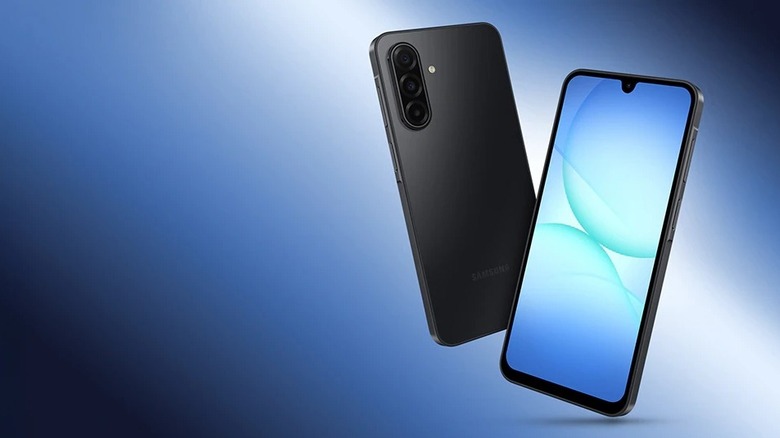
Samsung's Galaxy A series is widely liked for its affordably priced and capable smartphones, and the Galaxy A17 is no exception. At a price of $199 that frequently goes down to $175, it's right in your budget and is promised to receive six years of Android OS and security updates, giving you complete peace of mind. Although it's not really an upgrade over its predecessor — the Galaxy A16 – it has the right essentials to deliver a decent experience.
It sports a sleek design with IP65 dust and water resistance, and comes with a 6.7-inch OLED panel with a 90Hz refresh rate. There is also a 5,000mAh battery on board with support for 25W wired charging, and a side-mounted fingerprint sensor for biometric authentication. Its Exynos 1330 chip isn't the newest or most powerful, and it's paired with just 4 GB of RAM in the U.S., but it has enough juice to handle everyday tasks with relative ease. That said, you may encounter occasional stutters and lag if you try to push it too hard. It's certainly not a phone for multitasking.
Despite its low-end processor, the phone gets some useful AI features, such as Circle to Search and Gemini AI assistant. The onboard triple camera setup takes good photos for the phone's price tag, and you would generally be satisfied with the results. Another good thing is the support for expandable storage, allowing you to pop in a microSD card to increase the available storage from the default 128 GB — a feature that's becoming increasingly rare.
Motorola Moto G (2026)
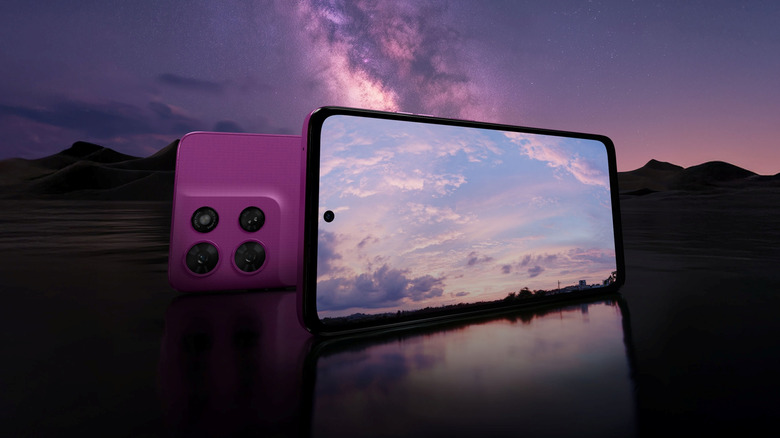
It's been over a decade since Motorola took the wraps off the first-generation Moto G, and the phone and its successors have consistently been reliable budget performers. The 2026 version of the Moto G continues the trend, and while it's not as exciting as the original Moto G, it's certainly worth considering if you only have $200 to buy a new phone.
It retains the relatively lower 720p resolution of its last few predecessors, but the presence of a 120Hz refresh rate is certainly a positive that helps the phone offer a fluid and smoother user interface. One of the standout features of the latest Moto G is its colorful design that includes a textured silicone polymer back that looks different from the typical glass or plastic slabs on the market. Battery life is another positive, with the phone's 5,200mAh unit easily lasting one full day of moderate to heavy usage. It also supports 30W fast wired charging, has a fingerprint sensor, expandable storage, and even a 3.5mm audio jack.
It won't receive software updates for six years like the Galaxy A17. However, Motorola is promising two years of Android OS updates, meaning the phone should ideally get until Android 18, and three years of security patches, saving it from being obsolete at least until late 2028. Sadly, like most budget phones, the Moto G has a low-end chip, and while it won't snag any performance prizes, the MediaTek Dimensity 6300 processor paired with 4 GB of RAM is capable enough for essentials, but you are bound to come across some choppiness. It will set you back $200 for its sole 128 GB model.
TCL 60 XE NXTPaper
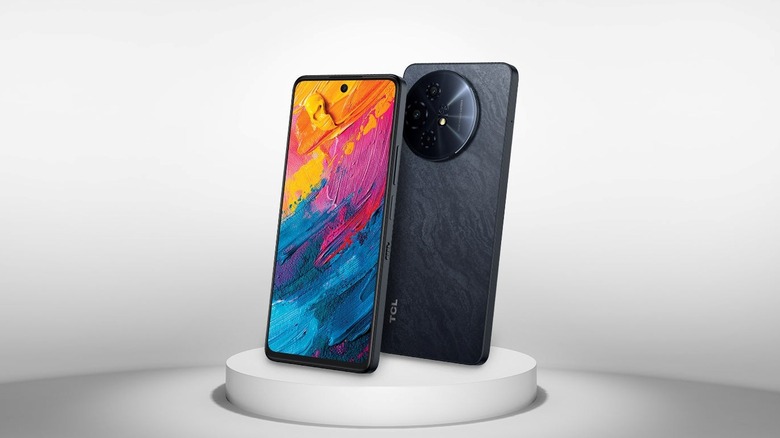
The TCL 60 XE NXTPaper is not your typical smartphone and won't entice everyone, but it's a unique device that houses an interesting display technology that you won't find in any other phone in this price segment. It has a 120Hz matte LCD screen with a paperlike texture, and you can choose from three color modes (besides the standard mode), which let you pick from a low-saturation color e-ink-like display, a black and white display with regular smartphone functionality, and a black and white display with low refresh rate and limited app availability. Unfortunately, though, the under-sun visibility of the screen is poor.
Otherwise, the phone has pretty solid hardware, with a MediaTek Dimensity 6100+ processor and 8 GB of RAM, which delivers decent performance. You'll still have to deal with occasional hiccups, though. You also get a microSD card slot, NFC for contactless payments, and it's one of the few Android phones with a 3.5mm headphone jack. The 5,010mAh battery is good enough for a full day of backup, and the rear camera system is passable, with mixed results, depending on lighting and the scene.
One notable downside of the phone is its software support. TCL has only promised one major Android OS update and two years of security patches for the phone, which means it'll only get the Android 16 update. All in all, you can consider the TCL offering if you are someone who likes to do a lot of reading on your phone or just needs a good matte display. It's far from perfect, but it has several things going for it. Although it was introduced at a starting price of $250, it can now be purchased for as low as $180.
How we selected these phones
The sub-$200 segment for Android smartphones isn't as active as some of the other price categories in the U.S. However, there are some decent phones that you can find. While choosing our recommendation for this segment, we focused on some of the best-reviewed smartphones that come from reputable manufacturers and were released in the last 18 months. We avoided older smartphones as they are more likely to become obsolete sooner in the absence of a clearly defined software support period. We looked at expert reviews, user feedback, and raw specifications to trim our choices. More importantly, we only picked phones that are officially sold in the U.S. for a proper after-sales experience.