

The Simple Tweak That Will Instantly Make Your Bookshelf Speakers Sound Better
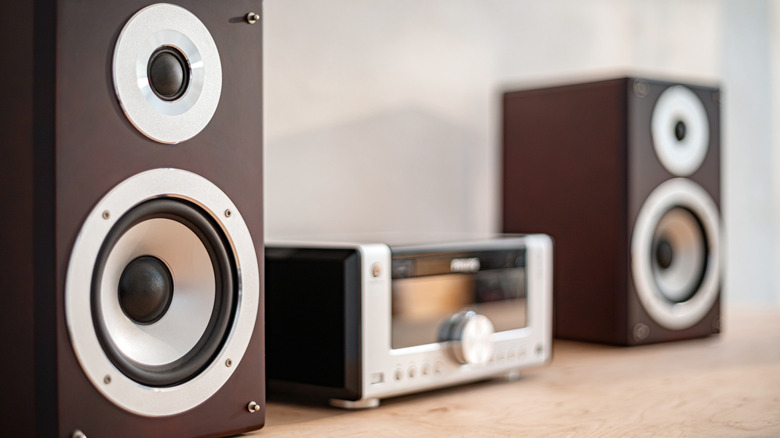
For an audiophile, there are few experiences more disappointing than not getting the performance you expect from your gear. You spent a fortune on high-end equipment like the best wireless speakers, agonized over proper installation and placement, only to be rewarded with muddy bass or a poor soundstage. But before you go and splash more cash trying to brute-force this problem, there's one tweak you should try that can make a massive difference to audio quality (and will cost you very little, particularly compared to investing in new equipment).
Even high-end bookshelf speakers are highly reliant on the surface they're perched on. One major and oft-neglected problem, even with cheap wireless speakers you can find on Amazon, is caused by placing speakers on a hollow surface. That space can create subtle vibrations that can have a significant impact, making bass feel bloated, instruments sound displaced, and the soundstage feel broken. Filling in your shelves can transform a setup from mediocre to stunning, and can be done for a fraction of the price of investing in new, high-end speakers.
Fill out your speaker stand to drastically improve sound quality
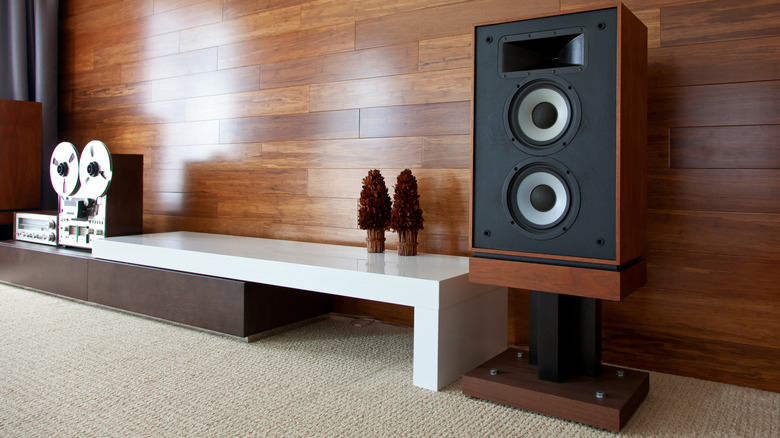
Removing empty spaces in the foundation that your speakers sit on can instantly improve your listening experience, leading to clearer, more balanced-sounding vocals, tighter bass, and an immersive soundstage. A lot of speaker stands come with hollow posts or a hollow base that can exaggerate (or create) flaws in a recording. To address the issue, you can simply fill in all that empty space with a common material.
For the cheapest solution, you can simply choose sand or odorless cat litter. For a more acoustically advanced solution, consider Atabites from Atacama Audio. Atabites are high-density zinc-coated metal pellets, specially designed to fill spaces such as empty speaker stands. They reduce vibrations and resonance in the stand itself, which can help speakers perform more cleanly, and because they're denser than sand, you get more mass into a smaller volume.
However, Atabites are significantly more expensive than the alternative, so if cost is an issue, sand or litter should suffice. Regardless of what you choose, make sure you pick a material that's pH-neutral, moisture-free, and won't absorb ambient moisture.
Other tips for improving bookshelf speaker sound
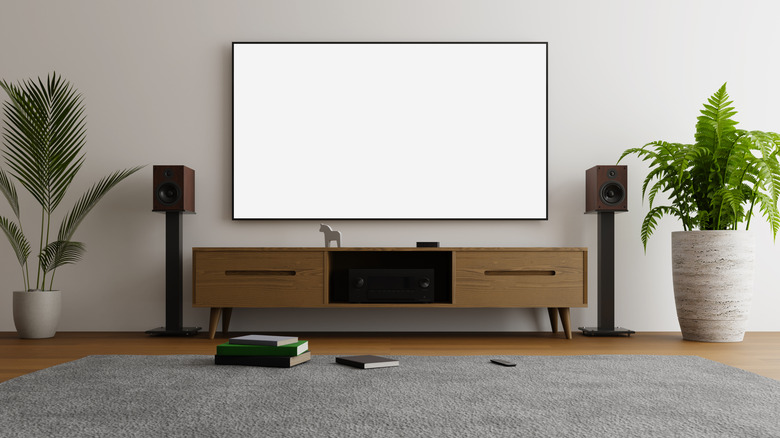
Of course, there are a number of other quick tips that can help you get the most out of your bookshelf speakers without splurging on new gear, including knowing which speakers to avoid. For one, make sure your speakers have enough of a buffer between them and any walls, as boundary reinforcement can lead to exaggerated bass or muddy sound.
You should also consider the 83% rule, popularized by high-end audio expert Jim Smith. The idea is that the distance you sit from the midpoint between your speakers should be 83% of the distance between the speakers, which Smith says contributes to clear imaging and an ideal soundstage. You should also "toe-in" the speakers, angling them toward the listener to improve stereo imaging, center focus, and treble clarity.
Finally, speaker height is an oft-overlooked element that can help achieve an ideal soundstage. Because high frequencies are directional, aligning the tweeters with the seated ear level's height will help provide the most accurate sound.