

Electric Cars Were Invented Much Earlier Than You Think
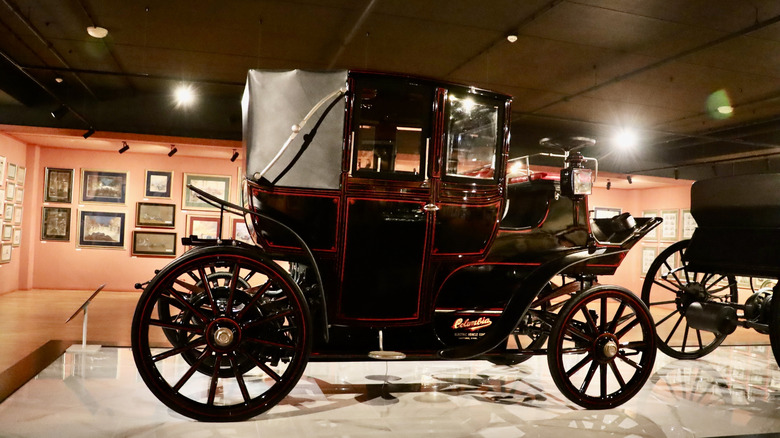
Even as electric vehicles battle for a footing in the mainstream automotive market today, you might be surprised to learn that this struggle actually dates back nearly 200 years. That's right — battery-powered propulsion dates back to the early days of the horseless carriage. While steam and internal combustion were first vying to replace the horse, early inventors were already making the case for the electric motor.
The first electric vehicle to be developed was created by Robert Anderson, and while it was more or less a prototype and considered crude at the time, it is the genesis of today's electric vehicles. In the late 1800s, electric cars became more standard as car manufacturers began to understand how to design, build, and sell them to the public. In the early 1890s, William Morrison crafted the first electric car in the United States. Inspired by the horse-drawn carriages that came before it, the vehicle was more or less an electric wagon. Unlike typical cars, there was no nose at the front because there was no engine. The driver sat where a buggy driver or chauffeur would and steered the electric car from there. It was able to hold six passengers and had a top speed of 14 miles per hour. Compare that to the high-powered EVs of day that can power your home in an emergency.
The benefits and drawbacks of early electric cars

Moving into the 1900s, the electric car was growing in popularity, but, much like today, there was a price premium for electric compared to cars with an internal combustion engine. In fact, the typical cost of an electric car was around $2,000, which is close to $60,000 in today's money and more than the cheapest EVs you can buy new right now. That being said, electric cars were much quieter than the horse and carriage, steam-powered, and gas-powered cars of the time period, and they didn't emit smelly exhaust. Studebaker advertised its "noiseless, easy running" electric cars in local papers and print media.
Studebaker began making electric vehicles in 1902 and even Thomas Edison made an electric car in 1889. These electric automobiles came with a battery that needed to be charged before journeys. Early EVs had lead-acid batteries that were rechargeable, but there wasn't much infrastructure for charging in much of America. Batteries had to be maintained which could be done by the owner, the manufacturer, home charging stations, or garages.
How far could an early electric car travel?
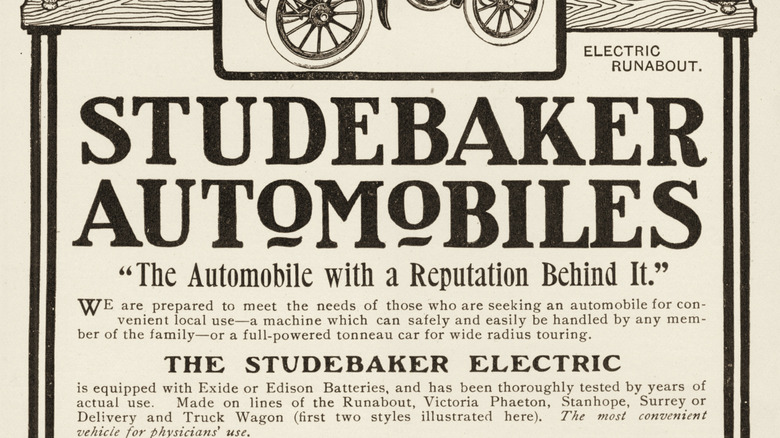
Electric vehicles were a feat of engineering in their day. They replaced traditional means of transportation like the buggy and even walking. People were able to use them to get around more quickly and efficiently. They may not have been fast or able to travel long distances before being charged again, unlike the longest-range electric vehicle you can buy today, but they did provide easier transportation for owners.
Electric cars were capable of driving between 30 to 40 miles in the earliest days. That's enough range to visit the local market and get back home before running out of juice. Compared to their steam-powered rivals at the time, owning one of those may require owners to sit outside for up to 45 minutes to start the vehicle. As time went on, EVs became even more efficient and by the mid to late 1900s, cars could travel much farther on a charge with some even setting records of 150 miles in on go. The early electric cars were made by a handful of auto manufacturers throughout the world, and at the start of the 20th century, more than one third of vehicles on the road were said to be electric.