

The Design Flaw That Haunted The Xbox 360
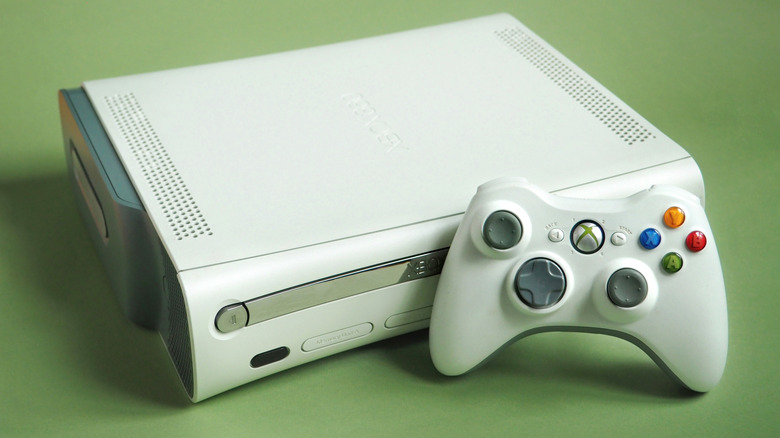
Consoles have had their fair share of issues after release. The PlayStation 3 had the yellow light of death, and the Nintendo Switch Joy-Cons drifted. Yet, none have been quite as memorable and problematic as the Xbox 360's red ring of death (RROD). If you owned a 360 back in the early 2000s, chances are you knew someone who was plagued by the RROD or experienced it yourself. It's a design flaw that tormented the Microsoft-made system and left gamers questioning what had gone wrong.
By June of 2006, there were reports showing red lights on the 360's power button, causing the system to crash. Microsoft and its hardware partners discovered the problem creating the RROD was thermal stress within the system. Repeated heating and cooling cycles during normal use placed strain on GPU and CPU solder joints, which ultimately caused hardware failure. However, the problem got fixed on later 360s when engineers developed a new, physically redesigned chip and packaging.
Even before the RROD, the 360 didn't have the smoothest evolution. The console's development team was under tight deadlines, and Microsoft reassigned some engineers from reducing wireless controller costs to fix pre-launch problems. After months of working out issues, the 360 was scheduled for release, launching in November 2005.
Was there a fix for the red ring of death?
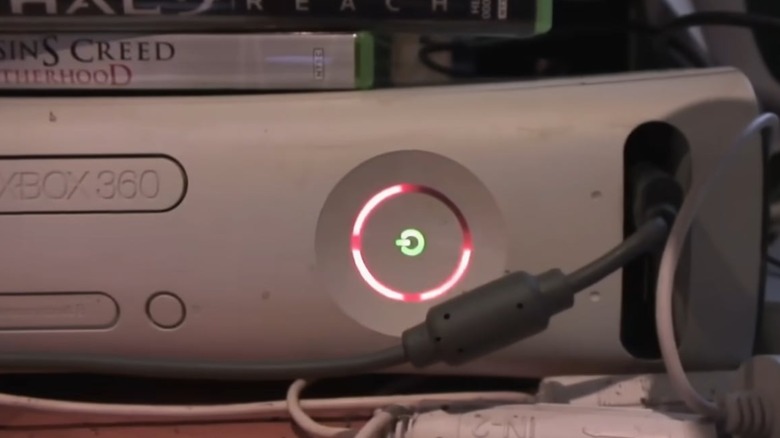
While the RROD was a nightmare for players and Microsoft alike, the company provided an expensive fix by spending $1.05 to $1.15 billion (pre-tax charge to earnings for the quarter ending June 30, 2007) for extended warranty coverage and large-scale repairs. Microsoft also sent players a box so they could have a replacement system shipped back overnight.
Some 360 owners tried their own repairs before sending their console to Microsoft. One such attempted fix (which was a potential fire hazard) involved wrapping the console in a damp towel, forcing it to overheat. Another, more challenging way was the X-clamp fix. This required a metal X-clamp to be removed from the motherboard below both the GPU and CPU.
Former Xbox executive Peter Moore said in an interview with The Game Business, ". . . the one thing I will always say is this was, for us, a defining moment. If we hadn't done what we did, I'm not sure the Xbox brand would be around today." Xbox's development team repaired countless 360s, putting hope back into the hands of gamers.
Whether it was late-night parties playing "Halo 3" or exploring "The Elder Scrolls IV: Oblivion" open world, the 360 is beloved by many. Today, Microsoft is taking further steps to enhance its gaming reputation, announcing Game Pass' new price drop and updates on its next-generation Xbox that will turn your PC into a gaming console.