

Google Is Killing The Chromebook Era With The Reveal Of Something More Powerful
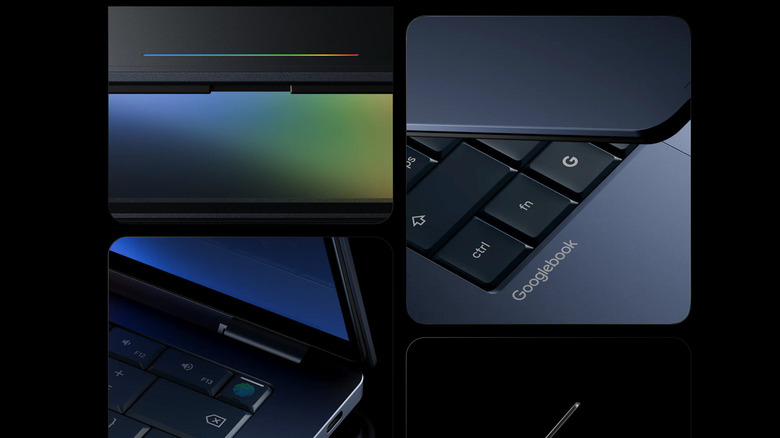
The Chromebook was first introduced to the world way back in 2011, with the first commercial models announced on May 11 and shipping to consumers on June 15, 2011. For the past fifteen years, they've been a cornerstone of the ultrabook market, though some have argued they never surpassed budget Windows or macOS laptop options.
Hinging on ChromeOS, a web-first architecture built to deliver fast booting, simplicity, and low-cost hardware, Chromebooks rose to prominence alongside the cloud itself, storing user data online instead of locally. This meant a more lightweight machine with less reliance on built-in storage.
That era ended on May 12, 2026, with Google's introduction of the Googlebook — a new lineup of machines the search giant says are built around the design philosophy that "intelligence is the new spec." What that means in practical terms is an increased focus on AI, which appears to have been thoroughly baked into the DNA of the new hardware (timely, given the company just discovered hackers using AI to create a zero-day exploit). There's also an increased focus on direct integration with Android devices, which translates to adding smartphone-like utility to your laptop.
Gemini is the new ChromeOS
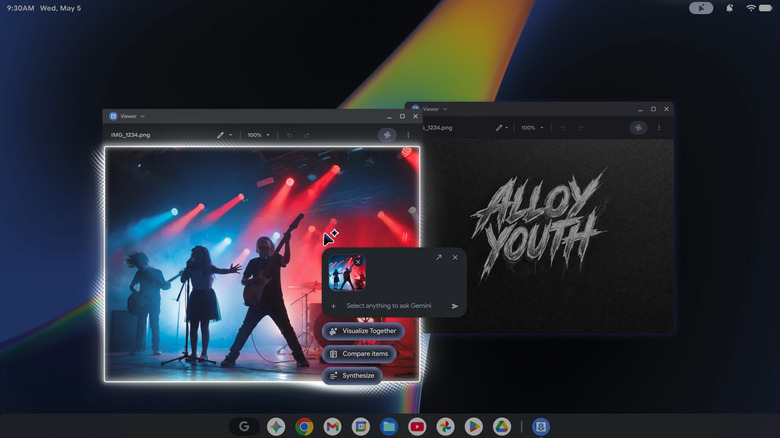
The integration of what Google calls Gemini Intelligence into laptops appears to be the tech firm's equivalent of Microsoft's expansive attempts to build Copilot into every facet of consumer computing in the last few years (a strategy it has recently begun scaling back). The most prominent way AI is surfaced is through the cursor. Googlebooks will allow you to shake the cursor to call up the new "Magic Pointer," which enables contextual Gemini integrations for virtually anything that appears on your laptop's display. The examples the company provided in the announcement include clicking a date in an email to schedule a meeting or selecting two images to combine them.
Google also emphasized the introduction of a feature called Create your Widget. The idea is to bring the utility of multiple programs or applications under one umbrella, accessible by clicking a single desktop widget. Google suggests building a widget for an upcoming trip, which would allow a user to quickly visualize a schedule, see airline, hotel, and restaurant reservations, and create reminders all through a single interface.
Erasing the line between your phone and laptop
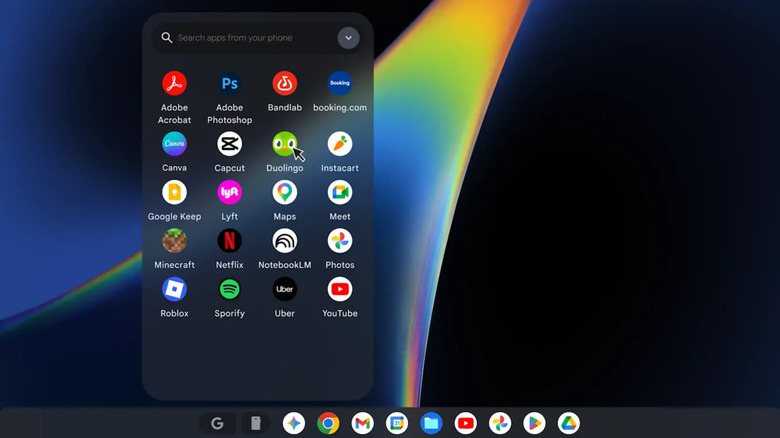
Googlebooks are also all about getting your phone and laptop to snuggle up more closely, so you don't have to interrupt your workday to access apps and features available on your phone. The Googlebook interface will allow you to quickly pull up files and apps on your phone directly from your laptop's taskbar instead of having to access a second device.
Interestingly, the examples Google points to for this closer integration with Android are mostly things you can already do through a browser or existing app. For instance, the company suggests jumping into a Duolingo lesson, but Duolingo is already accessible via browser, no smartphone required. The announcement post also recommends ordering food without needing to grab your phone, but virtually every delivery service, and many restaurants, allow you to order via a website. There's also mention of quickly accessing files on your phone, which you can do on any Windows PC through the built-in Phone Link program.
Whether Googlebooks are more iteration or revolution remains to be seen, but we shouldn't have to wait long to find out. The company says it's partnering with laptop manufacturers such as Acer, ASUS, Dell, HP, and Lenovo, and that an announcement about availability is coming this fall. If you do decide to upgrade, we have some tips for clever ways to use an outdated Chromebook.