

3 Of The Worst Places To Put A Smart Thermostat
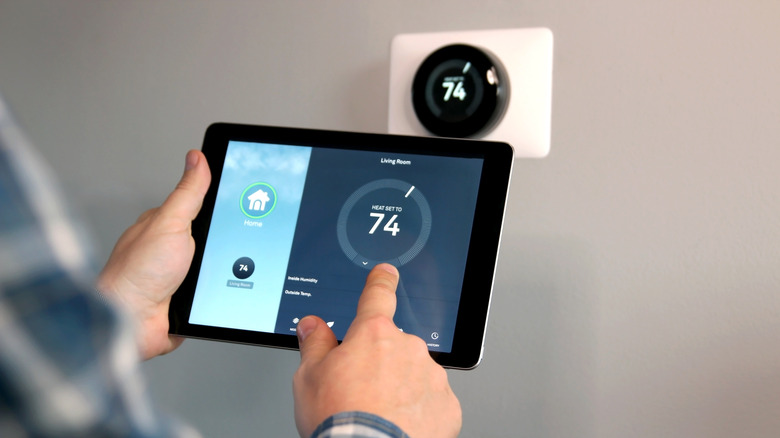
In addition to providing a convenient way to control and automate your home's temperature, a smart thermostat can save you money. It adjusts to your habits, heating and cooling the house as efficiently as possible and reducing energy usage when you aren't home. That can improve your comfort while lowering your bills. However, not everyone ends up saving. There are some common mistakes you might make when installing a smart thermostat, one of which is putting it in the wrong place.
Just as there is a best place to put your Wi-Fi router, not every part of your house is suitable for a smart thermostat. This is because a room's temperature varies based on several different factors, including foot traffic, ventilation, and function. Even within suitable rooms, there are spots you'll want to avoid. Getting this wrong is a surefire way to increase your energy consumption, which is both wasteful and expensive.
According to Consumer Reports, the best place for a smart thermostat is in a central location of a frequently used space, such as the living room. Your thermostat also needs good Wi-Fi strength and no obstructions that would block either the connection or restrict the flow of free air. It's also best to install it around four or five feet from the floor — since heat rises and cool air sinks, placing the thermostat too high or too low will give an inaccurate reading. Now that you know the ideal location, let's go over some places you need to avoid and why they aren't suitable for a smart thermostat.
Near windows and doors
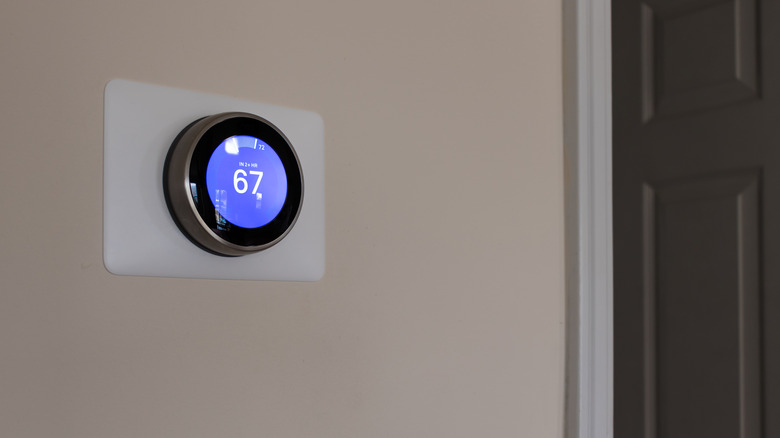
As mentioned, your smart thermostat should be in a central location of your home, away from doors and windows. This is because the temperature in these areas is impacted by outside air, and that fluctuation is bound to cause inaccurate readings since they won't reflect the actual temperature inside your house. As a result, your heating and cooling systems will make unnecessary adjustments and even turn themselves off or on when you don't want them to, using more energy than necessary. On top of that, placing a smart thermostat somewhere that experiences constant temperature changes causes wear and tear on your HVAC system, which is a costly headache to replace.
Additionally, avoid installing your thermostat on any part of the wall that receives direct sunlight. The added heat will throw off your reading, making the thermostat think the room is warmer than it actually is and lowering the temperature accordingly. For that same reason, smart thermostats shouldn't be near any heating or cooling sources, such as vents, radiators, and fireplaces.
In hallways or unused rooms
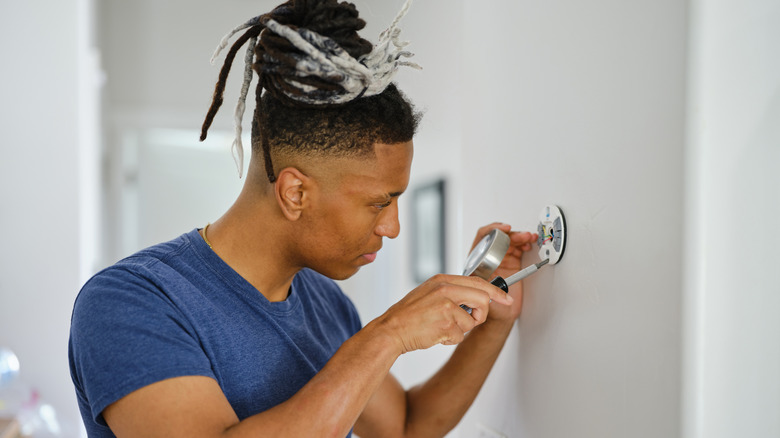
You might be tempted to place your smart thermostat somewhere out of the way, like a hallway, but that's actually one of the worst possible places to put your smart thermostat. While hallways are closer to the center of the house and away from windows, they're typically cooler than the rest of the house. You're probably not spending all that much time in the hallway, either, so a device placed there won't register accurate readings of the temps in your actual living spaces. The opening and closing of doors can also make hallways drafty, which will make the thermostat adjust the temperature more often than necessary.
For the same reason, you shouldn't install a smart thermostat in any rooms that go most of the day unoccupied. It's important to set your temperature based on the rooms people are actually using throughout the day to maximize energy efficiency and comfort. As with hallways, low-traffic rooms won't be representative of the rest of the house, and that will impede your thermostat's ability to get an accurate reading.
In the kitchen
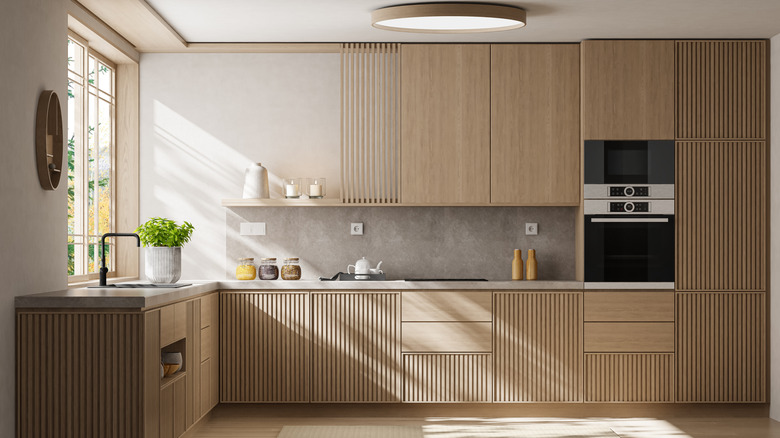
Depending on the layout of your home, the kitchen might seem like a suitable place for your smart thermostat. But even if you spend a lot of time in this part of the house, you'll run into those same issues with unnecessary temperature changes, causing inaccurate readings that hike up your energy bills. The kitchen is generally one of the warmest rooms in the house, heating up when you use the oven or stove. Placing the thermostat too close to appliances like toasters or coffee pots can also trick it into thinking that the rest of your home is as warm as your kitchen and needs to be cooled accordingly.
Similarly, and this may be more obvious, your smart thermostat shouldn't go in a bathroom. Like the kitchen, your bathroom's temperature fluctuates, particularly when you shower. Bathrooms also tend to have poor ventilation and minimal air flow, which will also throw off your readings.