

The Common Mistake That's Filling Your Android Phone's Storage
If you're the type of person who sits at 95% or more of your phone's storage capacity filled, your phone probably feels like a nag at this point, constantly reminding you that you're reaching the breaking point and you need to do some spring cleaning. Your immediate impulse might be to get into the weeds of your media and start deleting some of those precious memories, but there's often a more common, subtle culprit at work: an overabundance of apps, and their (sometimes massive) caches.
It's the most common sin on a modern smartphone: filling up your device with tons of apps, including a huge backlog that you rarely, if ever, touch. At the same time, updates might bring new apps you didn't ask for and may not even notice, as they got lost in the tidal wave of icons beneath your home screen. With them come updates and background files that add more bloat, and over time, they can devour huge swaths of free storage, even if you're backing up your data without using cloud storage.
The hidden storage drain: app bloat and cache buildup
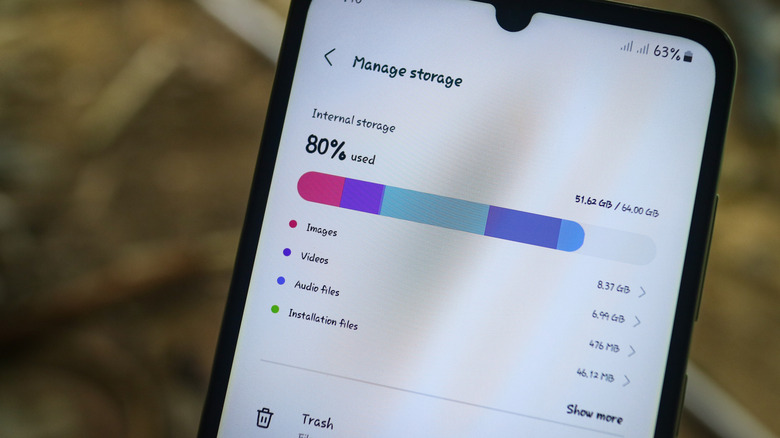
That buildup has a hidden cost, as well. It doesn't just eat up free space for photos and videos and more apps; draining storage to critical levels can have a noticeable impact on performance. Less storage space means less working room for temporary files, system updates, and background processes. It can also slow down calls for data by apps as they have to sort through an ever-growing pile of information.
Social media apps are some of the worst storage hogs. To speed up performance, platforms like Instagram, TikTok, and Facebook are constantly preloading content and caching images and videos. They may continue to scroll smoothly while other apps become more and more sluggish as a handful of apps eat gigabytes of your data. Old games you no longer play and apps you no longer use are another common offender; they'll continue to pull down updates and cache files whether you've opened them in the past six months or not.
Unfortunately, Android has very few automated services to deal with this kind of cruft, though Google allegedly has a feature in the works to help with storage problems. The only solution is to be proactive and take streamlining your device into your own hands (or add more storage in the form of an SD card).
Fewer apps and smarter workflows mean a faster, less annoying Android experience
Breaking the cycle can be as easy as a few minutes spent eliminating unused apps and clearing the caches that you do use frequently. Sit down with your phone and perform a deep forensic dive on your app drawers, and be firm with yourself. Are you ever going to go back to that idle dungeon crawler RPG you haven't played in a year? Do you really need a sixth messenger app with a dead contact list? Remember, you can redownload anything you delete, so try adopting a "deleted until proven useful" attitude. A good approach is to streamline workflows.
Instead of using separate apps for notes, reminders, and task management, a single platform like Google Keep or Notion can tackle all three at once, and save you both storage space and some precious time. You can also consolidate a number of standalone apps into a browser, especially if you don't frequently use them. This includes everything from Reddit to social media apps to shopping platforms, most of which you can access through Chrome or another browser.
Caches are next. The biggest offenders are social media apps, streaming services, and browsers. Clearing the caches on these can often save you tens of gigabytes of space you didn't realize were being quietly gobbled up. This step alone can almost instantly make your phone feel snappier, more efficient, and more responsive.