

4 Disadvantages To Soundbar Audio You Need To Know About
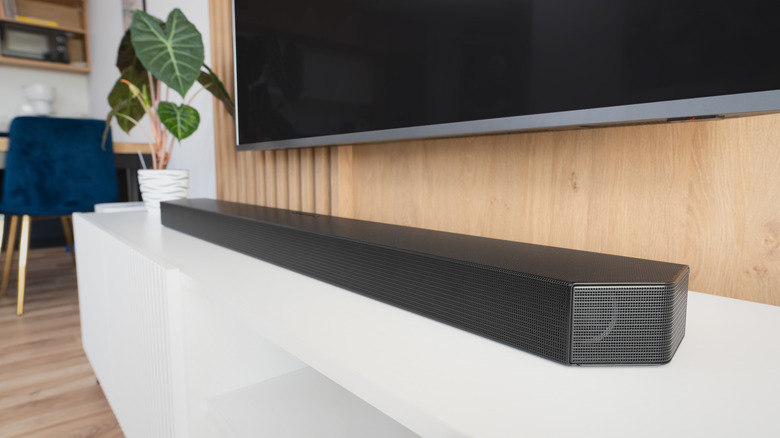
If you're sick and tired of the soulless audio your TV speakers produce, a simple solution is adding a soundbar. Requiring little in the way of setup, you can have one of the best soundbars you can buy up and running in just a few minutes — and we're willing to bet the first movie or show you test will sound far better than what your TV could ever deliver on its own.
That said, a soundbar isn't an end-all, be-all solution for lackluster audio. While easy to connect, most systems won't deliver the same level of immersion and channel separation as a proper surround sound setup with an AV receiver. There's also the risk of buying a soundbar that's too large or small for the listening space you're trying to fill, a common soundbar shopping mistake you won't find out you've made until your new bar is out of the box.
We don't want anyone to be dissatisfied with their soundbar purchase. Research and reviews are critical when selecting one of these TV speaker replacements, and it's also worth digging into this list of four disadvantages to soundbar audio you should know about. Buyer's remorse can hit especially hard when an audio product isn't up to snuff — not to mention that re-packing a soundbar can be a massive pain.
The space-saving design will impact the width of your soundstage
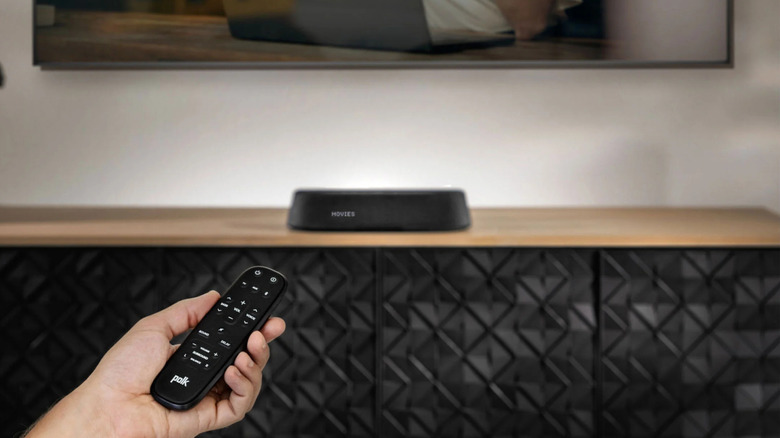
A typical soundbar enclosure contains several speakers positioned close to each other, with tweeters and bass radiators thrown in occasionally, too. While this all-in-one approach is great for freeing up space in your living room, housing left and right audio channels so closely together can impact the spaciousness of your audio.
Front channels (left, right, center) are among the most important parts of any speaker system, but you'll want a decent bit of distance between each bookshelf or floor-stander for proper stereo imaging. Traditional speakers can be spaced throughout a room however you see fit, so you won't have to worry as much about a narrow soundstage; if something doesn't sound good, you can simply move a speaker.
Soundbar manufacturers may attempt to compensate for a narrow stage with cinematic presets or a loudness boost function, but you can only do so much when all your speakers are shoved into a plastic chassis that's half the width of your 65-inch TV. Even the widest soundbars may struggle to create enough left-right separation to make audio feel naturally driven and spaced.
Surround virtualization doesn't mean you should expect true surround sound
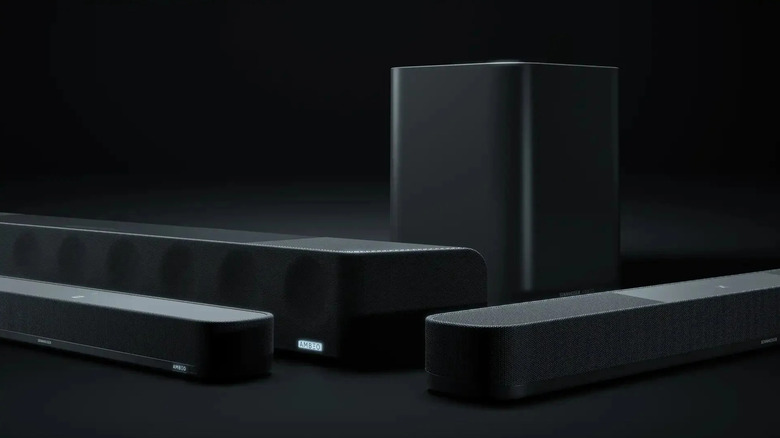
Many midrange and premium soundbars (and even some entry-level models) tout the ability to "virtualize" beefy surround formats, including Dolby Atmos and DTS:X. Generally speaking, this often means that the soundbar itself contains up- and/or side-firing speakers, or that it comes with a set of wireless rears. It also means that the bar likely uses psychoacoustics and digital processing to sound bigger than it actually is. Whatever the case may be, "virtualization" isn't the same as "you own a complete surround sound system."
Depending on the model you're working with, surround virtualization may end up being nothing more than a slightly wider soundstage in the front, or nothing at all. Good virtualization is best achieved in small to medium-sized rooms, so if you're working with a cavernous theater space, a soundbar may not have the power or directivity required to drive decibels into every square inch of the room.
Surround virtualization also necessitates proper connectivity. If you're aiming for Atmos height effects, hooking your bar up via digital optical isn't going to work. Instead, you'll want to be using HDMI ARC/eARC to give your bar system and TV the bandwidth both devices need to ensnare your space in sound.
Upgrading your audio hardware over time usually isn't an option
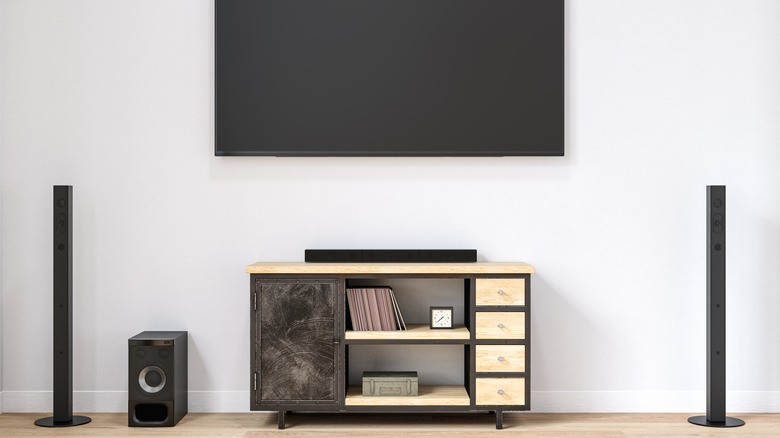
One of the best parts of owning an AV receiver with connected surround sound speakers is the modular approach you can take to building an audio system. Let's say you've invested in the entire 5.1 portion of a surround configuration, but you're not thrilled with your subwoofer's low-impact performance. No worries — once funds free up, you can just purchase a larger, more powerful sub. The same goes for any other speaker you're not satisfied with.
We'd be lying if we said that no soundbar system is modular, but upgradeability is far more limited than what you can expect with a traditional speaker system. Unfortunately, that often means that if you don't like the way your bar's wireless sub or rear speakers sound (if it came with them), you're stuck — unless you decide to upgrade the entire soundbar rig.
Again, though, this isn't a hard ruling for all soundbars. For instance, there are a handful of products on the market that have an LFE output to connect an active subwoofer. So, even if the soundbar didn't come with a bass bringer, you may still be able to add one down the line. But speaking of subwoofers, there's one last soundbar audio disadvantage you should know about before you go.
Wireless soundbar-subwoofer combos may leave a lot to be desired
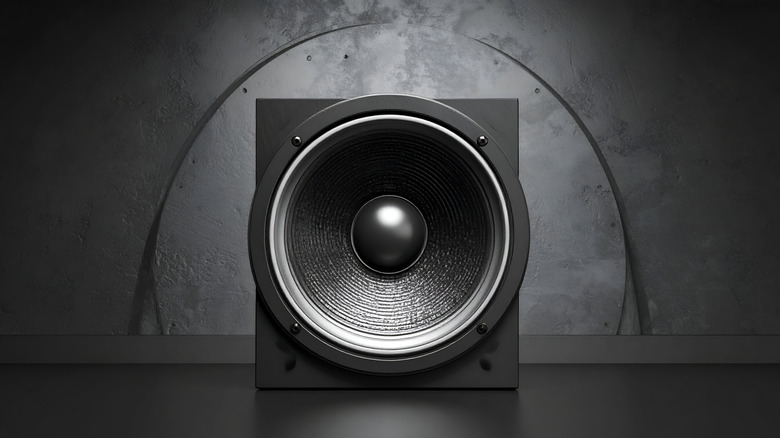
Many new soundbars come bundled with a standalone subwoofer that pairs with the bar wirelessly. On paper, this is a godsend, because it means you'll be able to place the woofer in just about any part of your room that's near an AC outlet. In reality, though, the A to B pairing between bar and woofer can be a lot more irksome. There's also not much rhyme or reason as to why one soundbar bundle might link up more reliably than another (r/soundbars has some interesting theories, though).
I can even provide a personal example: A few years ago, I bought a Samsung soundbar combo that I connected to a Samsung TV. My living room is only 12 feet long, and even when the woofer was placed directly next to the soundbar, it wouldn't connect. At all. I also tried hard resetting everything to no avail. But months later, I hooked up a new bar-woofer system (one I was testing for a review), and wireless pairing went smoothly.
It's probably safe to assume that the larger the footprint you're working with, the better the chance that a wireless bar-woofer connection may drop out or fail entirely. And trust me: Once the sub disconnects, you'll likely notice a dip in overall sound quality and immersion.