

Why Germans Use The QWERTZ Keyboard Instead Of QWERTY
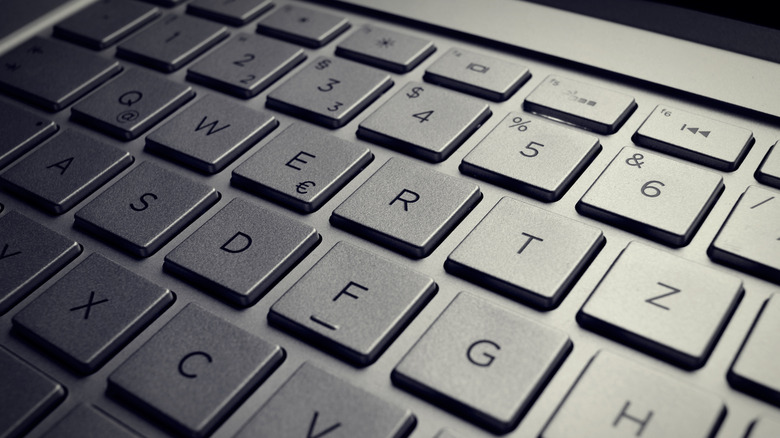
Most native English speakers are accustomed to the QWERTY keyboard, using it regularly on their phone, home computer, or at work. Start typing at speed on a German keyboard, though, and you'll quickly run into trouble because the layout of the letters is ever so slightly different — a change that turns it into a QWERTZ keyboard. "QWERTY" comes from the first six keys that appear on the top-left row of a traditional English-language keyboard, whether physical or digital. It's an easy-to-see, easy-to-say label that quickly identifies the layout. No, "YUIOP keyboard" and "ASDFG keyboard" would never have stuck. So QWERTY it is!
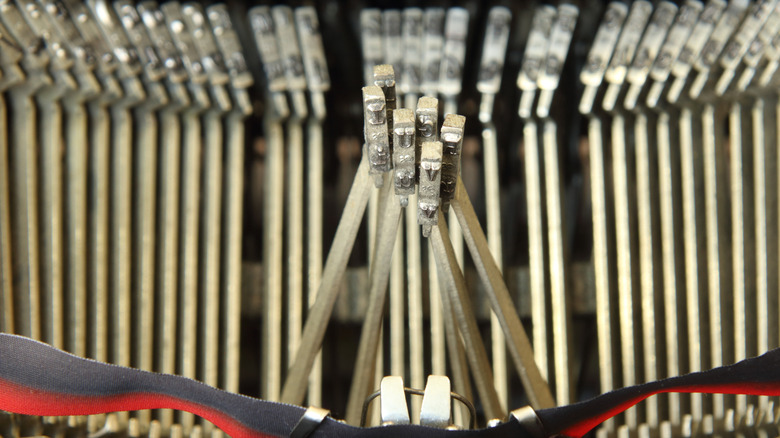
The QWERTY keyboard dates back to 1874 with the launch of Christopher Latham Sholes and Carlos Glidden's Remington No. 1 typewriter. Interestingly, not everyone agrees as to why the letters appear as they do. According to Smithsonian Magazine, some historians claim the layout was designed to reduce the chances of the metal bars jamming (see image below) by creating greater space between some commonly used letter pairs, while others say it was to help telegraphists avoid errors when transcribing Morse code.
The QWERTZ keyboard, which started to appear on German typewriters in the early 20th century, swaps the Z at the bottom left of a QWERTY keyboard with the Y that's just to the right of the T. In the German language, Z is a more frequently used letter, so it made sense to place it where it's easier to access. The Z also appears before the U, making it easier to type ZU, a common combination of letters in German.
How QWERTZ improves typing in German
Reducing the chance of jams doesn't appear to have been the motivation for this particular layout. The letter Y is used much less in German than in English, so banishing it to the lower left‑hand corner of the keyboard made sense. In a straight swap to increase typing convenience, the Z was brought to the heart of the keyboard, since Z occurs more frequently in German than in English.
By the time QWERTZ appeared on German typewriters, users were already familiar with QWERTY, so manufacturers decided to keep the basic layout and only make minor changes to suit German typing patterns. Despite being relics of old typewriter technology, the recognizable letter layouts remain as vital functions on our modern-day phones and computers. When you think about it, it's a wonderful example of how familiarity and availability can make some cool retro gadgets feel really rather modern.
QWERTY variants exist for English-language users too
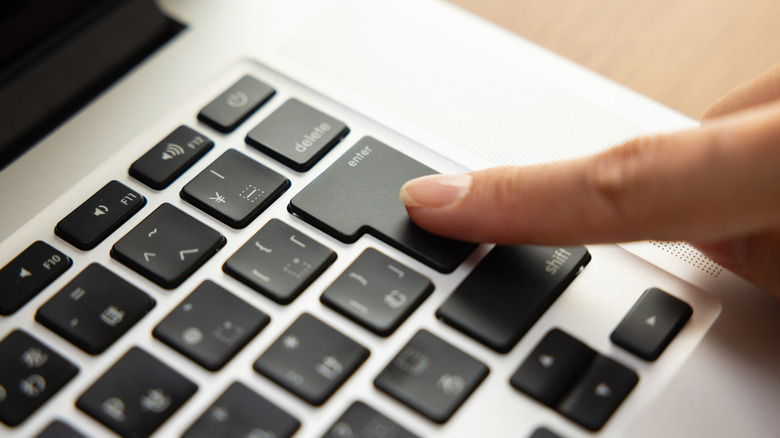
Interestingly, even QWERTY keyboards themselves show small differences across English‑language regions. The physical keyboard form factor used in the U.S. and Canada is generally built to the American National Standards Institute (ANSI) specification, while U.K. keyboards typically follow the International Organization for Standardization (ISO) specification. Differences between the two include the Enter/Return key on many North American keyboards appearing as an upside‑down "L" spanning two rows, whereas U.K. keyboards usually have a slightly wider Return key on a single row.
Currency symbols are another obvious difference. On a standard British keyboard layout, Shift+3 produces the £ (British pound) sign, while the same action on a North American layout produces the # symbol. North American layouts place the $ sign on the 4 key (Shift+4), which is where it also appears on U.K. keyboards. And, of course, the tech giant also offers region‑specific layouts such as QWERTZ for German‑speaking markets.
Dedicated keyboard enthusiasts take things a step further by building custom hardware and doing things like remapping keys. They might also choose different keyboard switch colors and materials for visual cues and feel. Yes, it's a whole other delightfully nerdy level!