

Kindle Editions Of E-Books Can Be Changed Anytime - Here's Why
We may receive a commission on purchases made from links.
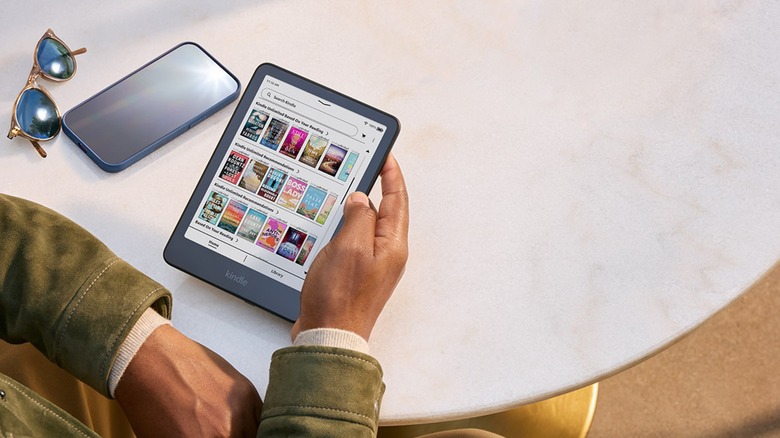
Amazon's Kindle line of products is one of the most popular e-book readers on the market. Alternatives such as Kobo Clara Colour are also worth buying, but it's hard to deny the Kindle is an incredible device because of its absolutely gargantuan library. At least until you realize the books you're reading might not be the same as the ones you can find in a physical library.
Recently, X user @coastalsoftgir decided to start reading "Pretty Little Liars" on her Kindle and noticed an odd inclusion on page five. Normally, a book passage on that page is supposed to mention "Fear Factor," a show about completing dares in a contest, but the sentence has been replaced by a mention of TikTok. The app is a popular social media platform now, but the original novel was published in 2006, back when shows like "Fear Factor" reigned supreme and TikTok wasn't even close to launching. Other readers also discovered references to Snapchat, Instagram, Adele, and Billie Eilish. These services hadn't been invented in 2006, and Billie Eilish was five years old when the novel was written. So what gives?
While Amazon hasn't made any statements, the running theory is that "Pretty Little Liars" was altered to appeal to younger readers, specifically readers who will buy the book on Kindle. While the changes might sound harmless, most people don't see it that way. The person who brought this change to the internet's attention considered dropping the book right there, and her comment section is overflowing with people agreeing with her outrage. However, others are looking at the silver lining: The Kindle Edition of "Pretty Little Liars" is an excellent argument for buying physical books.
These Kindle changes set an ugly precedent
In the spirit of fairness, the aforementioned edits seem to only apply to the Kindle edition of "Pretty Little Liars." One commenter noted that their copy on playbooks doesn't have the TikTok edit. However, such changes raise concerns bigger than book preservation.
One potential issue is the possibility of unannounced censorship. If, say, someone in power wants a passage in a book to be changed because they find it problematic, Amazon could just sneak into the files and stealthily "update" everyone's copies without anyone noticing — although Amazon says e-books already in users' libraries may only be updated if the author proves a "serious error" must be fixed. Other kinds of updates and editions only affect future purchases. That's because Kindle users don't really own their e-books; they're just purchasing a license to receive a file that contains a copy of their book, so do they really have a say? The same argument was used against people who purchased digital games that have been delisted from storefronts. Gamers responded by starting the Stop Killing Games movement.
Likewise, a book's author can't request Amazon edit a Kindle edition because it represents an ethical position the writer no longer identifies with, and they would have to publish a new edition. On the bright side, such a change could improve their work, but it could just as easily ruin an otherwise fine novel. It all depends on which way the author swings, so many readers might agree it's safer to hedge your bets and leave books on Kindle the way they are. And while we previously stated that e-books aren't being edited across all services, who's to say that Kindle alternatives such as the Boox Go Color won't see similar changes in the future? These edits set a scary precedent that could permanently alter the e-book landscape.