

5 Ways The 2026 Subaru Solterra Is Fixing Its Bad Reputation, And What's Still Wrong
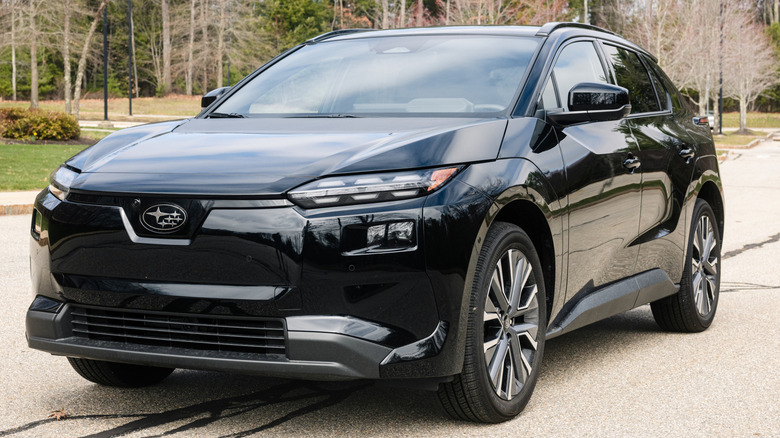
Electric vehicles are having a tough go of it circa 2026. First-quarter sales were down 27% versus the same time in 2025 and accounted for only 5.8% of new-vehicle sales in the U.S. for that period, per Cox Automotive. At the same time, automakers like Ford are moving away from aggressive EV production, namely by converting its briefly battery-powered Lightning pickup truck into a plug-in hybrid. The reasons are complex, but the takeaway is that it might seem as though Americans are less interested in EVs.
Subaru disagrees, if its 2026 Solterra is any evidence. After three years on the market, the Solterra has undergone a mid-cycle refresh, and while this update brings the typical fresh fascias, it goes much deeper in the name of increasing EV appeal for the masses. Early Solterras were dinged by the online peanut gallery for fast-charging speeds that were too slow, weak range, gawky styling, and high prices relative to the level of content. Clearly, Subaru was listening, as the revised Solterra works to address these concerns through a host of obvious and invisible-to-the-consumer-eye changes.
Both previous infotainment screens are out in favor of a standard, huge touchscreen. You can now tap into Tesla Supercharger stations for a quick refill. And range has jumped nearly 27%, even though battery pack capacity increased less than 3%. It's not all rose-colored glasses; the Solterra does still have a notably questionable feature. But after driving one for a week, I can tell you that, on the whole, this latest Subaru EV impresses.
More driving range
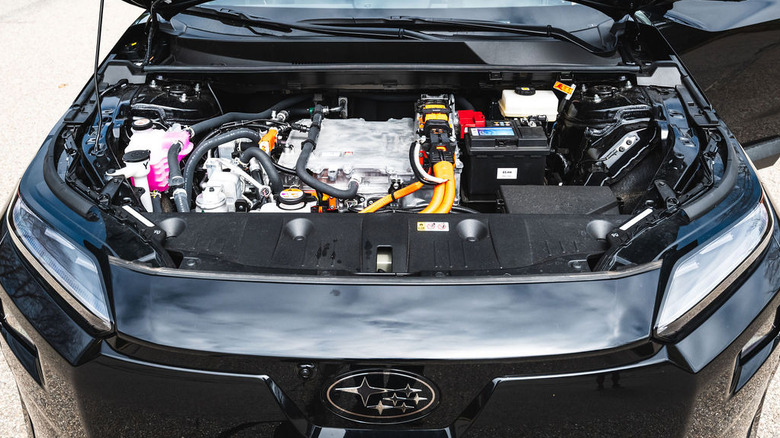
In its first iteration, the Subaru Solterra came with a 72.8-kWh battery pack and a 227-mile driving range. For 2026, the battery is bumped to 74.7 kWh of capacity, and the max range figure moves to 288 miles. The math comes out to a 2.6% increase in battery size, but a 26.9% increase in range. Surely Subaru could have simply packed in more battery cells to dramatically drive up range, but that comes with added weight, the bane of all EVs.
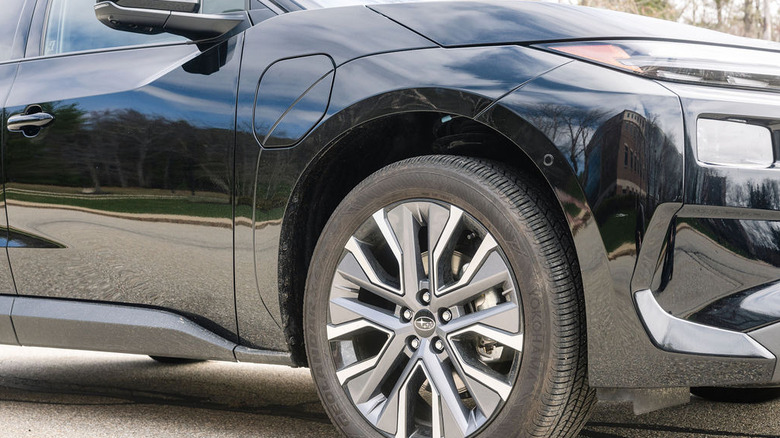
It may not be the longest-range EV you can buy in 2026, but still, this is an impressive bit of automotive engineering that is largely accomplished beneath the Solterra's surface. There are a few visual giveaways, like aerodynamic optimization of the side mirrors and rear spoiler design, and fairly simple changes, like lighter cabin carpeting, all of which help on this front. But going deeper, you'll find wheel bearings that Subaru says reduce friction by 18%. The motor cases are smaller than before, and the internal gears are now bathed in oil and feature polished teeth, both in the name of less friction.
This new arrangement also translates to the electric oil pump having an easier job, which reduces the battery load. Then you've got repositioned magnets within the rotor to simultaneously improve the electromagnetic flux pattern, decrease the size of the rotor and stator, and produce more power. Even the inverter switches have been revamped to yield small bumps in efficiency, all of which add up to a notable range increase for the Solterra.
Supercharger compatible
A big stumbling block to widespread consumer adoption of EVs is the spotty network of charging stations across the country. Gas stations are seemingly on every corner, but the same cannot be said of electric vehicle chargers. Unless you drive a Tesla, that is. Sort of. Since 2012, Tesla has made a concerted effort to build a wide-ranging charging network for its cars. The payoff is that, as of 2025, Tesla operated more than 33,000 charging ports versus 5,100 for the next closest provider.
So, it's easy to understand why Subaru made the move away from a Combined Charging System (CCS) connector for the Solterra to the North American Charging Standard (NACS) that makes it compatible with Superchargers. At the same time, the Japanese automaker increased the Level 3 charging rate from 100 to 150 kW and updated the battery preconditioning system. Early Solterras saw reports of nearly an hour to charge from 10% to 80%, while the 2026 model is rated to do so in just 30 minutes, which is close to what I saw in real-world testing.
To be clear, Subaru did update this system for 2024 to enable 35-minute sessions, but really, every minute counts when you're sitting at a charging station. AC charging has also seen an improvement on the 2026 model, which now has an 11 kW onboard charger versus 7 kW previously. That translates to about six hours of Level 2 charging to fill up, a suitable window for most overnight scenarios. Previously, the timeframe was more than nine hours.
Radiant leg warmers
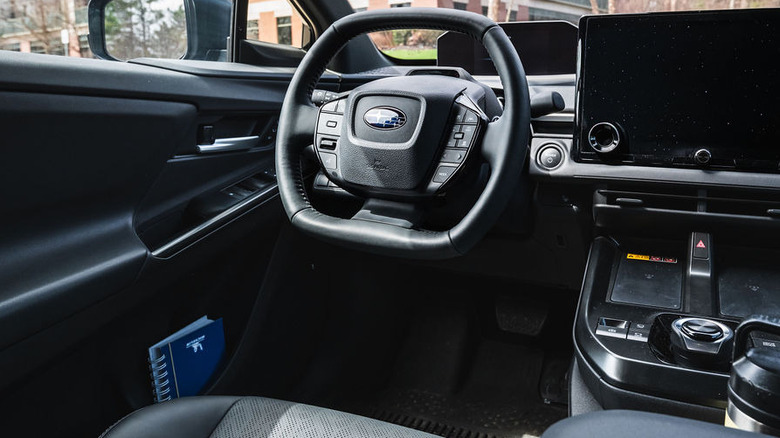
To incrementally boost efficiency in its Solterra EV, Subaru has turned to radiant warming for the 2026 model. The Solterra still uses traditional blown hot air from HVAC registers, but on the Touring XT trim, it's taken the infrared radiation approach to keep front passengers' lower extremities toasty. For the driver, there is a panel under the steering column, and for the passenger, it's where the glovebox would normally reside. Be aware that even though this feature is only included on the range-topping Solterra, the glovebox is gone on the rest of the range.
The idea is to apply targeted heating with a more efficient system, in order to ease the load on the battery and improve driving range. Subaru is not alone in this endeavor. Luxury carmaker Genesis says that when used in conjunction with traditional systems, radiant heating drops energy consumption by 17%. Ford saw similar improvements in its use of this method on the E-Transit electric van, noting a 5% increase in driving range as a result.
And BMW has been experimenting with infrared heating since 2012. The Toyota bZ4X, mechanical twin to the Solterra and one of the cheapest EVs you can buy new in 2026, previously offered this system, so it was likely an easy upgrade on the Subaru side. And for anyone concerned about getting burned by a hot dash, the surface of these panels — which can hit 212 degrees Fahrenheit in 60 seconds — is designed to drop to 122 degrees Fahrenheit when contact is detected.
Self-parking system
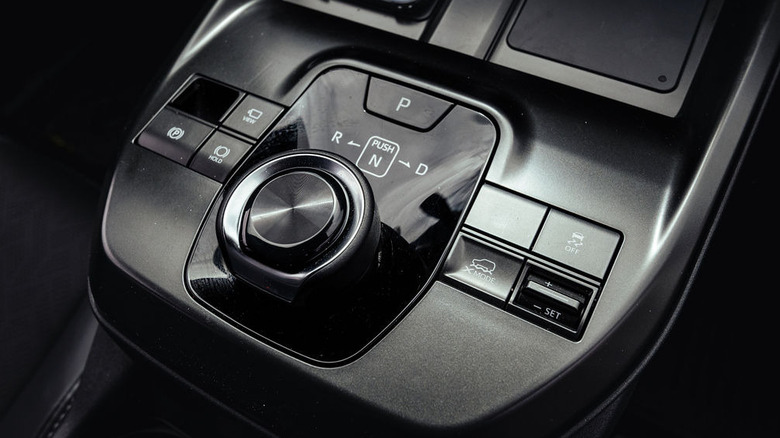
Parking your car can be scary. According to The Zebra, 49% of Americans have a condition dubbed parallelophobia, otherwise known as being afraid of parallel parking. Fortunately for these folks, automakers have been rolling out tech that will park your car for you, in parallel and perpendicular positions. My old Ford Explorer has this option, and it works okay for perpendicular scenarios, though the Blue Oval has since canned it due to apparent lack of customer use.
The latest Jeep Grand Cherokee also offers self-parking, and so does the 2026 Subaru Solterra. After testing it in a Costco parking lot, I have to say, results are mixed. To engage, slow-roll down a parking lot or city street and click the button with a steering wheel icon and the letter P. From there, you will enter a video game-like interface for putting your Solterra in between the lines. There are little arrows for adjusting exactly where you're positioned and on-screen directions for what to do after you've selected a space.
During one attempt, the Subaru eased itself into the right place, but on another, it appeared confused, milled around in the middle of a parking lane, and pronounced itself parked. Perhaps with more practice, I would master this technology. But you really wouldn't want to use it anywhere there might be other drivers, as the process is quite involved (read: slow). In fairness, the system on my Explorer isn't any faster, so maybe self-parking simply isn't as great as it sounds on paper.
Infotainment interface
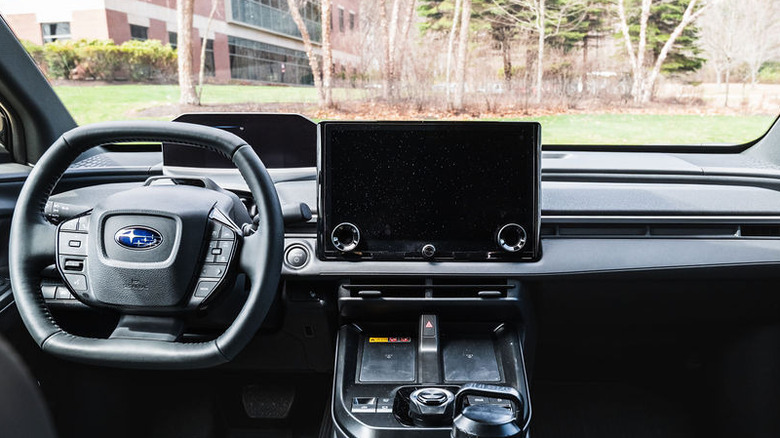
The infotainment touchscreen has received a fairly major glow-up in the 2026 Subaru Solterra. Previously, entry-level models came with an 8-inch display and the option for a 12.3-inch interface. As of 2026, every Solterra comes fitted with a 14-inch screen. It's big, responsive, and best of all — for semi-tech-allergic drivers like me — you can turn it off.
Also easily toggled off and accessed via this big display are the many advanced driver-assistance systems. But what I really appreciated about this new design is the smooth integration of several key physical controls. A simple power dial can be pressed and spun to control volume. All the defrost functions — front, rear, and side mirrors — get dedicated buttons, and the dual-zone automatic climate control is managed with a slick rotary dial that incorporates a digital temperature readout.
Wireless smartphone integration is standard across the Solterra lineup. It connected quickly with my iPhone, and without me needing to press any buttons, something that is not always true of modern cars. It's a fairly enormous infotainment touchscreen, even by today's standards, but overall, is just one more way that Subaru — one of the most reliable electric vehicle brands — has improved on its compact EV.