

CDs Vs. Vinyl: Which Has Better Audio Quality?

Vinyl resurgence is nothing to scoff at. In 2025 alone, around 46.8 million vinyl units were sold in the US. Despite lagging behind vinyl records, CDs saw impressive figures during the same period, logging about 29.5 million sales. With many listeners dipping their toes into physical media, the debate around the audio quality between CD and vinyl is surging.
Audiophiles claim that vinyl sounds better than digital audio. While preference likely influences the overall experience, CD has superior audio quality based on raw figures. This includes both its dynamic range and its low end.
Does this put the final nail in the coffin of the CD vs. vinyl audio quality debate? Unfortunately, it's a lot more nuanced than looking at the spec sheet. Vinyl may not have the fidelity of a CD, but some of its limitations actually boost its appeal. Not only does this include subtle mastering differences that often make vinyl sound more balanced on an artistic level, but soft clipping and low-end harmonic distortion may result in a more pleasurable listening experience.
Why CDs reign supreme over vinyl in terms of sheer audio fidelity
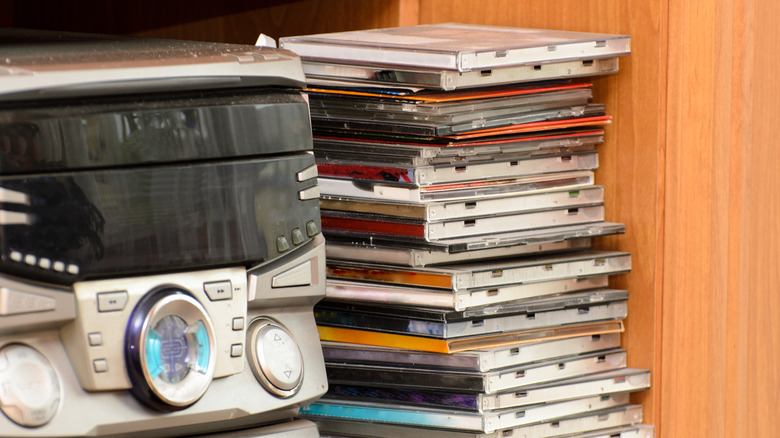
It's not surprising that CDs are making a comeback in the era of streaming. They reproduce audio at 16-bit/44.1kHz PCM, consistently delivering 1,411 kbps, which is much higher than Spotify's highest quality of around 320 kbps.
CDs also take the proverbial cake when you stack them against vinyl. They have a superb dynamic range (the difference between the quietest and loudest sounds) of up to 96dB, while vinyl has "just" 70dB to work with. This is a limitation of the format. Vinyl has a prominent noise floor, meaning that quiet sounds in an analog recording may be drowned out by noise, something that's much more apparent in the inner grooves of the record.
Similarly, CD has superior stereo channel separation measured at over 90dB, which offers a much more expansive soundstage than the meager 30dB available on vinyl. But maybe the biggest limitation of the older medium is at the low end. Lower frequencies require deeper grooves. Yet these also put quite a bit of stress on the stylus. In other words, all that bass could make the cartridge jump and skip. As such, mastering engineers often need to consider this by adjusting the recording's EQ balance to ensure it plays well on different turntables.
Why vinyl may still deliver a better experience

Although the music-listening experience is personal, vinyl is more popular due to its immersive nature. Many enthusiasts enjoy interacting with the package, staring at a larger artwork, and manually flipping the record. However, some also describe vinyl as sounding more "alive" than CD. Is there any truth to this, or is it just subjective experience informing the perception of the sound?
There is some layer of truth to this, and most of it boils down to the masters themselves. Because CD has nearly no limitation on dynamic range, digital recordings often push loudness to the limit. The "loudness war" is real, and most digital-first mixes get heavily compressed. In the end, you have the situation where a CD could offer a finer sonic picture, but the final result is often louder on average and has less difference between the quiet and loud parts.
While CD masters often sound "squashed", mastering engineers need to work around vinyl's limitations. In many cases, the vinyl version may preserve more of the original dynamics, making the record seem more vibrant. Other disadvantages of vinyl also end up working in its favor. The analog chain introduces additional noise and harmonic distortion, which most listeners perceive as pleasant.
CDs may be a higher-level format in terms of raw power, but for many connoisseurs, the clunkiness of vinyl works in its favor. After all, the higher fidelity may never be enough to beat the sheer enjoyment of putting on a well-pressed record on an audiophile-quality turntable, sitting back, and getting lost in the crackle.