

Xiaomi Pad 8 Pro Review: The Android iPad
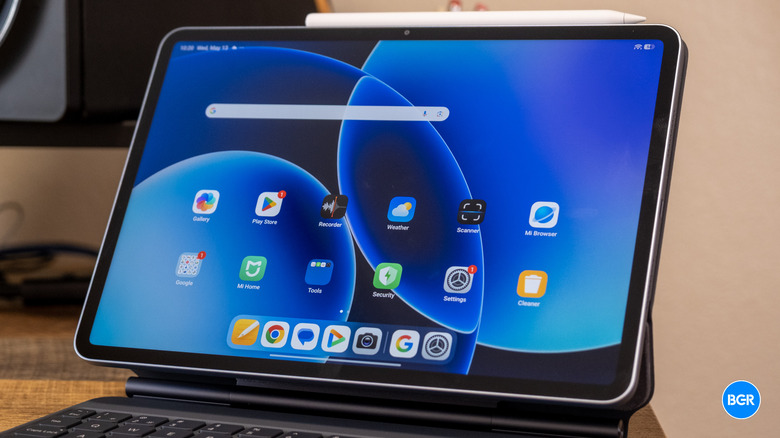
Premium Android tablets continue to improve, but I'd argue, they're still simply not as good as the likes of the iPad Pro. Xiaomi, however, is addressing this head-on with a tablet and associated accessories that take inspiration from Apple's products in more ways than one.
The Xiaomi Pad 8 Pro has a decently thin build and solid performance. It also supports accessories like the Xiaomi Focus Keyboard — a near copy of the beloved Apple Magic Keyboard for the iPad. At around €650 (~$755) for the entry-level model in Europe, the Xiaomi Pad 8 Pro isn't cheap — and as such, it really has to go head to head with the iPad and other top-tier Android tablets.
Does the Xiaomi Pad 8 Pro perform well for the price, and can it actually serve as a laptop replacement? I've been using it for a while now to find out.
Design
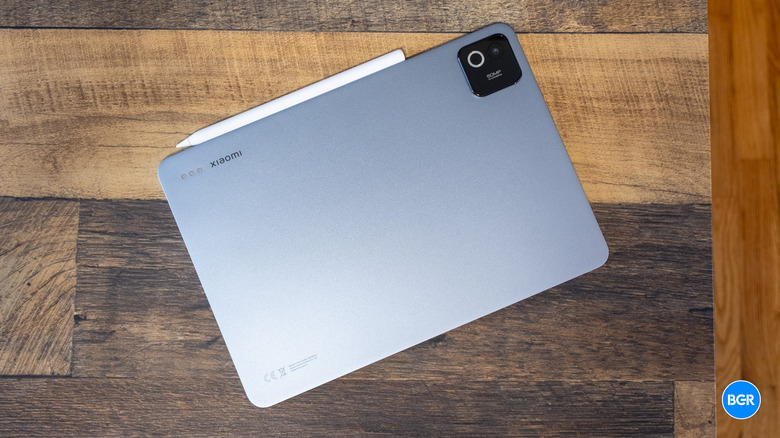
The Xiaomi Pad 8 Pro is reasonably sleek, stylish, and thin. It's actually thinner than the previous-generation Xiaomi Pad 7 Pro, which is impressive given the fact that it has a much larger battery. It's a full aluminum unibody with rounded corners and squared-off sides, which is the design language pretty much everyone is converging on right now — but it's still clean overall.
The dimensions come in at 251 x 173 x 5.8 mm, which gives you an 85.4% screen-to-body ratio. That's competitive with the Galaxy Tab S11 and means there's not much wasted space around the panel. I actually like how much bezel there is, and I probably wouldn't want much more. What's there is enough to grip without accidentally touching the screen.
On the back of the tablet is a somewhat large square camera module. The lens elements stick out enough to create a small but noticeable visual awkwardness on what is otherwise a very minimalist back panel. It's not really a big deal, and it doesn't change how you use the device all that much.
The Xiaomi Pad 8 Pro comes in Pine Green, Blue, and Gray, and based on online images they all look solid. I'm reviewing the Blue model, which I quite like the look of. It's a very subtle blue, which will appeal to many, though some might prefer a bolder color.
The tablet is also available with a matte glass, which Xiaomi claims blocks up to 70% of reflections. I would have liked to try that version out, but I have the glossy-screen model. I've really liked the matte glass approach on modern iPad models, so I'm glad to see more companies adopting it.
The Xiaomi Pad 8 Pro is comfortable enough in the hand, though it is a little heavier than some other tablets. Its 11.2-inch display means that it's not overly large, like some bigger models that I find a bit unwieldy. As a whole, the tablet looks and feels premium and durable.
Display
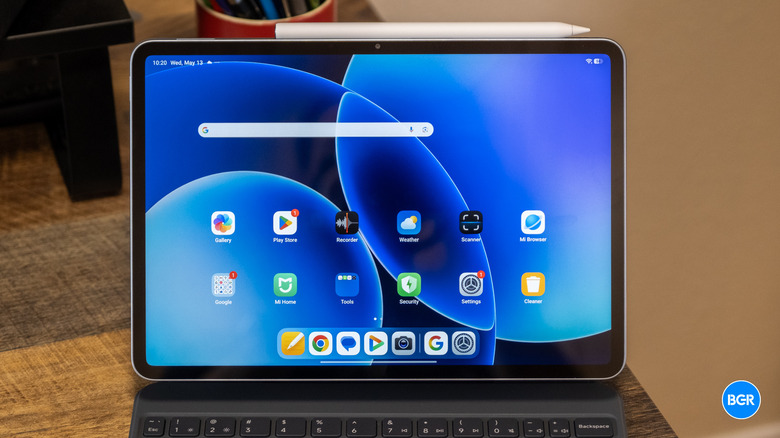
The Xiaomi Pad 8 Pro comes with an 11.2-inch IPS LCD display with a 3,200 x 2,136 resolution — a 3:2 aspect ratio that's better suited to documents and web browsing than the 16:10 you'll find on many competitors. Pixel density works out to 345ppi, which is quite crisp for a tablet, and higher than some noteworthy alternatives.
Refresh rate goes up to 144Hz, with adaptive switching between 60Hz, 120Hz, and 144Hz depending on what you're doing. 800 nits of peak brightness isn't bad for a device like this, but also isn't class-leading. The device supports Dolby Vision and a 12-bit color-depth.
In daily use, the display is good. Text is crisp, and motion is smooth. But it's still an LCD panel as opposed to OLED. That means that you simply can't get the same deep black levels on offer by OLED-equipped tablets. For this price range, I would have liked to see an OLED panel, and frankly, there isn't much excuse not to include one, especially given the fact that other tablets at this price point often do.
Performance
Powering the tablet is a Qualcomm Snapdragon 8 Elite chipset, which is Qualcomm's flagship SoC from 2025. It's no longer the top-tier SoC, which is a title that instead goes to the Snapdragon 8 Elite Gen 5. On this tablet, the Snapdragon 8 Elite is coupled with either 8GB or 12GB of RAM — our review model has 8GB. Storage options range between 128GB, 256GB, and 512GB.
Frankly, the tablet performed more than well enough, and while the Snapdragon 8 Elite isn't Qualcomm's latest silicon, you simply won't notice the difference right now. It's possible down the line, toward the end of the device's lifespan, a Snapdragon 8 Elite Gen 5 tablet would have kept up better with more demanding software, but that's just speculation.
In multitasking, gaming, and productivity, the tablet performed well. That last one is probably most important for a tablet like this. It's a very capable productivity machine.
The other quirk worth knowing about is RAM management. Xiaomi tends to be aggressive about closing background apps, and the Pad 8 Pro is no exception. You'll come back to something you had open and find it reloading. With 12GB of RAM on paper, this shouldn't be happening as often as it does. It's not a dealbreaker, but it's an irritant.
It's also worth noting that the tablet only comes with Wi-Fi connectivity; there's no cellular option for those who want something they can take on the road and remain connected with. All of that to say, while I would have liked to see the Qualcomm Snapdragon 8 Elite Gen 5 processor instead of the last-generation chip, the tablet still performs easily well enough for the vast majority of use cases and should for at least a few years to come.
Battery and charging
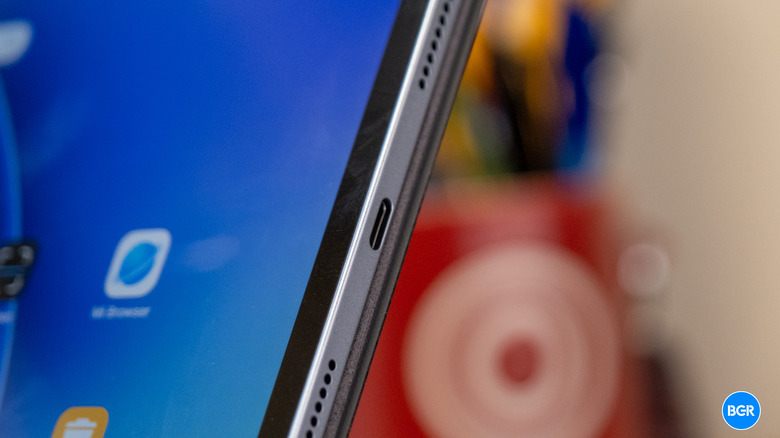
The 9,200 mAh battery is pretty huge, and it allows the tablet to last for hours upon hours. Of course, your mileage may vary depending on what you're using the tablet for, and gamers won't get as much out of it as those using it for productivity. That said, gamers will probably get more gaming time out of the Xiaomi Pad 8 Pro than most other tablets.
In my mixed use, I easily got through a full work day with room to spare. After a good 8 hours or so, I still had a little over 30% of the battery remaining. Charging is handled by 67W HyperCharge over USB-C, which gets you to a full charge in about an hour and a half. The tablet also offers 22.5W reverse wired charging, so you can use the tablet as a power bank for your phone or earbuds in a pinch. There's no wireless charging, but I've never really felt the need to wirelessly charge my tablet anyway.
Camera
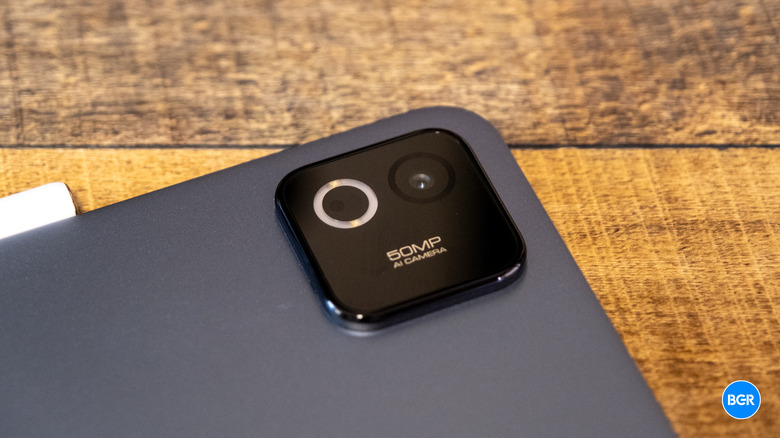
Tablet cameras are usually an afterthought, but Xiaomi has actually put some effort in here — whether you use it or not. The rear camera is a 50-megapixel sensor with an f/1.8 aperture and phase-detection autofocus, capable of 4K video at 60fps. The front-facing 32MP sensor at f/2.2 handles 1080p at 30fps and is genuinely good for video calls. It's also located in the proper spot — the top edge when you're holding the tablet horizontally.
In practice, both cameras punch above what you'd expect from a tablet, but they're still well below Xiaomi's best smartphone cameras. Detail preservation is solid, sharpness is good, and stabilization on the rear camera is better than you might expect it to be. For video conferencing, casual recording, document scanning, or grabbing a quick reference photo, this setup is more than enough.
As expected, there are plenty of camera-focused AI tools, though again, you may not use them all that much. They work fine. It's worth noting how much of an upgrade this is over the standard Pad 8, which makes do with a 13MP rear and 8MP front camera. If cameras matter to you at all on a tablet, then the Pro is the tablet to get. That said, you still shouldn't expect flagship smartphone camera quality. You won't get it here. The Xiaomi Pad 8 Pro's camera system is well below what you would get from modern high-end phones and is still best used for video calls rather than anything else.
Software
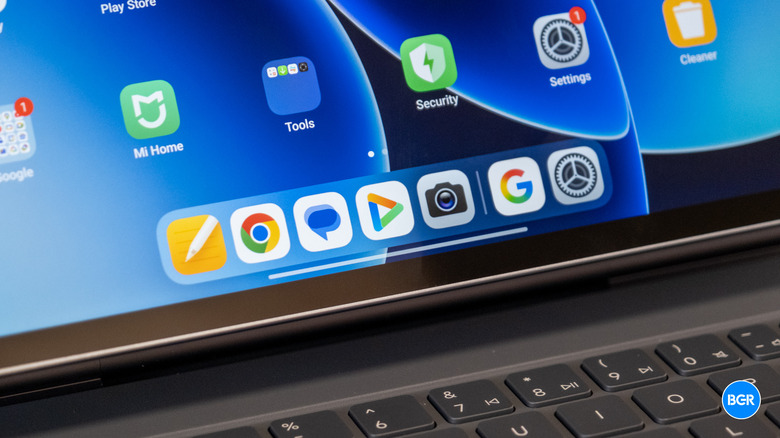
The Pad 8 Pro ships with Xiaomi's HyperOS 3 running on Android 16, heavily tuned for tablets. HyperAI is woven through the system — speech recognition, generative writing tools, an AI calculator that recognizes handwritten math — that kind of thing. Most of it is just there if you want it, so you don't have to use it. I didn't all that much.
Workstation Mode is the most important productivity feature. You get split-screen at 5:5 or 1:9 ratios, floating windows that resize and reposition relatively easily, and a dock with quick access to frequently used apps. It works pretty well, though you will need to get used to some of the quirks.
There is some bloatware that comes pre-installed on the tablet, but it's not over the top. You'll get apps like WPS Office, TikTok, and Spotify, but companies should know the classic practice of installing the apps you want still works well. We don't need to change it. On the upside, Xiaomi is promising up to five years of major updates, which is competitive.
Accessories
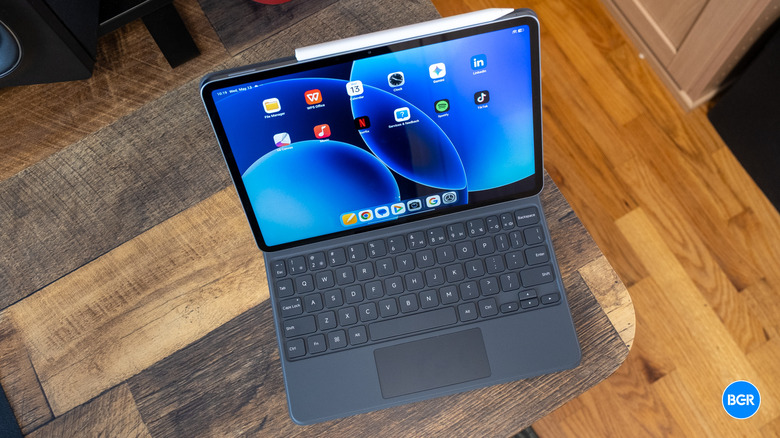
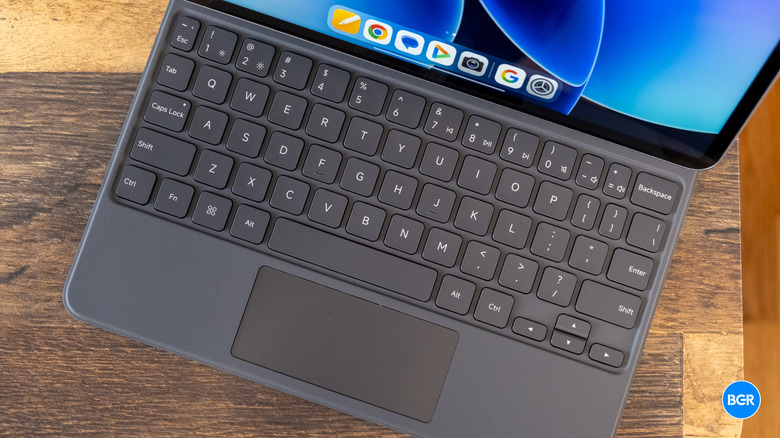
The Xiaomi Pad 8 Pro works with a slew of accessories, and I was able to test the device with many of them. My favorite is the Focus Keyboard, which, yes, is a Magic Keyboard copy. It's not as good as Apple's Magic Keyboard — the touchpad isn't as responsive, and the keys are a little less tactile. But it still works very well, and it's better than the vast majority of tablet keyboard accessories I've tried.
The Xiaomi Focus Pen Pro is a solid upgrade over previous Xiaomi styluses. It's buttonless, and it features gesture shortcuts triggered by squeezing or double-tapping, a haptic motor for tactile feedback, 16,384 pressure levels, and an internal gyroscope. Latency is low, and it feels decently natural. Like the Apple Pencil, it attaches magnetically to the top of the Xiaomi tablet, where it can charge wirelessly. Even though it's a copy of Apple's feature, I don't mind when brands copy a great feature.
The catch, of course, is that none of this comes in the box. Add the keyboard and pen, and you're looking at a much more expensive system — and one that costs more than a decent laptop like the MacBook Air. That doesn't make it pointless. A tablet and a laptop like the MacBook Air serve different purposes, even though modern tablets are arguably trying to replace cheaper laptops. It does mean that if you're looking for a productivity machine, it's worth weighing your options.
Conclusions
The Xiaomi Pad 8 Pro is an excellent Android tablet. It's powerful, well-designed, and has a huge battery life. That said, at €650, it's not the cheapest tablet around, and the competition is relatively fierce. If you're willing to live in Apple's ecosystem, one of those is an iPad Pro, and it's well worth considering an iPad given the better tablet operating system. If you're looking to stick with Android, the Xiaomi Pad 8 Pro is an excellent option.
There are plenty of trade-offs, though. LCD instead of OLED means weaker black levels and less vibrant colors, and not everyone will love the software. These aren't really dealbreakers for most, but they're worth knowing about.
The competition
The OnePlus Pad 3 is one of the most direct rivals. It has the same Snapdragon 8 Elite processor, a bigger 13.2-inch screen, and slightly bigger battery. If you want the bigger canvas, that's the one to get. The Samsung Galaxy Tab S11 has a better AMOLED display and an IP68 rating, but its battery life isn't in the same conversation as the Xiaomi. The Apple iPad Pro wins on ecosystem integration and software longevity, but if you're looking for an Android tablet, it's not for you. And the standard Xiaomi Pad 8 is the cheaper option within Xiaomi's own lineup — it has the same screen and battery, but a weaker chip and cameras.
Should I buy the Xiaomi Pad 8 Pro?
Yes, if you're looking for a great-performing tablet and like Xiaomi's approach.