

There's A Simple Reason Why Physical Alarm Clocks Are Back In Style
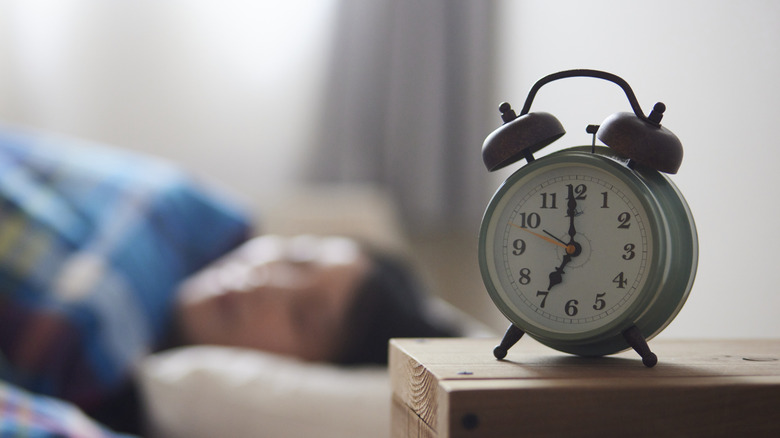
The fact that a technology has been widely replaced by new innovations certainly doesn't mean the old tech is dead forever. Consider the example of vinyl records. Even in our digital age, this ionic analog format is making a comeback. Similarly, it appears that traditional alarm clocks are having a moment again, particularly among Gen Z.
This isn't the first retro technology younger folks have embraced in recent years. Along with vinyl records and other forms of physical media, they've also started using old-school digital cameras and various other gadgets that you may have assumed were relics of the (recent) past. However, the decision to use a bare-bones alarm clock instead of relying on a phone's clock app may not simply be an ironic statement or a nostalgia-fueled impulse. There's reason to believe that using a traditional alarm clock instead of a smartphone may offer health benefits that can affect everything from mood and concentration to quality of sleep.
The health reasons why physical alarm clocks are coming back

Smartphones and apps definitely aren't designed to promote quality sleep. For instance, smartphone screens emit blue light, and exposure to this type of light can suppress the body's natural production of melatonin, the sleep hormone. As such, looking at your phone before bed can make it difficult to wind down. If you use your phone as an alarm clock, merely checking the time in the middle of the night can awaken the brain to the point that getting back to sleep becomes a real challenge.
There's also the fact that phones are inherent sources of potential stress and nervous system activation. When you receive a notification, it triggers your nervous system, prompting you to check for an email, update, etc. Having the phone nearby can cause you to be on a certain degree of high alert at all times, preventing you from truly relaxing. This may be why those who ditch smartphone clocks in favor of traditional physical alarm clocks report feeling more rested and refreshed upon waking. Not having a major source of potential distraction (or even distress) on the nightstand can allow them to achieve a state of physical rest they're not accustomed to.
Consider whether you could benefit from making this switch. While a smartphone can absolutely help you be productive in certain ways, the extent to which it interferes with quality rest and sleep may counteract those advantages. Sometimes, optimizing productivity means knowing when to put the phone away.