

2.5mm Vs. 3.5mm Headphone Jack: What's The Difference?
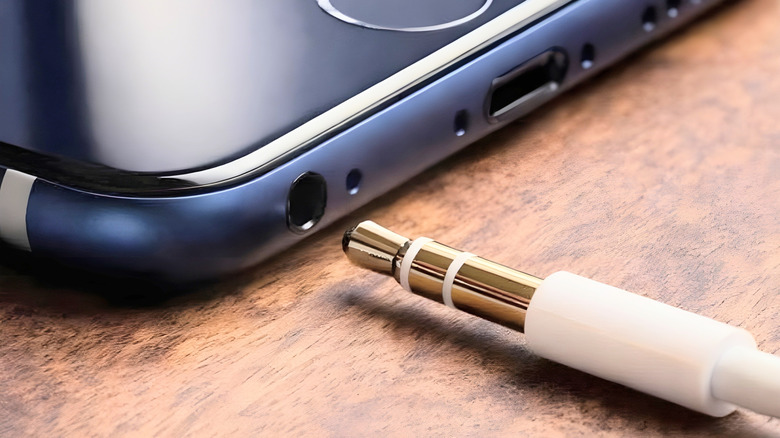
A headphone jack is the female connector to which the male headphone plug inserts. It's the circular hole you'll notice at the side of your laptop or tablet, on the front or back of your AV receiver or gaming console, and even on your musical instrument or video camera. The old headphone jack is less common for smartphones nowadays, as very few of them still include one. Instead, you're encouraged to use either wireless or USB-C wired headphones (or with an adapter). But a headphone cable is still widely used with laptops, tablets, and other devices, most commonly to connect a pair of wired headphones to your source device for private listening.
But did you know there's more than one type? The two you will probably encounter most often are 2.5mm and 3.5mm headphone jacks (there's also 6.35mm and 4.4mm). And 2.5mm and 3.5mm jacks aren't the same. The 3.5mm jack is the one you'll be most familiar with. But you may come across a 2.5mm jack with some gear, and there are important differences between them.
2.5mm vs. 3.5mm jack
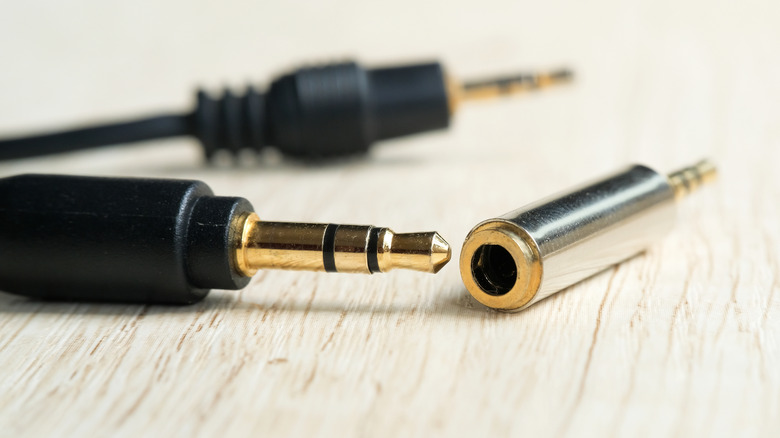
As you might expect from the names, the main difference between these two common headphone jack types is size. A 2.5mm headphone jack measures 3/32 inches, so it's smaller in circumference and length than a 3.5mm jack that measures 1/8 inches (6.35mm measures 1/4 inches). The plug length for a 2.5mm jack is 11mm, and for a 3.5mm jack, it can be anywhere from 14mm to 17 mm. There's also a 4.4mm jack, used in pro audio and telecommunications, but it isn't commonly found in everyday consumer products, so the average person won't ever encounter it.
We know 3.5mm jacks are the most common ones, but where might you find a 2.5mm jack? It's usually in devices like two-way radios, video cameras, and cordless phones, which don't require as much power.
While these jacks are commonly referred to as headphone jacks, they aren't only used for headphones. They can be used with microphones, headsets, electric music instruments, speakers, studio monitors, and more. You'll find 3.5mm plugs in most consumer devices like phones (old models or ones that still include them), laptops like MacBooks, tablets, and gaming systems. They're also used as auxiliary cables, transferring audio from one device, like your headphones, to another, like a speaker. Both 2.5mm and 3.5mm jacks support stereo output, but 3.5mm is generally associated with use in higher-quality devices. They are not interchangeable, but you can use an adapter.
3.5mm is the one you know
Most devices you use probably come with a traditional 3.5mm headphone jack that has a diameter of about 15mm. But you may find larger 1/4-inch jacks with products like professional headphone amps and pro-level headphones, as well as audio interfaces, mixing consoles, recorders, and DACs. If this is the case, the device will probably come with, or recommend a 3.5mm-to-6.35mm adapter so you can still connect them to the same source devices if desired.
The reason 3.5mm jacks are less commonly found in smartphones is that most brands encourage the use of wireless headphones instead. You can also find wired headphones that connect to the same USB-C port you use to recharge the phone. Brands like Apple, Google, and Samsung have foregone 3.5mm jacks entirely with most, if not all, of their latest devices. Some brands, like Motorola, still have new phones with a 3.5mm jack.
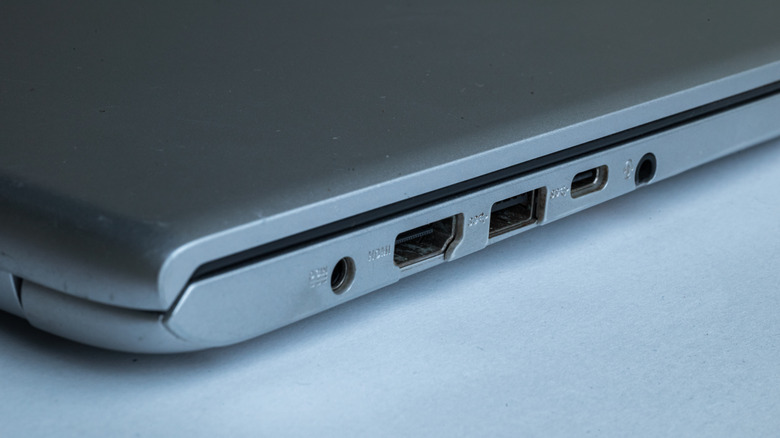
When it comes to laptops, tablets, and lots of other audio source devices, if you look around the perimeter or on the front or bottom and you see a jack, it's almost always going to be a 3.5mm jack. Unless you're into studio audio, instruments, or you're using a product like a video camera or walkie-talkie, you won't come across the others.