

Blue Lights In Japan Are Doing More Than Just Changing The Mood
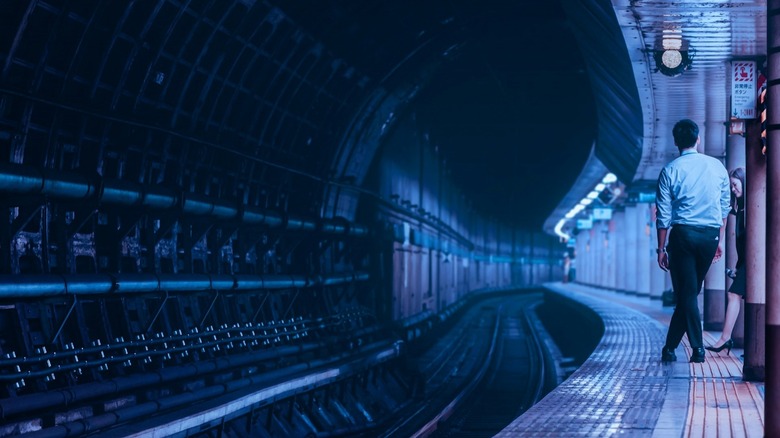
The color blue is often used to symbolize melancholy or sadness, which is an interesting juxtaposition once you realize how Japan is using the color for lighting. In psychology, blue is also considered to be a calming or soothing color and that's why in Japan, blue lights are installed in various places to reduce suicide rates. The lights have been installed above isolated platforms, where people are most likely to jump, in 29 stations along the Yamanote Line.
The bulbs are brighter than standard fluorescents and seem to help calm those bathed in the glow. A study from researchers at the University of Tokyo showed that the lights reduced suicides by 74% over a 13-year period. However, another study published in the National Library of Medicine argues that blue lighting is less effective at prevention than originally thought.
Railway suicides are a prevalent problem in Japan. There were over 970 such attempts between 2002 and 2006 spread across Tokyo, Kanagawa, and Osaka. From 2007 to 2009, railway suicide rates increased on the East Japan Railway Company's lines, which led to the installation of blue lights in an effort to make the platforms safer. Companies like Circadian Optics Light Therapy, of Shark Tank fame, have even taken the concept and adapted it for soothing indoor lighting.
Why blue lights are being used
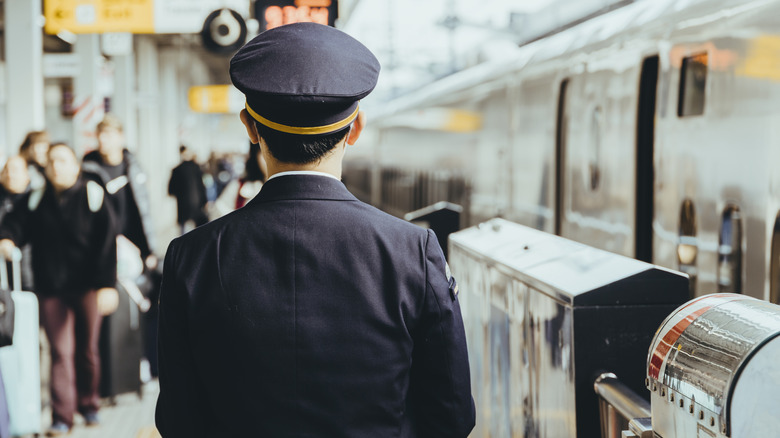
The Japanese have immense pride in their punctual trains and go to great lengths to ensure they're on schedule. So when there is a delay, it quite possibly can be due to a suicide, a very human problem that has wide-ranging ripple effects. Railway suicides cause major disruptions in urban centers, including extensive commuter delays and financial losses when the trains shut down. Many solutions have been proposed to improve safety around this, including the installation of airbags on the front of trains, placing barriers that keep the tracks isolated, and raising tracks above ground level.
The blue light solution is another option that has shown promise, is relatively low-cost, and more straightforward to implement than other ideas. The working theory is that a combination of inclement, cloudy weather and a lack of sunshine leads to increased suicides. Specifically, multiple days in a row of bad weather. These special blue lights aim to calm those feeling down. Interestingly, blue light from screens is associated with sleep disruption and the interruption of the body's natural circadian rhythm.
That's where the idea that your phone's blue light is ruining your sleep comes from. However, it's really just an oversimplification of the actual problem — poor habits. General exposure is not a bad thing, which is why exposure to white light during the day can have positive effects, like boosting your energy and alertness or improving your mood. That's partly why some experts argue there's simply no need for blue light glasses. It may not be as harmful as we think.