

Why Are Nuclear Fuel Rods Thrown Out With 90% Of Their Potential Power Left?
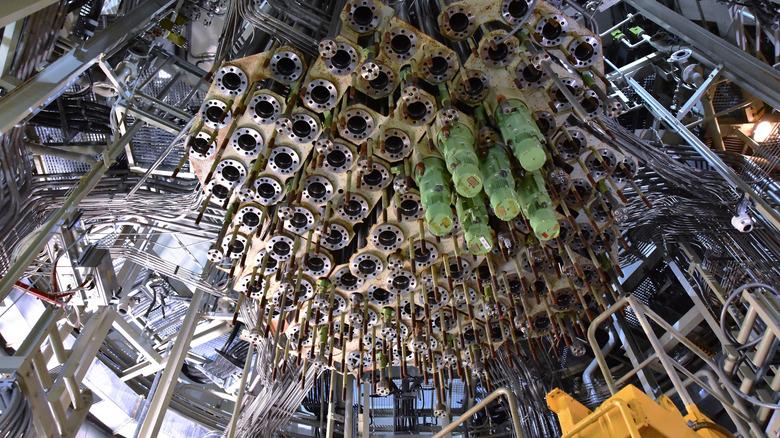
Nuclear reactors generate power through a process called nuclear fission, using uranium for fuel to release an immense amount of energy as heat. Ceramic pellets with low-enriched uranium are stacked in metal cladding, and assembled in what we know as fuel rods. Those rods are inserted into a reactor to generate power, and removed and replaced when they're spent. But that spent waste isn't "empty" in the traditional sense. Nuclear fuel rods contain about 90% of their potential energy leftover. While a lot of unused fuel is left behind, it cannot power a nuclear reactor without being repurposed.
That's because the spent materials still contain approximately 96% of the original uranium. During use, the fissionable U-235 reduces to less than 1%, meaning it's no longer viable to power reactors. Meanwhile, unusable waste products make up 3%, and the final 1% is plutonium produced while in the reactor. The United States disposes of this waste, sometimes referred to as nuclear waste, at more than 70 sites in 35 states. It is safely and securely transported and disposed of, but if it were recycled it could still be useful. Every four to six years per reactor, rods are replaced, generating over 2,200 tons of waste per year. That's a lot, enough that you could argue nuclear power is not 100% clean.
Why let it go to waste? A big reason for that is raw uranium ore is significantly cheaper to mine and process. Reprocessing is deemed too costly and risky by many. Although, other countries successfully recycle nuclear waste, like at France's Orano reprocessing facility in La Hague. Leftover uranium and plutonium are extracted and stored in a liquid form until they can be solidified to manufacture new fuel.
Reprocessing and recycling is not a simple or straightforward task
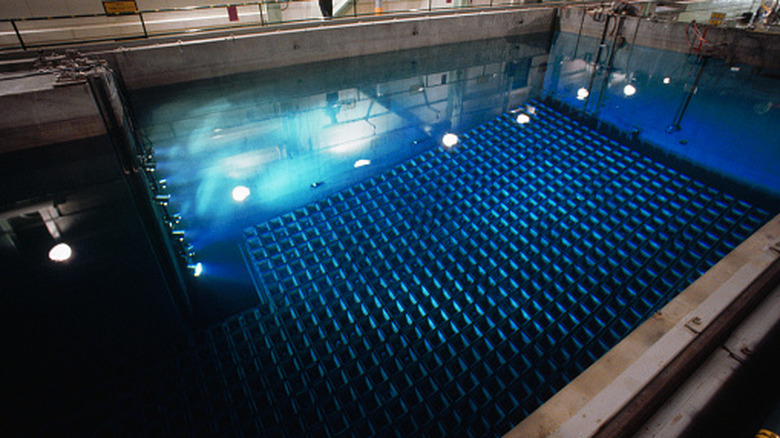
A reason we dispose of and store waste, rather than reprocess it, is that it's costly and it's not exactly simple to achieve. The U.S. government stopped reprocessing in the late 1970's for this reason and also stopped experimenting with reprocessed fuel. Another proposed form of recycling from nuclear power startup Oklo relies on a process called "pyroprocessing," which introduces the waste materials into molten salt. From there the usable fuel is separated and turned into a gas. It's costly, dangerous, and could potentially create weapons-grade materials. These concerns have significantly reduced its proliferation, especially when uranium is affordable and readily available. An MIT study from 2003, updated in 2009, went as far as recommending the use of fresh uranium for the next 50 years, explicitly calling for it to be discarded after use instead of repurposed.
Another hang-up is that the waste has to be transported to a reprocessing facility usually a greater distance than simple disposal, sometimes even internationally. Once processed, it would have to travel back to reactor sites. Experts argue the longer transit time leaves more room for accidents or theft. Supporters, like Oklo, argue the recycled fuel materials would not be useful for weapons manufacturing, scientists aren't so sure. Ultimately, the consensus is the associated risks, costs, and the time involved may not warrant the effort.
Moreover, nuclear reactor development has advanced considerably, with the next-generation of nuclear power about to take a big step forward. That may result in efficient reactors that produce less waste than their forebears — though they will still leave behind waste, just in smaller quantities.
Reprocessing facilities do exist and are in operation currently
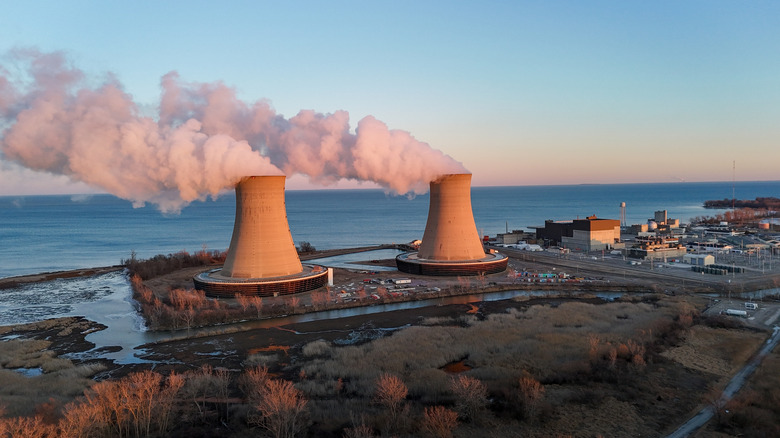
There are projects working to make recycled nuclear waste viable. Oklo is working on facilities to demonstrate new reactors that can work with reprocessed materials as fresh fuel. It's worth noting the plan there is to use pyroprocessing to repurpose nuclear waste. Critics claim the technology has been around for a long time and its viability is not backed by verifiable research.
France's repurposing facility is a highlight, and Orano's La Hague and Melox plants have been in operation for more than 50 years producing a recycled nuclear waste product called MOX. Japan is working on a similar facility, though it has been delayed several times since it's initial construction in 1993. Before that, Japan shipped its waste to France and the U.K. for reprocessing through Orano. MOX fuel still produces waste, which brings us full circle to the initial problem: Even after being recycled, the waste has to be disposed of and stored safely somewhere. MOX fuel cannot be reprocessed or reused, it's effectively spent. What do we do with that waste?
As nuclear technologies continue to see innovation, this does seem like a growing problem. Theoretical nuclear batteries could change everything potentially powering devices for decades. But the next question is, what's going to happen with the waste? The waste may always be a concern when it comes to nuclear solutions.