

Not Wind, Not Solar: Mini Nuclear Reactors Could Fix America's Energy Problems
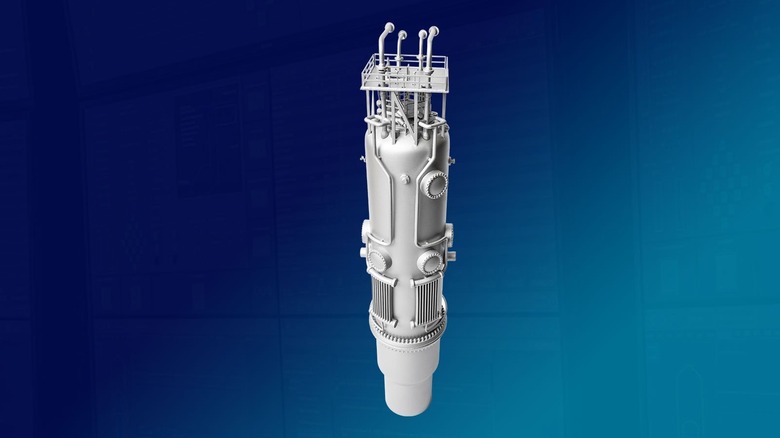
America's nuclear boondoggle may be coming to an end, as the Department of Energy looks to deploy a new generation of nuclear reactors. Although the U.S operates 98 gigawatts of nuclear capacity, high costs, difficult licensing processes, the specter of nuclear disasters like Three Mile Island, Chernobyl, and the Santa Susana Field Laboratory (possibly the worst nuclear disaster in American history) have stunted its expansion. However, the Trump administration believes that a federal spending surge, eased regulations, and expedited supply chains could reverse this trend. With a goal of reaching 400 gigawatts by 2050, the administration has pinned its nuclear hopes on Small Modular Reactors (SMRs). Supported by a $900 million investment fund, the administration believes that these smaller nuclear reactors are the key to the country's clean energy future.
Advocates claim that SMRs — and their smaller subset, microreactors – are a cheaper, safer, more malleable alternative to traditional nuclear power plants, making them a potentially critical clean energy source. Capable of being deployed in both major cities and isolated rural areas, microreactors could alleviate the mounting energy crisis accelerated by artificial intelligence and other energy-greedy industries. However, critics caution that today's SMRs might incur more costs and nuclear waste per megawatt. Uncertain safety risks amidst decimated safety regulations further complicate the technology's future.
While America's SMR grid remains hypothetical, roughly $15.4 billion in global investments have caused a surge in SMR projects worldwide. To date, however, only two commercial projects are active: Russia's KLT-40S and China's HTR-PM. Roughly 74 new projects are under development, with another 50 pre-project agreements already in place. The U.S., for its part, has made SMRs a pillar of its energy platform. With Silicon Valley entering the fray, the nascent technology could save or doom America's energy future.
Inside SMRs
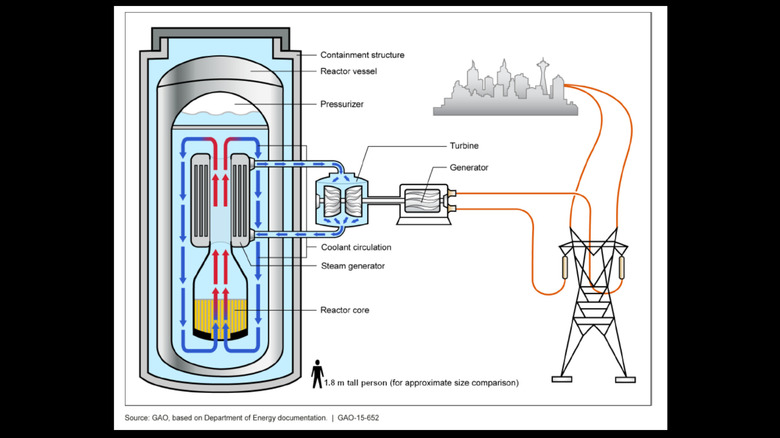
The various kinds of SMRs are differentiated by the substances used to moderate and cool their nuclear reactions. Light water reactors, for example, use water to moderate reactions and cool their reactors, and they are ideal for supplementing traditional power grids. High-temperature gas reactors, which use graphite as a moderator and helium as a coolant, generate mass amounts of heat and are best for specific industrial processes. Molten salt reactors, meanwhile, use liquified salts in both moderation and cooling, and they are also ideal for industrial settings. Sodium-cooled reactors, which replace water with liquid metal, create more efficient energy generation and fuel consumption processes.
Because of SMRs don't require 10-mile safety perimeters, some argue they are more geographically flexible. Advocates also claim that SMRs are safer, as smaller reactors mean less nuclear material and lower heat outputs. The use of passive safety features, which rely on natural laws like gravity and buoyancy rather than external security systems, is also framed as a safety advantage. Meanwhile, the administration has touted the technology's potential cost savings, citing lower capital requirements, shorter construction times, and modular components that can be fabricated in a factory and installed without extensive on-site field work.
Some remain skeptical, as many of SMRs' benefits remain unproven. From a cost perspective, the loss of economies of scale could raise construction and operational costs. The now-cancelled NuScale project in Idaho, for instance, reportedly cost nearly 3 times that of wind and solar alternatives. Some scientists also argue that SMR's perceived savings attest to lower safety requirements rather than increased energy efficiency. Meanwhile, the technology's safety gains are hotly contested. For example, passive safety measures pose unique safety liabilities and are potentially susceptible to natural disasters. SMRs also likely produce more nuclear waste per gigawatt, necessitating novel disposal solutions. A lack of real-world data further complicates safety claims.
The future of SMRs
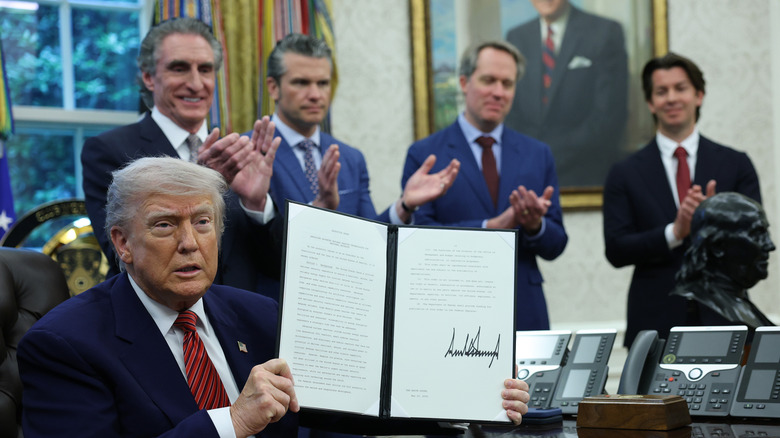
America's nuclear future is both promising and uncertain. To date, the Trump administration has allocated $894 million to reactor projects in Tennessee, Michigan, Indiana, New York, and Nebraska. In May 2026, the Department of Transportation and Maritime Administration (MARAD) announced a joint project to bring the technology to the country's commercial shipping sector. Meanwhile, the U.S. military continues to be at the forefront of nuclear deployment, with the Air Force and Army hoping to open SMR plants by 2027 and 2030, respectively. The Navy, meanwhile, announced in August 2025 that it is seeking energy solutions, including microreactor prototypes. As of April 2026, the U.S. Energy Information Administration (EIA) listed 36 active SMR development projects. Nuclear may even be the key to NASA's lunar ambitions, including potentially putting a reactor on the moon. Still, no American SMR project is operational.
America's private SMR industry has historically struggled to find commercial viability against soaring costs, prolonged development times, troubled licensing, and limited supply chains. Companies like NuScale, Oklo, and X-Energy have struggled to get high profile projects off the ground. However, spurred by the administration's guarantees of expedited approvals, investments from Silicon Valley may turn the tide. Tech oligarchs like Sam Altman and Bill Gates have invested heavily in the SMR industry, while conglomerates like Amazon, Google, and Meta increasingly look to nuclear power to fuel their soaring energy needs. On top of that, on May 18, 2026, a report by the NRC found Dow and X-Energy's Texas SMR project to have "no significant" environmental impact, a major milestone for the industry's forward push.
Some have cautioned that the Trump administration's regulatory dismantling could create more risks than benefits. Others have argued that investing in SMRs comes at the expense of safer, cheaper, and more readily available alternatives like wind, hydro, and solar. On balance, the shift towards small modular reactors is sure to have major consequences for America's energy future.