

Why The Samsung Galaxy A Series Is Cheaper Than The S And Z
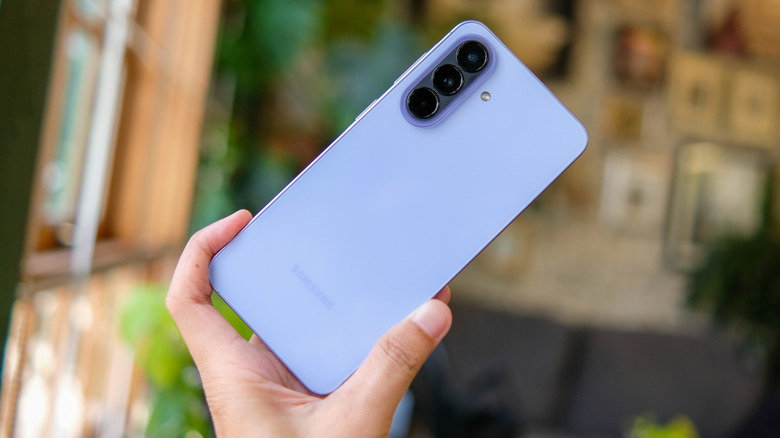
Most smartphone makers follow a "good, better, best" format with their launches. With Samsung's Galaxy line, for example, the latest series includes the Galaxy S26, Galaxy S26+, and Galaxy S26 Ultra. Sometimes, the "plus" variation is simply a version of the Pro or Ultra model with a larger screen. Other times, it has additional upgrades, too. Many brands have started introducing midrange or budget-level options with premium features alongside this trio, under an "A" series for Samsung and Google, or "E" series with Apple's iPhone. These are always cheaper versions, and there's a reason.
When it comes to Samsung's A-series line, which was first introduced more than a decade ago, the latest models are midrange options with a pared down feature set mainly pertaining to performance, battery life, and photography. For this reason, these phones are always cheaper than the company's flagship S and Z (foldable) lines. But the latest A-series models still boast pretty impressive features that will meet the needs of many customers at a fraction of the price.
Why Samsung Galaxy A series phones cost less
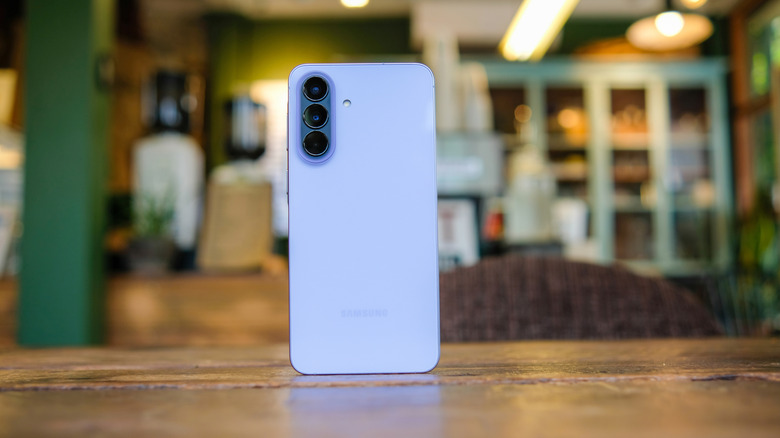
Galaxy A-series phones are generally cheaper because they have less powerful processing and, as a result, are missing some features or don't perform as well with intensive tasks like gaming. They might be durable, but often use less strong materials in their builds. While some models might have the same battery size as a base Galaxy S series device, since the processor isn't as efficient, the battery might not last as long per charge. That said, if you're doing less intensive tasks with the phone, you might be able to extend the battery life. A-series phones usually don't have as many cameras or feature camera sensors with lower resolution.
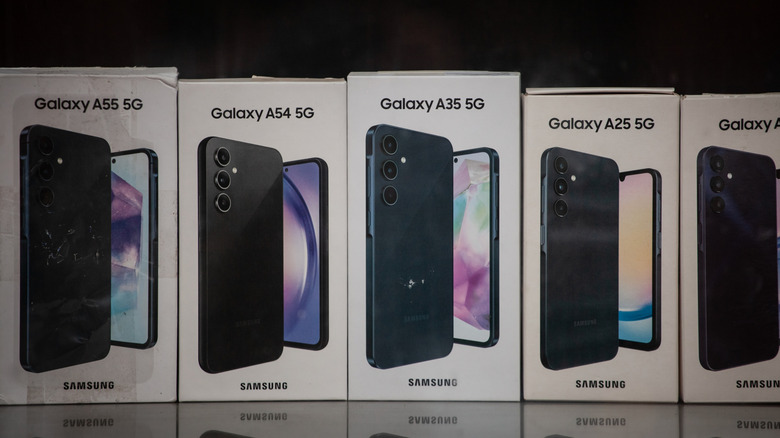
As a comparison, for example, consider how the latest Samsung Galaxy S26 stacks up to the Galaxy A57. The Galaxy S26 has a smaller, higher-res, brighter, more durable screen along with a sleeker and lighter design. It is powered by a higher-end Snapdragon processor and has more RAM, while the U.S. version has more storage options. The Galaxy A25, a $300 Samsung phone Consumer Reports recommends buying, has a large, Eye Care-certified screen for reducing blue light, decent cameras, and a battery that can last for up to two days per charge. This makes it a high-quality, yet affordable phone that will be more than enough for average, everyday use, even if it isn't as ultra-powerful as S- and Z-series models.
Why get an A-series phone?
Even though Samsung Galaxy A-series phones aren't as powerful, they still have a lot of the same features. The Samsung Galaxy A57, for example, has a similar triple-camera system to the Galaxy S26, but it replaces the telephoto lens with a smaller macro one. It also has a larger battery. Instead of Galaxy AI, the latest A-series phones have Awesome Intelligence, a limited AI feature set that the phone's lesser processor can handle. The newest A-series phones also meet ratings like IP68 for temporary submersion in water, even if they aren't made with the same materials.
Samsung's Galaxy A-series phones are decent devices with great value. You might get more from a newer A-series phone like the Galaxy A57 than you would with an older flagship-level Galaxy device. A-series phones even get the latest OS updates, with the aforementioned Galaxy A57, A37, and A25 counting among the Samsung phones that will be updated to Android 17. You may find that a premium A-series model is a better fit for your needs than a new flagship one. For teens and light users, Galaxy A-series phones offer a nice balance of value and feature set. Some models further down the line, like the Galaxy A37, are budget options with a plastic frame and older processor, which further explains the price drop. But you can find Galaxy A-series phones without many concessions that sell for less because of the few concessions they do have.