

5 Sci-Fi Horror Movies So Disturbing You Will Only Watch Them Once
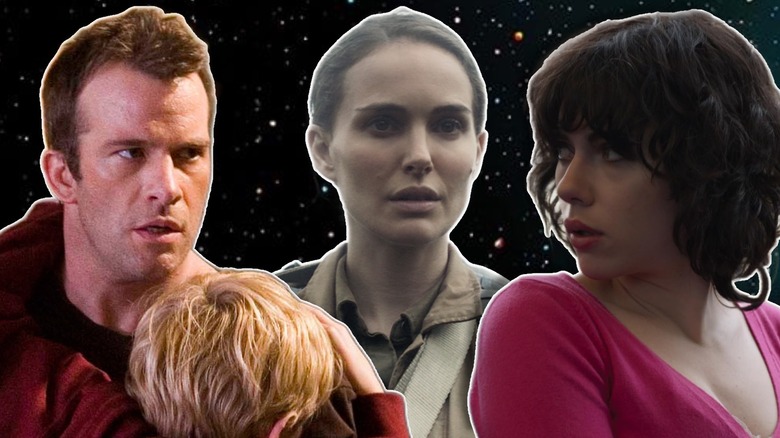
Some of the best sci-fi movies are the ones that leave you hopeful for a better tomorrow. Where some daring space voyage ends with humanity being saved, or a trip back through time saves the future that could've been so much worse. Heck, some films leave you feeling a little bit happier over the prospect of not being alone in the universe if it means aliens can be great pals or show you the secrets of space if they're in a giving mood.
But while there are some stories that see science save the day, there are others that make you terrified of what can happen if humanity goes where it doesn't need to. A trip into the great unknown, or a science experiment gone wrong can be a nope-riddled watch that you never want to go back to, courtesy of its unnerving subject matter, or simply when its packed with images that find themselves seared into your brain long after the credits roll.
It's with that, we've put together a nasty list of disturbing sci-fi films that we don't blame you for never returning to. Give them a watch if you're feeling brave enough, beginning with a massively overlooked sci-fi effort that might have one of the scariest monsters to ever grace the screen.
Annihilation
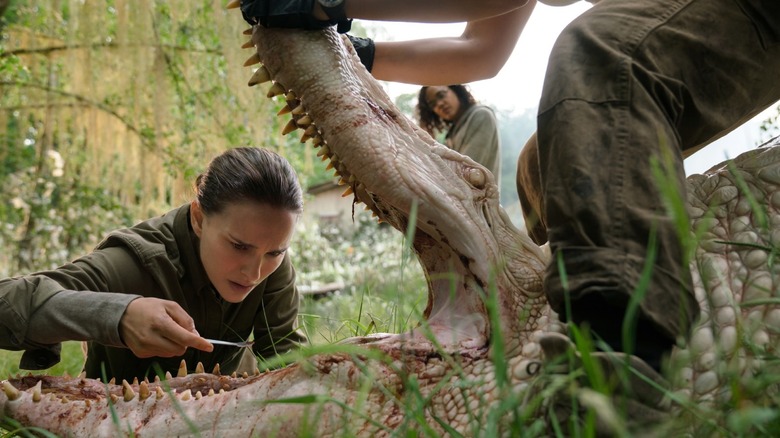
Alex Garland has become a prominent voice in sci-fi, and the messages he shares are often unflinching and bleak, lingering long after you've finished absorbing them. That's precisely the case with his immensely overlooked and near-perfect project starring Natalie Portman and Oscar Isaac, "Annihilation." Portman plays Lena, a lead scientist who, along with a small team, is tasked with investigating the Shimmer, a mysterious land dramatically altered by a meteor that crashed down three years earlier.
Plants and wildlife have mutated as a result of the event, and no one besides her husband (Isaac) has returned after attempting to study it. Nevertheless, Lena sets out in search of the truth and, in doing so, encounters haunting otherworldly phenomena that leave her questioning her own identity.
The deeper Lena and her team venture into this magic garden, the worse the group becomes, as the Shimmer casts its unnatural light on all of them and sends some of the team spiraling as they try to understand its secrets. But for every lifeform that braves this and is eventually overcome by the alien presence that has scorched the land, unique and truly monstrous mutations form that stalk our explorers, with one highlight being the bear mutation that roars like one of their own and looks like it marched right out of "The Thing." It's fitting, then, that the film ends on a similar note, with Lena's journey leaving us just as lost as she might be after her close encounter with an otherworldly being we pray we never come into contact with.
The Fly
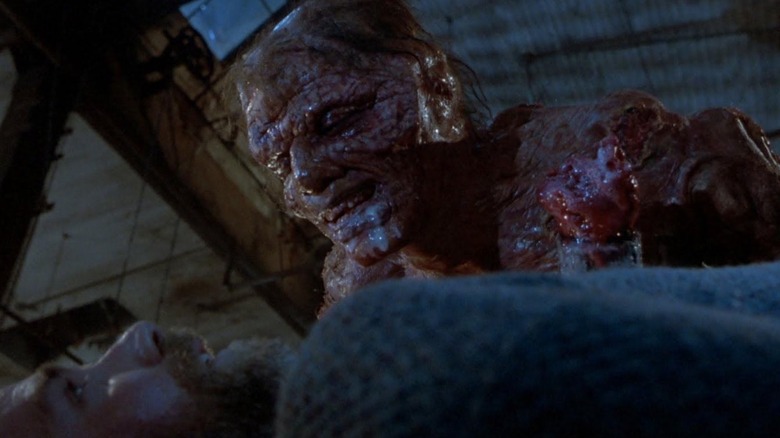
It might be a favorite for some, but it's totally understandable if David Cronenberg's "The Fly" only gets a single watch, on account of just how bleak things get for Jeff Goldblum and his home-based science project. As with every breakthrough in science, Goldblum's Dr. Seth Brundle is practically climbing the walls over how things have gone when he moves instantaneously from one telepod to another, unaware that he took a housefly along with him.
From there, Brundle becomes less the cool customer that Goldblum is known for and more of a twitching, skin-peeling monster that Geena Davis is afraid of. While it might not get as much love as it deserves nowadays, "The Fly" still makes for an uncomfortable watch because of not just Seth's monstrous decline, but the doomed relationship that blooms from it.
This is perhaps Cronenberg's most tragic film, as Davis' daring journalist tries her best to pull her new love interest back from the brink, but sadly finds him too far gone to make a comeback. It's why the most unsettling moments in the film aren't just watching Goldblum lose an ear, or spit acidic vomit, but ushering his lost love to do what needs to be done when his final trip through the telepod becomes his undoing.
The Mist
Frank Darabont had already adapted one of Stephen King's novellas in 1994 with "The Shawshank Redemption," which is still ranked on IMDb as the greatest movie of all time. But just as that movie ended on a hopeful note, his second stint with King in 2007 ended on perhaps one of the most soul-crushing finales ever.
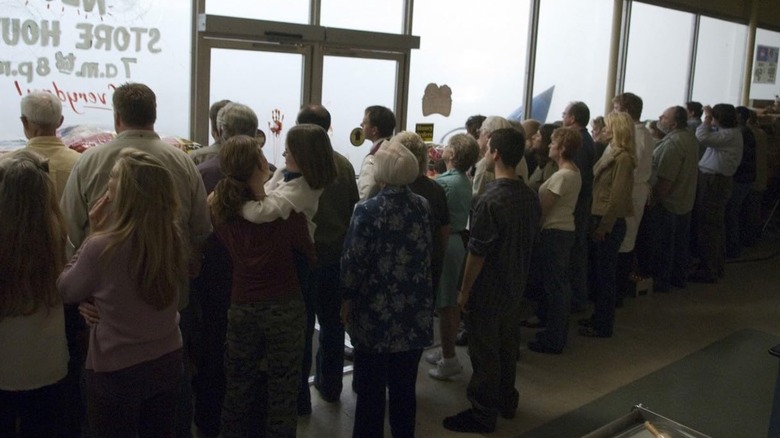
"The Mist" sees Thomas Jane as a devoted father trapped in a store with a band of strangers after a mist with supernatural occupants blankets the town. From there, he's forced to do everything he can to keep his sanity in check and his son safe, not only from the dangers lurking in the unknown outside, but also from the equally despicable monsters that are revealing themselves in the other townsfolk stranded in the building.
Part creature-feature, part post-apocalyptic horror, Darabont does a great job of delivering another chilling tale from King's bookshelf, which would make it a manageable watch and a repeat viewing for many. The issue, however, comes in the film's final moments, which will go down as one of the most painful twists in cinema history. It also explains why that kind of somber tone was rampant throughout much of "The Walking Dead's" early episodes, when Darabont was the showrunner. And yet, even after contributing to one of the greatest zombie television shows ever made, it doesn't hold a candle to our last few minutes with Jane that we rarely wish to revisit.
Event Horizon
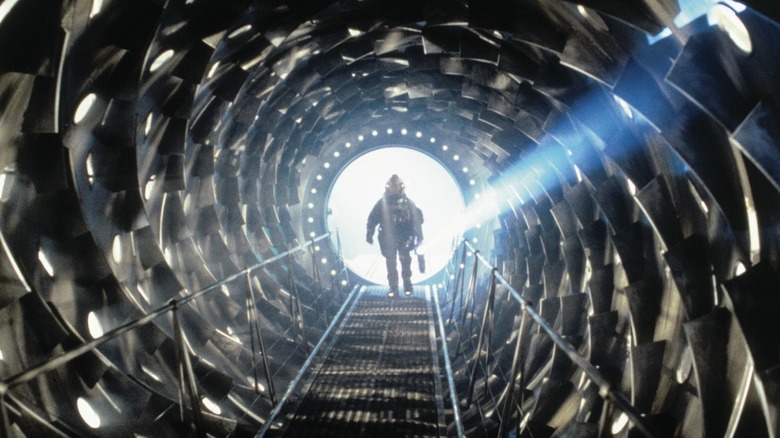
Paul W.S. Anderson's cult classic horror, "Event Horizon," was a box-office bomb upon release, and given how evil and unhinged it is at times, it's a shame it didn't stay lost in space forever. Crossing the flight paths of films like "Alien" and "Hellraiser," the 1997 scarefest follows a crew led by Laurence Fishburne as they dock with the Event Horizon, a spaceship that's been missing for seven years and returned with something hellish onboard. Everyone's eager to ditch the hunk of junk, but standing in their way is Sam Neill as Dr. William Weir, the brain behind this space-aged death trap that's boldly gone where no one should've gone before.
While not quite as timeless as "Alien," the gnarly visuals and Neill's swift descent into hell make for a chilling watch. As Fishburne's heroic captain rightly points out, "This place is a tomb," but the wild set designs, including tunnels made of circuit boards and an oversized fidget spinner, are the cause of all this. As a result, it provides even more heinous ways to kill this unsuspecting crew.
This really feels like a haunted house on the edge of Neptune, and has had multiple attempted revisits in recent years. Since 2011, efforts have been made to revisit the Event Horizon through a remake or a television series set to stream on Prime Video, but none have materialized. Whoever leads the voyage, we just hope it isn't as disturbing as this one.
Under the Skin
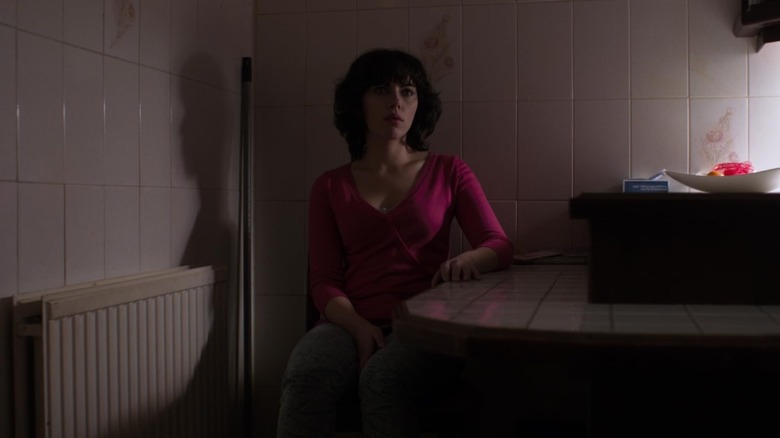
Director Jonathan Glazer enlists the blockbuster talent of Scarlett Johansson to lure and consume naive Glaswegian men in his 2013 sci-fi movie, "Under the Skin," and the result is one of the most uncomfortable sci-fi films ever made. Based on the book of the same name from Michel Faber, Johansson plays the The Female, a mysterious being posing as a woman that uses her looks to get men in the back of her van and do unthinkable things to them.
The film is a head trip, and made even more uncomfortable by the supporting cast that were carefully picked to come face-to-face with Johansson's space siren, given that they had no acting experience prior. It leads The Female's close encounters to be realistic and raw, allowing things to get even more excruciating when things go south, or when the supernatural elements slowly invade the movie.
One such instance involves Johansson's character watching a doomed rescue mission at sea, while a baby is forced to witness her parents perish. It's a harrowing sequence to sit through, and the lowest high point of a film that'll guarantee you wanting to go outside, touch grass and be glad that you've never met Johansson in Scotland.