

Sony's Next-Gen 'True RGB' TVs Could Give OLED A Run For Its Money
We may receive a commission on purchases made from links.
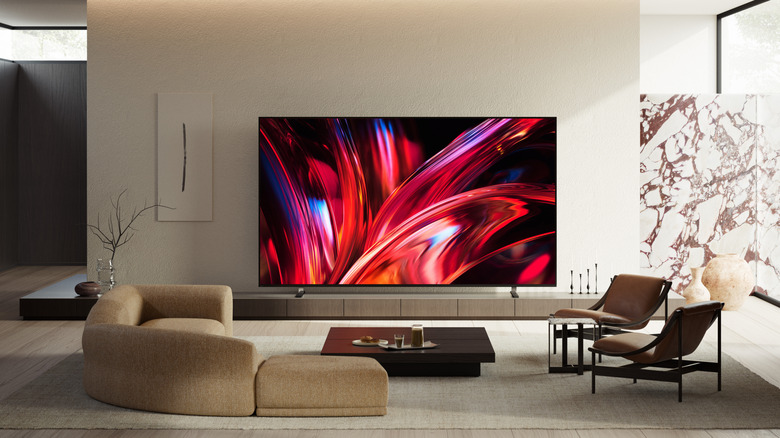
Sony's new Bravia TVs are finally here, and the company has two models on offer as part of its latest premium TV lineup. There's the high-end Bravia 9 II and a cheaper Bravia 7 II. The Bravia 9 II is available in 65, 75, 85, and 115-inch variants, while the Bravia 7 II is offered in 50, 55, 65, 75, 85, and 98-inch variants. With an MSRP ranging from $1,600 to $9,000 for the Bravia 7 II and from $3,600 to $31,000 for the Bravia 9 II, Sony's flagship TVs are certainly not what you would consider cheap, and the company isn't known for being a cheap smart TV brand either. Sony's asking prices might make you think its TVs use OLED technology, but they don't.
Part of the reason why they aren't cheap is that they are using the company's proprietary True RGB display technology, which is being pitched as an alternative to OLED. Sony teased its True RGB display technology in April; the technology independently controls red, green, and blue LED light sources, which the company says provides the best aspects of both Mini LED and OLED technology. Sony says this has enabled it to achieve the largest color volume in the company's history.
Sony's True RGB Bravia TVs are here to challenge OLED
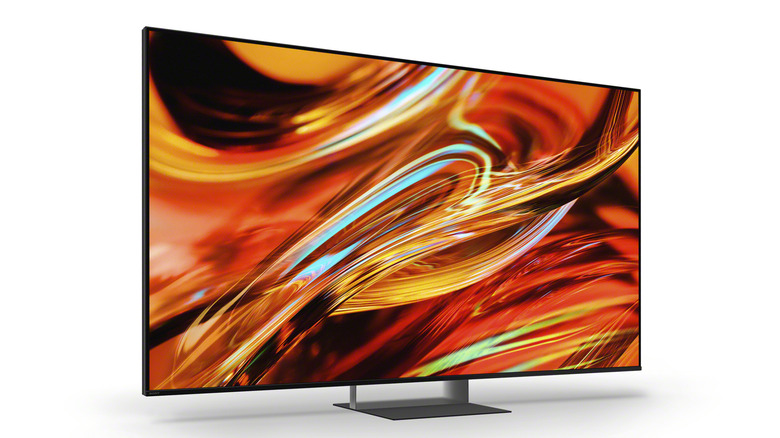
OLED is considered among the best display technologies, if not the absolute best. So if you ask anyone to name their pick for the best type of TV, it'll likely be an OLED one. OLED is considered the best due to its use of self-emitting organic compounds, which deliver true blacks, vibrant colors, a high contrast ratio, and wide viewing angles. Sony wants True RGB to take on OLED by using independently controlled red, green, and blue LEDs, promising precise color reproduction.
The company says the technology can deliver high contrast, color gamut, and depth, as well as wide viewing angles. True RGB is also said to offer higher brightness and picture accuracy. Mini LED is usually considered second-best to OLED, and with Sony pitching True RGB as offering the best of both worlds in terms of brightness, picture accuracy, and color, this new display technology could give OLED a run for its money.
Sony's enthusiasm for its True RGB technology is unmistakable, but does this mean an end to OLED? It's too early to tell. Besides, Sony itself doesn't see True RGB as an 'OLED killer'. In a demo with Tom's Guide in early April, the company made it clear that True RGB isn't meant to replace OLED. Instead, it only exists to address the disadvantages of OLED displays, like brightness and size scalability. Regardless, the existence of these TVs is an important step forward for LED display technology and is a welcome addition to the premium market, especially if Sony's performance claims hold up.