

5 Of The Best Android Phones Without AI

We may receive a commission on purchases made from links.
Finding an Android phone completely devoid of AI in 2026 can be tricky because most modern smartphones, especially the flagships, have AI capabilities built in. For example, Google Pixel phones have Gemini Nano, Samsung Galaxy S series has Galaxy AI, and Motorola smartphones have Moto AI. If the Windows Phones were still around, those would probably be running Copilot.
While manufacturers frame the new technology as a helpful tool that streamlines your experience, a growing subset of users want an AI-free phone because they find it intrusive, distracting, and a privacy risk. As long as a phone doesn't have on-device AI, it doesn't have AI in the strictest sense. If it has system-level AI features that you can completely disable, it also deserves a spot on the list. The same goes if it has AI apps like Gemini, Copilot, and ChatGPT pre-installed, since these are optional and can be uninstalled.
Looking at older and minimalist Android phones makes sense since many of them don't support the AI features manufacturers are pushing. There are also a couple of recent phones that qualify, but the selection lacks flagship devices. With those caveats in mind, here are some options to consider if you're looking for an AI-free smartphone.
Google Pixel 7a
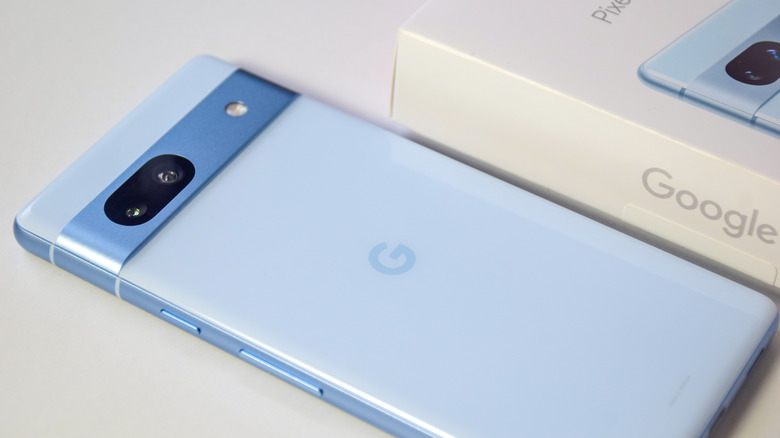
The Google Pixel 7a has a Tensor G2 chip inside with 8GB of RAM. It's quite snappy even in 2026, but not on the level of current flagships, and tends to overheat quickly. While the chip is capable of advanced machine learning for processing images and translating languages faster, you won't find any forward-facing AI features, such as Circle to Search, Gemini Live, Magic Compose, and Pixel Screenshots, that came with later Pixel phones.
That's because the Pixel 7a doesn't have the hardware capability to run Gemini Nano. That's good news in this case since that's the very thing you're trying to avoid with this phone. It does come with AI-enabled apps and features thanks to Gemini, but you can completely disable those by uninstalling the app and toggling off a few settings.
When the Pixel 7a was released in 2023, it was one of the best Android phones you could get on a budget, with a launch price of $499. Since Google discontinued it, you can get a used or renewed Google Pixel 7a for about $200 on marketplaces like Amazon. While the phone had a decent battery life when it launched, any unit you buy now will probably have some degradation. So it's best to keep your battery expectations in check. It's also one of the Pixel phones that will receive updates all the way to Android 17, so you're good on support for a few more years.
Motorola G Power (2026)
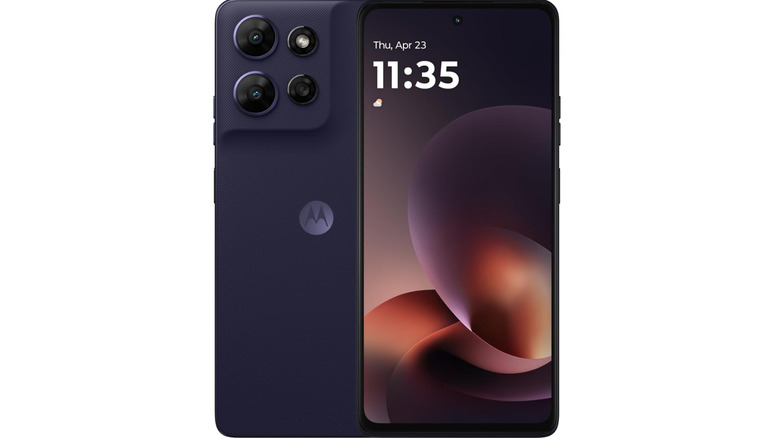
Currently, you can only find Motorola's on-device AI, Moto AI, in flagship smartphones like the Razr and Edge series of smartphones. The Motorola G Power (2026) is part of the Motorola G series, which has been running since 2013, and it only supports app-based generative AI capabilities. You only need to remove any pre-installed AI apps like Gemini and ChatGPT to make it AI-free.
This is a budget phone, which explains why it lacks hardware capable of running generative AI locally. You can get the Motorola G Power (2026) for $299.99, but you will have to come to terms with the fact that all you'll be using it for are daily tasks, such as browsing, casual photography, and streaming. You just won't be playing any demanding games or professionally editing photos with its MediaTek Dimensity 6300 chipset.
Regardless, the Motorola G Power (2026) is still a modern device that you won't have to spend a fortune on. Its eight gigabytes of RAM is already capable of multitasking smoothly, but it gets extra memory from its RAM Boost technology, which offloads some of the tasks to internal storage when apps need it. Speaking of storage, the phone comes with 128 gigabytes, but it's expandable to a terabyte since it's one of the Android phones that still come with a microSD slot.
Samsung Galaxy A16
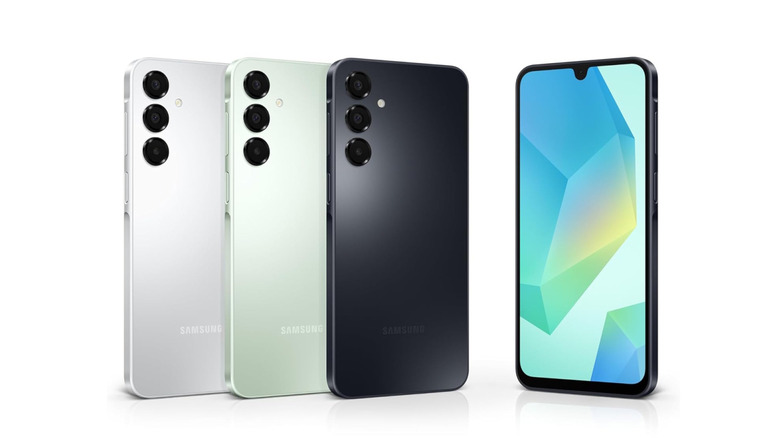
It's hard to find Samsung phones without AI that are still supported. It used to be the case that an Android's software life cycle was between two and three years, but Samsung has been extending that for its flagship and midrange phones. So it was a bit of a surprise when it announced that the Samsung Galaxy A16, which was released in January 2025 in the U.S., would get six years of Android updates. This is not even a midrange phone from the Galaxy A series, like the Galaxy A57 (this has some Galaxy AI tools baked in), but an ultra-budget phone that you can get for less than $150.
The Galaxy A16 has a follow-up, the Galaxy A17, which has some Galaxy AI features integrated into it. As an entry-level phone, you can expect the Galaxy A17 to do everyday tasks well, like the Motorola G Power (2026). These phones just aren't built for heavy-duty tasks and might heat up quickly if you push them. On the plus side, you get a bright, vibrant 6.7-inch Super AMOLED display and a 5,000 mAh battery that can easily last you all day. You can disable most or all of the AI features on this one, too.
Minimal Phone
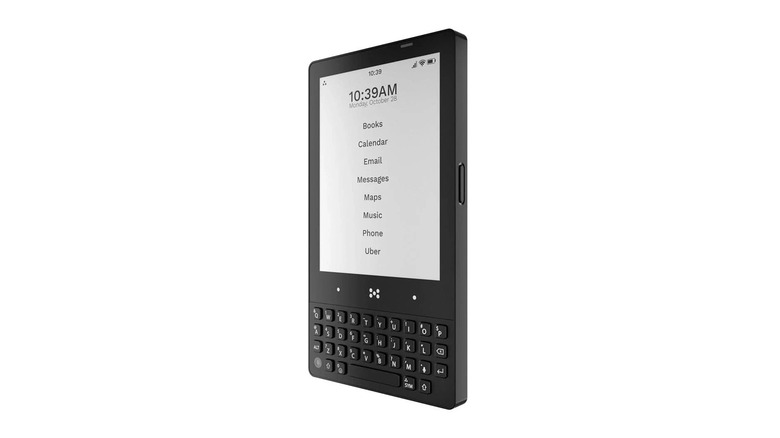
A minimalist phone is a great choice if you want to escape AI. But it goes beyond that in helping escape some of the modern trappings of smartphones, such as excessive screen time, notification overload, and bloated, distracting user interfaces. The Minimal Phone, which came out in February 2025, runs on the Android 14 OS. You have full access to the Google Play Store, allowing you to download the apps you need, such as Spotify, WhatsApp, Google Docs, Google Maps, and banking apps. So it's not a completely dumb phone, but something that sits somewhere in the middle.
This phone has a design that evokes BlackBerry vibes, with a QWERTY keyboard that offers tactile feedback. It has a 600-by-800-pixel E Ink touch panel, which is a display that aims to mimic ink on paper. There are no distracting colors or visual overload from glare and brightness, making it comfortable on the eyes.
For a starting price of $499 for the version with 6 gigabytes of RAM and 128 gigabytes of internal storage, the Minimal Phone might not be worth getting just to escape AI, but it can be a good purchase if you're truly looking for a phone that will reduce your screen time as well. Other sticking points beyond the price tag include a hard-to-use camera, the lack of 5G support, ghosting while refreshing the screen, and a slow touchscreen at times. But for a smartphone that tries to give you a basic experience, the Minimal Phone is one of the best options.
Mudita Kompakt
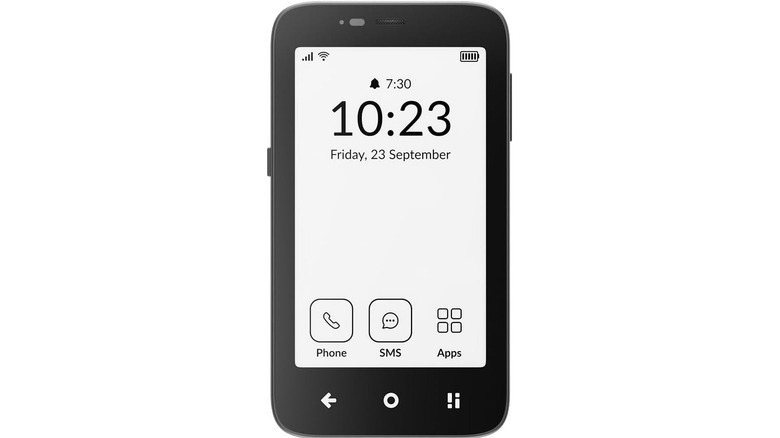
Another minimalist Android phone that can help escape AI while reducing your screen time is the $439 Mudita Kompakt. It has an E Ink display (800-by-600 pixels) and runs on a custom Android operating system called MuditaOS K. While the Minimal Phone still keeps you tethered to Google, this one has been completely stripped of all Google apps and services (de-Googled). It's a dumb phone in the purest sense, and that can be a good thing, especially if you're looking to mostly escape the Google ecosystem. It just has a heavier emphasis on simplicity over smart features.
You won't find the Google Play Store, Gemini, or any other third-party apps here, for that matter. It goes a step further than the Minimal Phone with the minimal experience in that regard. The apps on the Mudita Kompakt are specifically designed to run on its E Ink display. You can sideload third-party apps if you have the Android Package Kits (APKs), but you aren't guaranteed smooth performance.
The Mudita Kompakt's lack of Google ties also enhances privacy. You don't have to worry about ads and tracking. You can easily switch the phone to an offline mode with the press of a button, which disables cellular, GPS, Bluetooth, microphones, and the camera. All the core offline functions and apps will still work, including the maps for when you need navigation.
How we picked these phones
The biggest question we had to ask ourselves when selecting these phones is what exactly it means for a phone to not have AI. If we include machine learning, which is a subset of AI, then we'd only have dumb phones like the Mudita Kompakt on the list. The rest of the phones have machine learning algorithms running in the background to improve performance, the camera, battery life, and other specific tasks. These are not things that bother the average person about AI.
What we do mean by no AI is the lack of those features offered by dedicated AI chips, such as generating text and images, real-time language translation, removing objects from photos, and having human-like conversations. So, machine learning is okay if we look at AI narrowly. Also, while OS updates can add AI capabilities to the phone, we looked for clear ways to opt out of the experience entirely. This is why phones like the Google Pixel 7a made the list.
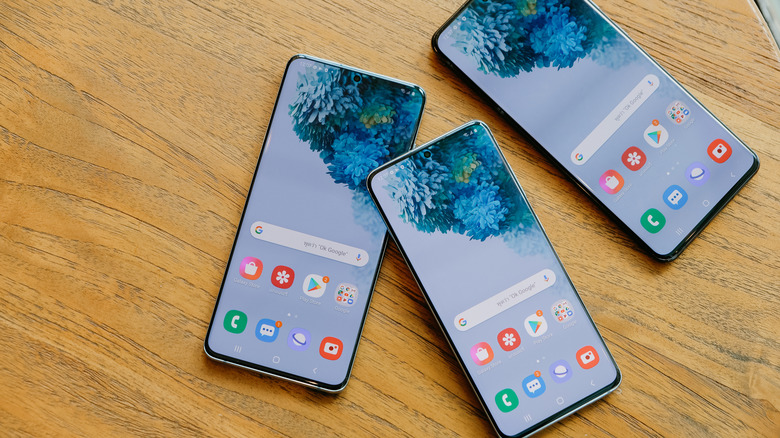
We also excluded phones that weren't supported by the original equipment manufacturer (OEM). When software support ends, that's when you officially know that an Android phone is too old. For instance, we could have easily included the Samsung Galaxy S20 Ultra on the list because it is still a usable phone in 2026 and has no AI. However, Samsung stopped supporting it in 2025. The longer an OS stays without updates, the more likely it is that hackers will find vulnerabilities to exploit.