

Wall Mount Vs. TV Stand: Which Is Better For Your Home Theater Setup?

When putting together a home theater setup in your living room, home cinema, or any other such space, one of the most basic decisions you have to make is how to install and position your TV. You basically have two main options: wall-mounting the TV or propping it up with a TV stand. Neither option is strictly "better" than the other. You should account for a range of factors (including your personal preferences) when deciding whether to use a TV stand or mount the TV to your home theater's wall.
Your overall approach to interior design and aesthetics will certainly be one factor worth keeping in mind when making this decision. That said, you should also consider the practical realities of your living situation (such as whether you own or rent) when deciding how to install a TV in your home theater. By accounting for these details and familiarizing yourself with the pros and cons of each option, you'll get a better sense of how you should place your TV.
Wall-mounting a TV: Pros and cons for a home theater setup

There are certain situations when you shouldn't wall-mount a TV, even if you'd otherwise like to. For example, maybe you're renting. Unless you get permission from your landlord, drilling holes to mount a TV on the wall is likely a no-no. Similarly, wall-mounting might not be an option if the walls don't have sufficient strength to support a TV. You might also reconsider a wall mount if you like to rearrange your space from time to time. Removing a wall-mounted TV and positioning it in another part of the room is more difficult than moving a TV on a stand.
However, there are instances when a wall mount might be the better option. Perhaps you want to keep the floor space as uncluttered as possible. A wall mount is preferable in this case. Wall mounts also tend to offer a more minimalist vibe that can align with modern interior design trends. A wall mount may also provide you with the flexibility of installing the TV at the perfect height and angle for comfortable viewing.
You may also consider a wall mount if you have young kids. A TV on a stand can tip over if someone knocks into it. That's less of a concern with a wall mount. In addition, although drilling might not be an option in a rental unit, there are various types of wall mounting options (such as tension-pole mounts and adhesive brackets) that don't require drilling.
When a TV stand is better for a home theater setup
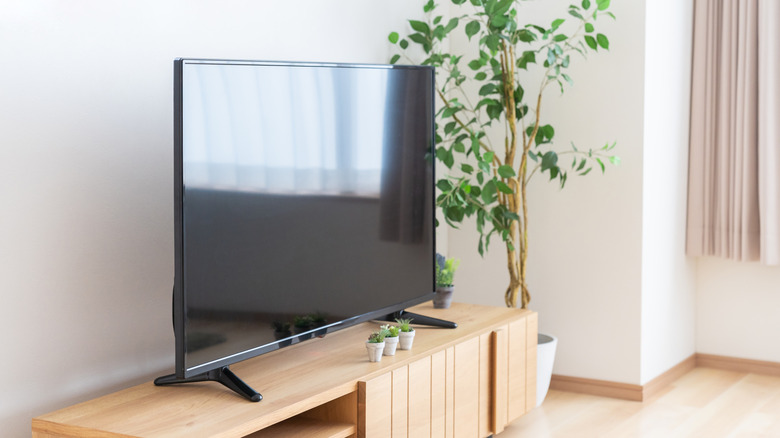
We've already covered some instances when a TV stand would be superior to wall-mounting. Again, if you want the option of easily rearranging your home theater, a TV stand offers greater flexibility. You can also select from different styles of TV stands (including universal TV stands) to find the right one for your space and budget. Some TV stands also offer anti-tip features, addressing one of the key limitations of other TV stands.
A stand might also feature its own closed storage or cable management system. If it doesn't, naturally, you can place a stand on top of a cabinet or media center with its own storage. This allows you to hide cables easily while also storing other relevant home theater items, such as remote controls, Blu-ray players, etc. A TV stand may involve easier installation as well.
That's not to say a TV stand is always the best option. Remember, a TV stand can take up floor space, which might not be ideal in a smaller home theater. How much you're willing to spend can also influence the quality of a TV stand setup. For instance, a more affordable TV stand might wobble.
Remember, there's no universal answer to the question of whether a TV stand or a wall mount is the best option for a home theater setup. However, for any given individual person, there probably is an option that's best. Accounting for these factors will help you determine which is right for your space.