

5 Nostalgic Electronics & Gadgets That Will Instantly Remind Gen X Of Their Parents
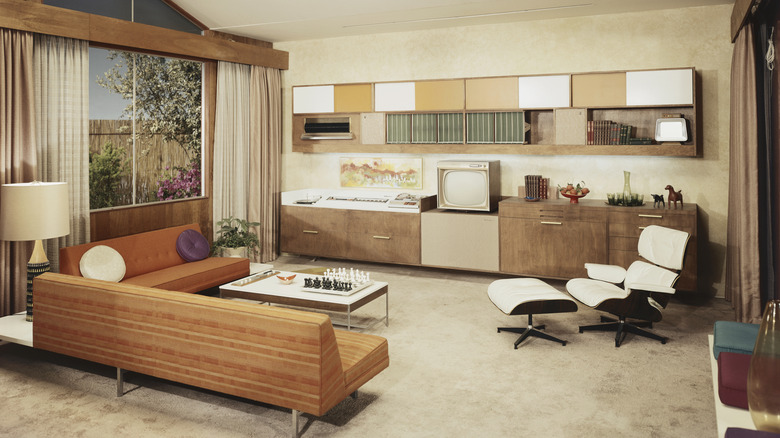
It's always interesting to look at technological development not just in terms of prospective future developments, but as the gigantic continuum of devices that preceded us. For example, the members of Generation X, born from 1965 to 1980, have their own nostalgic devices from their own lives, but in addition to that, there were many electronics, gadgets, and appliances that their baby boomer parents made use of in their childhoods, from electric can openers to fax machines.
The electronics that you grow up around leave an indelible mark on your memory, even if you weren't personally the one using them. Whether one of your parents did their work at home on an electric typewriter or your whole family got excited for your first color TV, these devices not only made their presence distinct in the memories of those whose families used them, but helped to set the stage for the many incredible advancements that would follow them. The '60s and onward were a fascinating time for consumer technology development, and Gen X got to experience it in its most formative state while in a formative state themselves.
The electric can opener

The practice of canning food for preservation and storage purposes dates all the way back to the 1800s, with handheld can openers following in the 1850s and rotary can openers in the 1870s. Of course, none of these were "gadgets" per se, as they all still relied fairly heavily on manual motion. That changed in a big way with the invention of the electric can opener, which would make retrieving your weeknight dinner ingredients much easier. The first electric can opener was actually patented back in 1931, but unfortunately, a large portion of houses in the United States still didn't have electricity then, so it didn't really find an audience.
The idea lay dormant for a couple of decades, until the Bodles, a father-daughter pair of inventors working out of a garage, created the first free-standing electric can opener that could find a comfy place on any kitchen counter. The Bodles' creation went on sale in 1956 under the Udico brand, becoming a major hit for that year's holiday season and prompting many other manufacturers to follow suit. Even with the advent of Gen X a decade later, countertop electric can openers remained a common fixture in kitchens around the United States.
The fax machine
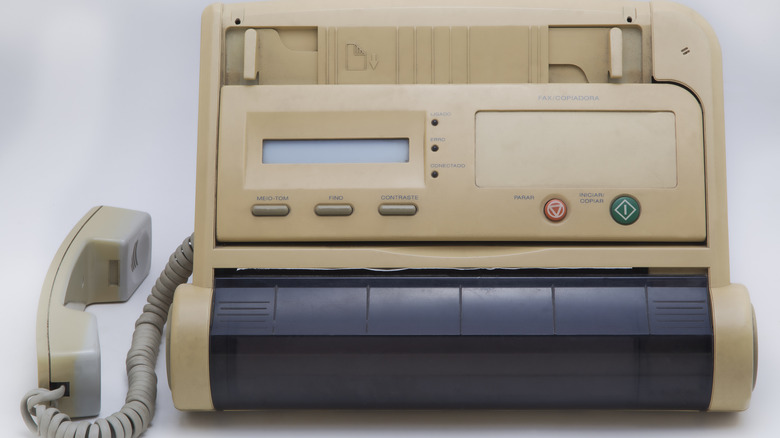
Before the invention and dissemination of the internet, if you wanted to send someone a message long-distance, it was pretty much just the postal service or nothing. Telephones had already circulated well before Gen X, but talking to someone over the phone wasn't quite the same as sending a quick communication. The first non-mail form of message sending, the fax machine, would become popularized in the 1960s following a slow growth period several decades prior.
The fax, which is short for facsimile, has roots in the electric printing telegraphs of the 1800s, but the technology really emerged in earnest in the 1920s. The earliest fax machines could send both text and simple images via radio waves, but the equipment was clunky and expensive, so nobody really owned their own private machines. The big change came about in 1964 with Xerox's release of its first fax and, more importantly, the release of its more compact Magnafax Telecopier two years later.
Rather than radio waves, this new fax could send text and photos through phone lines, which made the tech much more accessible and affordable. Thanks to this development, household faxes became a tool of the trade for workers in and out of the office, as well as families looking to send photos and messages back and forth.
The pocket radio
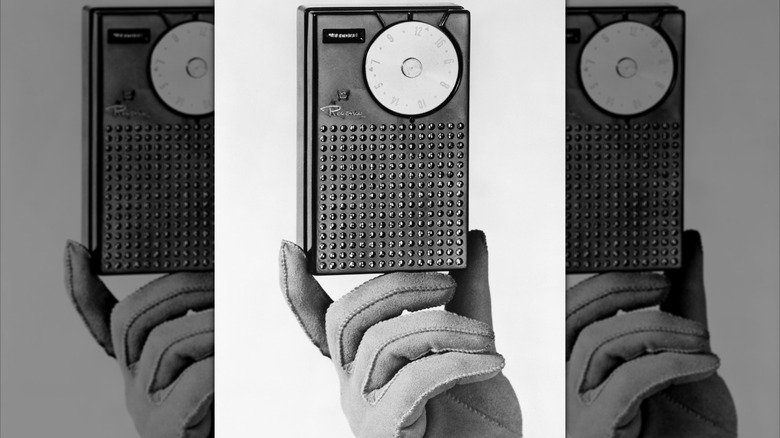
In the 1950s, both radio and television were properly entrenched in the public consciousness as definitive sources of entertainment, providing both music and serialized stories. However, neither medium was by any means portable, with both radios and televisions requiring massive appliances that took up sizable chunks of any living room. However, just before Gen X arrived in earnest, radio in particular experienced a major game-changer that finally let you take your tunes on the go.
In 1955, Sony released its very first transistor radio, the TR-55. Compared to the vacuum tube-powered radios of the time, this radio was positively tiny, small enough to fit on a table or counter. This product was very successful and prompted Sony to go even further with its next model in 1957, the TR-63, the first pocket radio and Sony's first export model. This little musical brick was small enough to fit in the average shirt pocket, and it was Sony's first major international success story. In the subsequent decade, portable transistor radios became the order of the day, whether you were lounging around in the yard or working hard at a construction site.
The electric typewriter
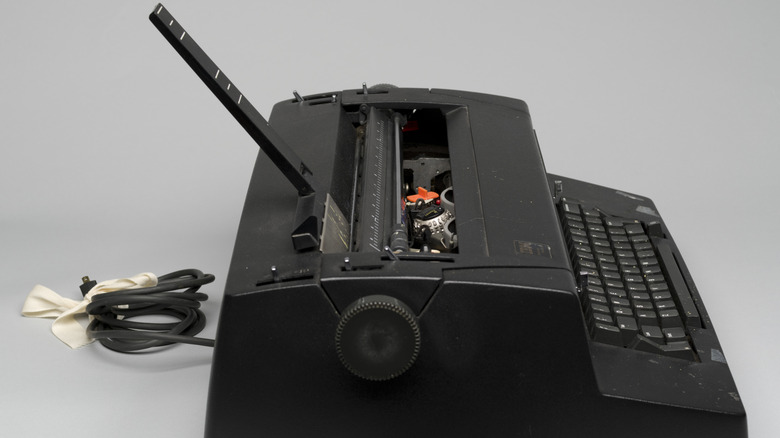
The first consumer-grade typewriters were released to the public in the late 1800s, revolutionizing the way we created letters and work documents. While the value of the typewriter can't be overstated, though, it wasn't perfect; keys would get stuck, sheets would get knocked out of alignment, and other assorted chores would hinder your typing process. These problems remained consistent until 1961, when IBM changed the game with the first electric typewriter, the IBM Selectric.
The Selectric would be the device that brought typewriters more in line with the convenient mechanical keyboards we know and love today. Electric typewriters technically existed for several decades prior, but they were just regular typewriters with powered components, which made them easier to type on and not much else. The Selectric, however, introduced a new kind of sphere-shaped typing element in lieu of the usual flat typebar. This spherical type element could tilt and rotate all on its own, eliminating the cumbersome paper carriage, and allowed users to quickly swap between different typefaces. Any Gen Xer whose parents worked at home in some capacity has probably seen an electric typewriter, as they absolutely ruled amongst office machines well through the '80s.
The color TV
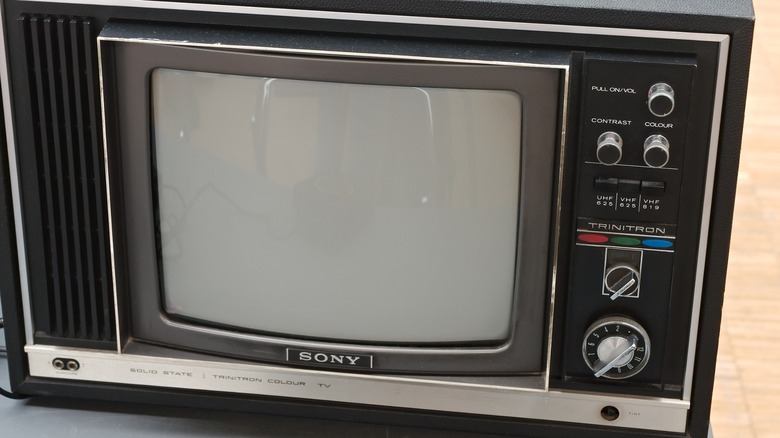
Regular television broadcasts began back in the late 1920s, with the public at large getting properly invested in it as an entertainment and news medium around the '40s and '50s. However, during these early days, television was exclusively presented in monochrome, as the technology for color displays hadn't quite been cracked yet. In the early 1960s, manufacturers started tinkering with color displays, trying various technological methods to make it work, but the company that would eventually land the bulls-eye would, once again, be Sony.
In 1968, four years into the advent of Gen X, Sony released the Trinitron, the crowning achievement in its pursuit of the perfect color TV and one of the most iconic TVs of the 80s. Not only did the Trinitron present images in color, but compared to most other models on the market, it offered unparalleled sharpness and picture quality. Color TV wasn't just a gimmick anymore; it was the gold standard, and Sony made quite a pretty penny, to say the least. There's a strong chance that those who grew up in this era have memories of a parent bringing home their first color TV, and an equally strong chance that it was a Trinitron.