

Are USB Rechargeable Batteries Actually Worth It?
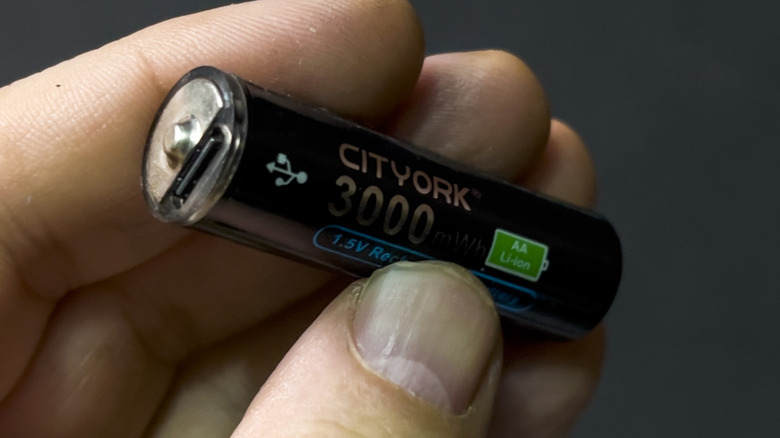
In 2026, traditional, non-rechargeable batteries seem hopelessly outdated — and awful for the environment. That said, rechargeable batteries can be cumbersome, and there are some devices you should never put them in. What's more, they require a dedicated charger, spare cells, and a bit of forethought to ensure you don't get stuck without a replacement battery when you inevitably need to cycle expended ones out. USB rechargeable batteries simplify the equation by putting the charging port directly on the battery itself.
All you need is a cable — likely the same one you use to charge your phone, headphones, or other devices — and you can quickly top off your batteries. There are even a number of adapters and splitters that let you recharge multiple batteries from a single USB port. Whether or not they're worth it depends on what you expect. For most, USB rechargeable batteries are best viewed as a convenience product that's also more sustainable over time (like this inexpensive Amazon battery replacement), not as a universal upgrade for every battery-powered device.
Why USB rechargeable batteries make sense
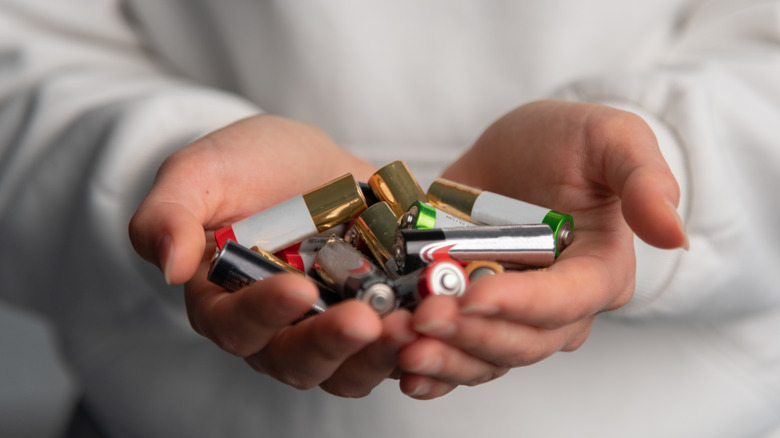
The strongest argument for USB rechargeable batteries is one of long-term value. According to Pale Blue Earth, a single pack of USB rechargeables can replace roughly 4,000 standard alkaline batteries. That's a huge number, and a significant one if you routinely burn through disposable batteries in remotes, toys, flashlights, game controllers, or other household devices.
Using rechargeable batteries also means less waste, and it's not just the batteries themselves. While fewer disposable batteries mean fewer end up heading to landfills, it also means less packaging, reduced transportation, and less demand for mining and manufacturing new cells.
Performance is another crucial consideration. The lithium-ion design of USB rechargeable batteries delivers a steady 1.5 V output. It can help to avoid the gradual drop-off that's problematic as other battery chemistries age, though be aware of these common mistakes that can ruin lithium cells. USB batteries are also lightweight and charge quickly. According to ZDNet, AA cells take roughly two hours to fully charge, and AAA cells only take an hour.
Where they fall short
The main downside of USB batteries, at least initially, is price. USB rechargeable batteries usually cost much more upfront than alkaline batteries, and are often pricier than many conventional rechargeable options. That can make them feel hard to justify if you only need batteries occasionally or if you're replacing just one or two cells at a time. That said, the lifetime value is significantly better, especially when compared against traditional alkaline batteries, and will show up quickly for anyone frequently swapping cells.
There are also some issues with charging logistics. If you don't have the right cables on hand, it can be awkward to swap individual batteries out with a single cable. These batteries also don't always give you a clear low-battery warning, so they can fail suddenly in devices that aren't designed with this specific chemistry in mind. That's why they're not automatically the best answer for high-drain or safety-sensitive gear. However, for most everyday uses, and in terms of overall value, USB rechargeable batteries are often a superior choice against other kinds of rechargeable batteries, and an absolute no-brainer when compared to conventional alkaline batteries.