

5 Chinese Tablets That Can Compete With iPads
We may receive a commission on purchases made from links.
Apple makes what some consider the best tablets you can buy. Its tablets are known for their powerful performance, excellent design, and solid build quality. But while they clearly stand out from the hardware to the software experience, iPads are pricey, with the cheapest model, the 11th-generation iPad, starting at $349 for a Wi-Fi-only variant. However, while iPads might be at the top of the tablet market, Apple isn't the only game in town. There are other companies that make tablets, and some from China that make excellent products that can give Apple's iPads a run for their money.
These tablets might not be officially sold in the U.S., but the fact that they aren't doesn't mean they don't exist. We've reviewed multiple tablets made by Apple, including the M5 iPad Pro and M3 iPad Air, and many other tablets from Chinese brands. With this experience, we've identified five tablets from Chinese brands that are very much capable of competing with iPads on both price and overall value proposition. Further details about our selection process can be found at the end of the article in the methodology section.
Nubia Pad Pro
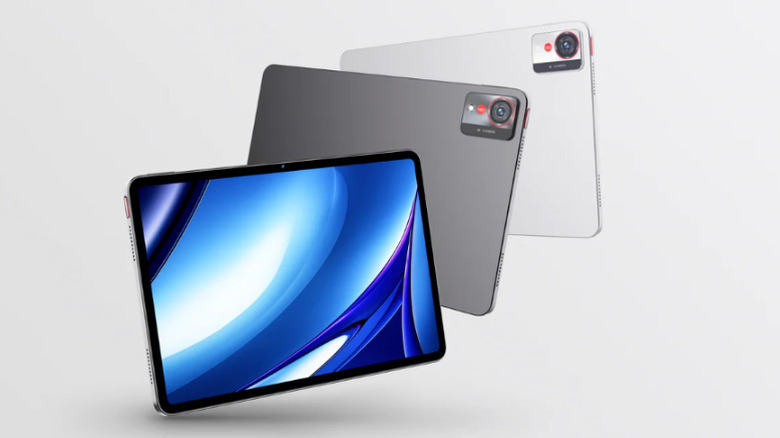
The Nubia Pad Pro was launched in 2025, starting in the company's homeland, China, and then internationally a month later. This tablet starts at $420 for the base model with 8 GB of memory and 256 GB of storage, making it cheaper than an 11th-generation iPad with similar storage. Additionally, there's a mid-tier model priced at $490 that comes with 12 GB of memory and 256 GB of storage, and if you need a more powerful option, you can get the high-end configuration offering 16 GB of memory and 512 GB of storage for $600. All variants of the tablet sport a 10.9-inch IPS display with a 144 Hz refresh rate and a 1,800 by 2,880-pixel resolution. Under the hood is a 4nm Qualcomm Snapdragon 8 Gen 3 chip, and it draws power from a 10,100 mAh battery that supports 66 W fast charging.
At its $420 starting price, the Nubia Pad Pro competes directly with Apple's 11th-generation iPad, which starts at $349. The iPad comes with an 11-inch 60 Hz IPS display with a 1,640 by 2,360 pixels resolution, a 4nm Apple A16 Bionic chip, 6 GB of memory, either 128, 256, or 512 GB of storage, and a 7,698 mAh battery with 45 W charging. While the base iPad 11th-generation is cheaper, the Nubia Pad Pro has higher storage and a better display with a high refresh rate for smooth scrolling and higher pixel density.
Huawei MatePad Pro 12.2
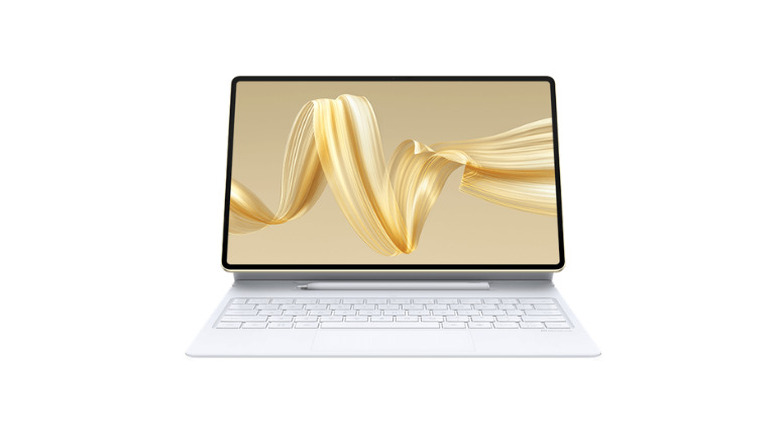
The MatePad Pro 12.2 targets the same flagship tablet market as the iPad Pro and features high-end specs befitting its caliber. On the front is a 12.2-inch OLED display with a smooth 144 Hz refresh rate, which can hit up to 2,000 nits of peak brightness. Under the hood is a Kirin T92A processor that you can configure with 12 or 16 GB of memory and 256, 512 GB, or 1 TB of storage. It's powered by a 10,100 mAh battery that supports up to 100 W wired charging speeds via USB-C. The Huawei MatePad Pro 12.2 sells in the U.K. at £799.99 for the 12/512 GB model, which converts to about $1,077 based on prevailing rates.
That price puts it in direct competition with Apple's 11-inch iPad Pro, which starts at $999 and features an 11-inch OLED panel with a 120 Hz refresh rate, 1,668 by 2,420-pixel resolution, and 1,600 nits of peak brightness. The iPad comes with Apple's M5 processor, either 12 or 16 GB of memory, between 256 GB and 2 TB of storage, and an 8,160 mAh battery. The iPad Pro might be powerful, but the Huawei MatePad Pro 12.2 gives you a display with higher pixel density, more storage for less, and a bigger battery. It is also a better value proposition as it includes an external keyboard with a built-in protective case out of the box similar to Apple's Magic Keyboard, which is usually a separate purchase starting at $299 for the iPad Pro.
Xiaomi Pad 8 Pro
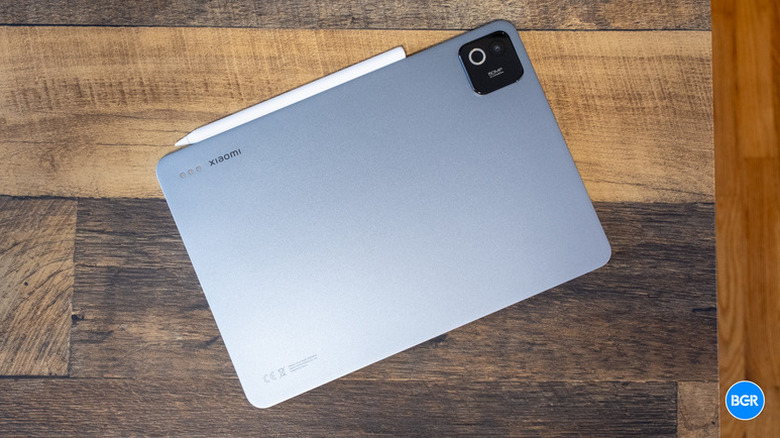
We've reviewed Xiaomi's Pad 8 Pro, and we think it's an excellent Android tablet. Under the hood of this tablet, you get Qualcomm's Snapdragon 8 Elite chipset, the silicon-maker's flagship processor from 2025 that powers the likes of Samsung's Galaxy S25 Ultra. That processor is paired with 8, 12, or 16 GB of memory and 128/256/512 GB of storage. There's a 9,200 mAh battery that supports 67 W wired charging. The display measures 11.2 inches and uses an IPS LCD panel with a 144 Hz refresh rate, HDR support, a 2,136-by-3,200-pixel resolution, and a maximum brightness of 800 nits. With a starting price of $645, the Xiaomi Pad 8 Pro is well-positioned to take on Apple's 11-inch iPad Air. For context, the 11-inch iPad Air starts at $599.
The Air comes with an 11-inch IPS LCD screen with a 1,640-by-2,360-pixel resolution, a 60 Hz refresh rate, and 500-nit brightness. Apple's offering is powered by an M4 chip with 12 GB of memory and a minimum of 128 GB of storage, configurable up to 1 TB. The iPad uses a 7,606 mAh battery. The Xiaomi is a pretty capable tablet that can compete with the iPad Air. If you're worried about the weight, you shouldn't be, as the Xiaomi Pad 8 Pro is light, weighing just 0.05 pounds more than the Air. Aside from weight, it beats the Air in some areas, like the display and fast charging, and costs almost the same.
Xiaomi Pad Mini
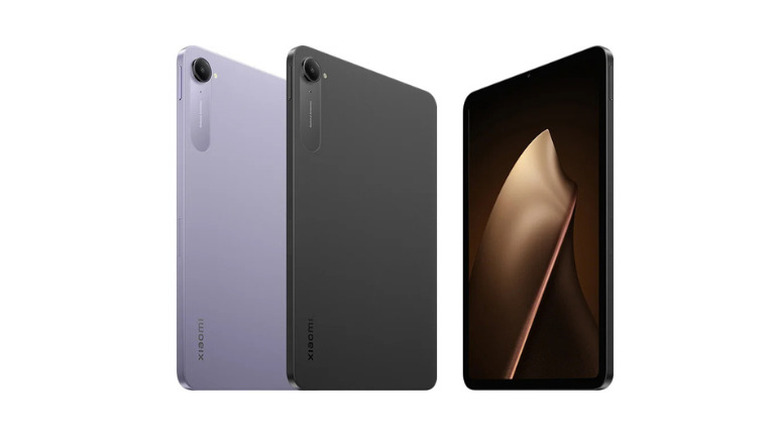
Appropriately named for its size, the Xiaomi Pad Mini comes with an 8.8-inch 165 Hz IPS LCD panel with HDR support (Dolby Vision and HDR10) and can hit 700 nits of HBM (high brightness mode) brightness. That display delivers a pixel density of 403, more than what you get on the 11-inch iPad Pro. Under the hood is the Mediatek Dimensity 9400+ chipset and a 7,500 mAh battery with 67 W wired fast charging. You can buy this tablet in two memory and storage configurations: 8 GB RAM + 256 GB storage or 12 GB RAM + 512 GB of storage. As the name suggests, this tablet is meant for people who prefer a relatively small device that is easy to carry around. That's the same market that the iPad mini targets, and the Chinese tech company Xiaomi wasn't afraid to borrow some notes from Apple's playbook in naming as well as in design.
The iPad mini features an 8.3-inch 60 Hz IPS LCD panel with 1,488 by 2,266-pixel resolution, resulting in a 327-pixel-per-inch density, and is powered by Apple's A17 Pro chip. The iPad has a smaller 5,078 mAh battery and is available in Space Gray, Blue, Purple, and Starlight, while the Xiaomi Pad Mini is available in Gray and Purple colors. The Pad Mini is priced competitively at $429, undercutting Apple's iPad mini, which starts at $499, but Xiaomi's tablet isn't officially available in the U.S. As for comparison, the Pad Mini offers a better display, a larger battery, and is even cheaper than the iPad mini.
Honor MagicPad 3 Pro 12.3
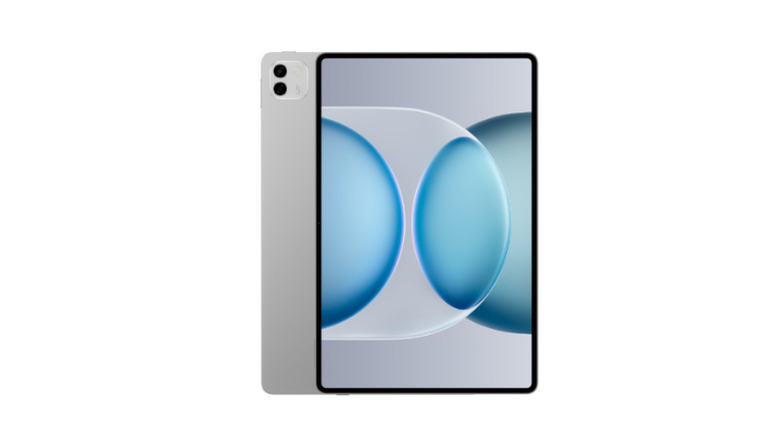
Another capable tablet from a Chinese company that can compete with Apple's iPads is the Honor MagicPad 3 Pro 12.3. It's an Android tablet that's powered by Qualcomm's Snapdragon 8 Gen 5, a powerful mid-range chipset, paired with 8, 12, or 16 GB of memory and 256 or 512 GB of storage. On the front is a 12.3-inch OLED display with a 165 Hz refresh rate, 3,000 nits peak brightness, and a 1,920 by 3,000 pixel resolution. It supports stylus input like most modern tablets and offers a 10,100 mAh battery with 66 W fast charging support. This tablet comes with MagicOS 10 out of the box, which is based on Android 16. The Honor MagicPad 3 Pro 12.3 starts at around $591 in China for the entry-level model with 8 GB of memory and 256 GB of storage.
That puts it squarely in M4 iPad Air territory, which costs a minimum of $599. The M4 iPad Air does come with an 11-inch IPS LCD panel with 1,640-by-2,360-pixel resolution, 7,606 mAh battery, 12 GB of memory, and multiple storage options, starting at 128 GB to 1 TB. Despite costing nearly the same as the iPad Air, the MagicPad 3 Pro 12.3 offers you a better OLED panel with higher brightness and pixel density, and a bigger battery. And despite having a 12.3-inch display and a bigger battery, the Honor tablet is still lighter than the iPad Air.
How we selected Chinese tablets that can compete with iPads
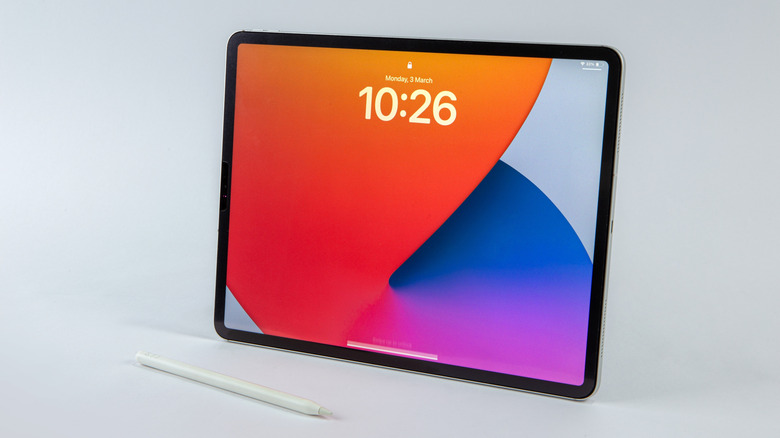
All tablets on this list met one key requirement — they are made by Chinese tech companies. In addition to that, we selected tablets that are sold at around the same price points as the different iPads in Apple's current offerings in the iPad, iPad mini, iPad Pro, and iPad Air lineups. We also looked for tablets that offer competitive value for the price, and we've compared each model to what it competes with in Apple's lineup to make it clear why we think it's a worthy alternative. For each model, we've also highlighted some of the areas in which it bests the iPad model within its price range.