

Nvidia Partnered With A Chinese Company To Build A 'Physical AI' Humanoid Robot
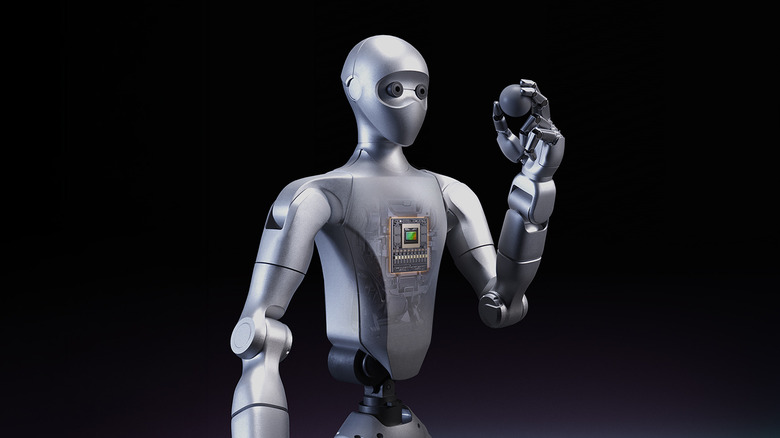
Nvidia has entered the humanoid robotics race. Through a partnership with Chinese startup Unitree, the U.S. chipmaker is developing a robotics system with an integrated reference design focused on academic research. The idea is to help research teams access advanced hardware, and more importantly, a complete software stack that can run without proprietary platforms.
Design-wise, the Isaac GR00T Reference Humanoid Robot is fully modular. The Nvidia Isaac GR00T platform, combined with the Nvidia Jetson Thor onboard computer, will make up the "brain" of the design. For the body, Nvidia opted for Unitree's six-foot H2 Plus humanoid body with Sharpa Wave tactile five-finger hands (developed by Dual) that will provide the robot with genuine dexterous manipulation abilities. The combination of all the features certainly justifies the robot's spot as one of Nvidia's coolest reveals at the 2026 Computex event.
Though it may still be a few years before humanoid robots become a part of our smart homes, Nvidia's foray into robotics could be a step in the right direction. Prioritizing research means the reference robot can lead to a democratization of the technology. According to the company's CEO, this move is integral, as the physical AI opens a significant economic opportunity in multiple industries. By providing the tools, Nvidia's robot could become a central piece of the puzzle, as it may help researchers make significant strides in the development of general-purpose humanoids.
How capable is Nvidia's humanoid robot?
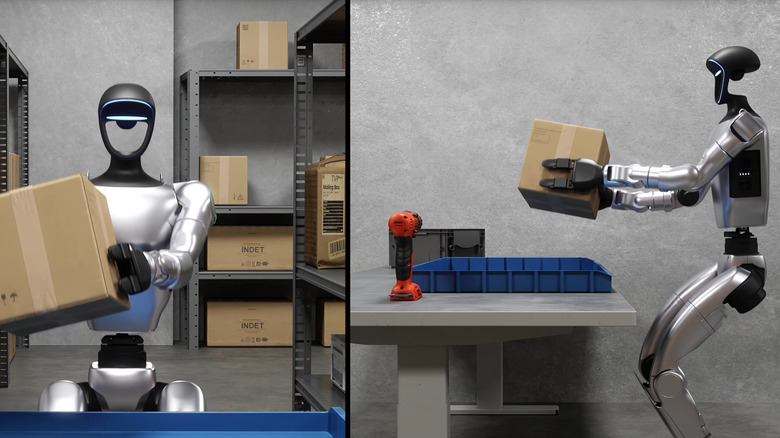
As a complete platform for humanoid research, Nvidia's Isaac GR00T Reference Humanoid Robot packs quite a lot into a single chassis. For starters, the Unitree H2 body is almost six feet tall, which, aside from looking quite dashing, is capable of 22 degrees of freedom. This is quite impressive when you also add in the 22 degrees of freedom afforded by two Sharpa Wave hands. The arms themselves can also lift as much as 33 pounds, and when combined with whole-body control abilities, including reaching and lifting, the Isaac GR00T is nothing short of capable.
Apart from brawn, the Nvidia robot has plenty of brains. The Nvidia Jetson AGX Thor sports a 2,070-teraflop Nvidia Blackwell GPU for peak AI performance, with available memory of 128 GB. In addition to a head-mounted camera, the robot supports a wide range of connectivity options for multi-view sensory processing. It's a powerful package, so it's really not a surprise that several institutions like the Stanford Robotics Center and ETH Zurich have decided to use the Nvidia robot for research.
Many people are scared of new robotics developments. Sure, a humanoid robot learning to read facial expressions from YouTube is nightmare fuel, but watching these machines learn to dance is also quite captivating, especially for tech nerds. While Nvidia's entry into robotics will likely inspire plenty of Skynet and Asimov references, it will also help research teams build a real foundation for advancing the field. Whether that's a net positive remains to be seen, but a company like Nvidia championing the tech could be a sign that humanoid robots are very close to becoming mainstream.