

Do Vinyl Records Last Longer Than CDs? Here's What We Know
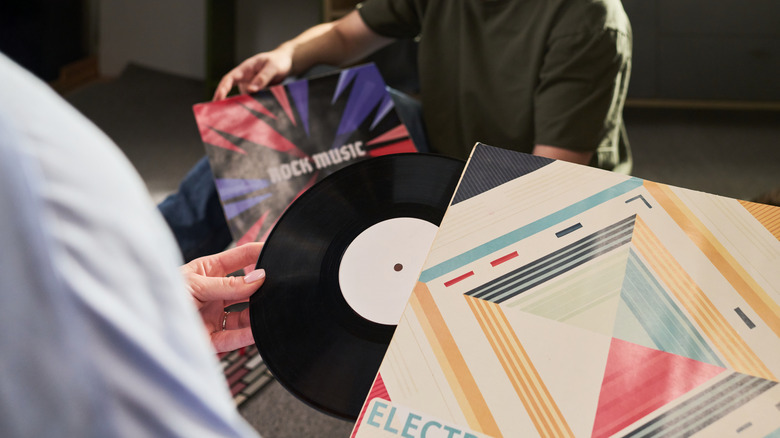
Vinyl records are making a comeback, having found a resurgent audience in the form of audiophiles, younger generations looking to detox from the digital world, and anyone who enjoys a little bit of nostalgia with their listening experience. However, sentimental value shouldn't be the only factors to consider when choosing how to listen to music. For example, if you're planning on ditching streaming in favor of buying physical copies of music, you might wonder if vinyl records last longer than CDs.
The short answer is that a vinyl record should remain in good condition for longer than a compact disc. That's partially because CDs — including discs like DVDs, CD-Rs, and even Laserdiscs — are vulnerable to "disc rot," in which they essentially deteriorate to the point of becoming unplayable over time. Granted, a vinyl record can also reach a point where it can no longer be played, but that process will often take longer than it does for a CD.
Compiling estimates from various experts, Statista reports that the average vinyl record, when properly stored and cared for, should last about 100 years. An average CD, on the other hand, should only last about 30. A vinyl record generally lasts longer than a CD because its data is stored in the for of grooves that are physically etched onto the disc. That said, factors such as maintenance and storage can play critical roles in determining the lifespan of both types of physical recorded music.
Vinyl record vs. CD longevity: Factors to consider
The above estimates are based on the assumption that a record or CD is being carefully preserved and its owner is staying on top of maintenance. Skips and pops are part of the joy of listening to a record, but if the vinyl hasn't been kept clean or stored properly in its sleeve, the extraneous noises can negatively affect the listening experience. But at least all vinyl acts the same.
A CD's average lifespan can actually vary quite substantially depending on the type of CD in question. For example, the CD-RW format may last somewhere up to 50 years, while a CD-R made with phthalocyanine dye and gold metal can remain in good condition for 100 years or more. Thus, if you don't mind setting aside time to do research, you might decide between buying a vinyl record or buying a CD by first investigating the specific types of CDs that are available for a given title.
Regardless of the format you decide is best for your music collection, it's important to remember that the equipment through which you listen to your music will also influence just how impressive it sounds. And if you're worried how long your records or CDs will last, be sure to choose the best audiophile gadgets that could last you decades. Taking the time to do your research will help you put together a music collection and audio system that fits your needs, budget, and tastes.