

The Pros And Cons Of Camping With Solar Powered Gadgets
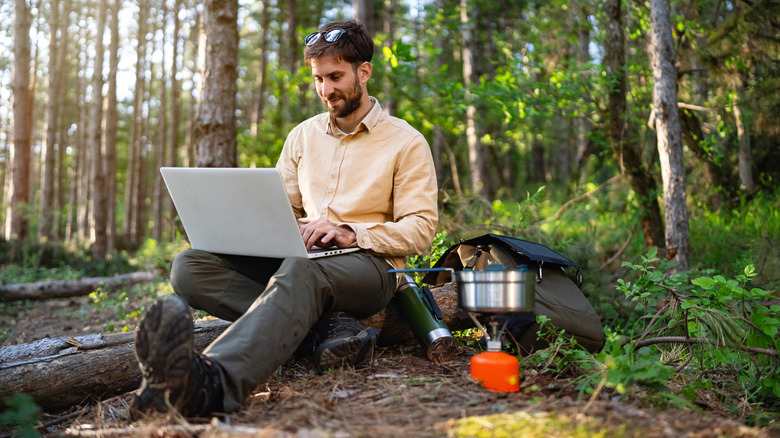
If you have ever considered camping, you've probably wondered whether taking solar gadgets is a good choice for this kind of adventure. After all, even though this activity gives us the perfect chance to disconnect from urban life for a while, we also know that technology is still important for many things in our daily life. Even in the woods, electronics have their uses, like taking photos or staying safe, which is why mini gadgets perfect for a camping trip have become an increasingly common sight on the trail.
But is it really worth it to invest in solar-powered gear for your excursion? These devices often promise autonomy for adventurers, since they can turn sunlight into clean and free electricity. Besides offering a sustainable alternative that attracts anyone who wants to reduce environmental impact, they also help remove the extra burden of carrying heavy battery packs on your trip.
However, even though solar power offers several benefits for users and the environment, it is also important to consider a few points. Small devices can operate on solar energy without problems, but the same often does not apply to larger devices, which may not perform in a reliable way. For all their advantages, solar gadgets can still affect your entire camping experience in a negative way if you're not careful. Here are some pros and cons to consider.
Solar power offers endless energy for off-grid camping
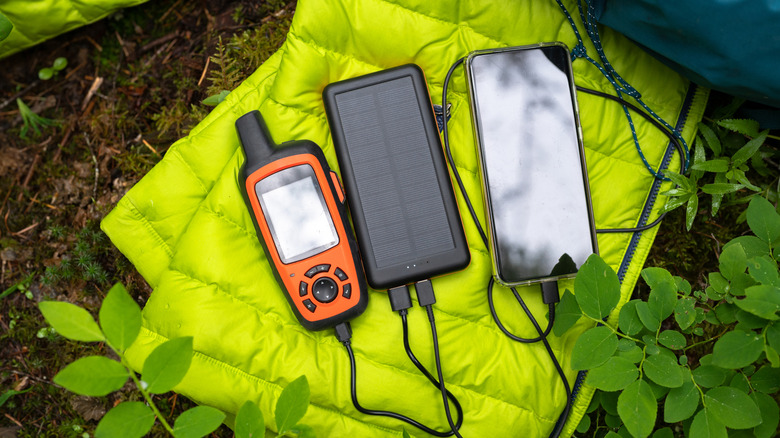
Spending several days away from the grid has a way of making you realize just how much you depend on charged devices nowadays. A dead flashlight, GPS, or smartphone can be a real safety issue, especially during an unexpected emergency out in the wilderness. Solar gadgets solve this problem in the most straightforward way possible, since they pull energy directly from the sun. As long as the sky is clear and you have a bit of time for charging, you're covered.
The biggest advantage that solar offers over regular power banks is that solar gear doesn't have a hard limit. Standard batteries drain down and stay empty until you find somewhere to plug them in. Solar panels recharge every day on their own, which means your energy supply essentially renews itself for as long as you're out there, something hard to replicate with conventional batteries and gadgets.
The weight savings are another benefit worth mentioning. Packing enough spare batteries to last a few days or a full week adds more bulk than most people expect. Swapping that out for a solar panel can make a difference, leaving more room in your bag for things that actually matter, with the added benefit of leaving you with a lighter load to carry.
Weather conditions make solar camping gadgets unreliable
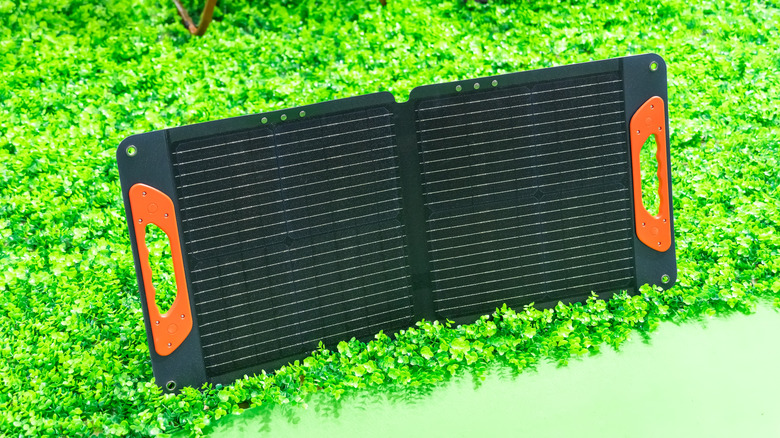
The sun is one of the biggest issues solar gadgets run into. You have to place the solar panels of your equipment where the sunlight hits them, frequently for many hours of the day to achieve a meaningful charge. But this isn't always possible for camping, since your particular kind of adventure may land you where getting to a sunny spot and staying there for an extended time period can be challenging.
The weather works against this as well. Even if you had planned your trip on sunny days, you might still run into a cloudy sky during the evening or rain out of nowhere that will disrupt the performance of your devices. So you don't have the kind of control over your power source that you get with outlets at home. That means when you are in an emergency, your devices might not work because they don't have a good charge — a risk worth understanding alongside which devices you can and cannot power with portable solar panels.
Even if you have nice clear skies for most of your trip, you'll still need to chase the sun around to a certain extent as it travels across the sky to make sure your device can charge at maximum efficiency. For instance, the best place for collecting solar power during the morning may be quite inconvenient or completely unusable in the afternoon. To keep your devices topped off, you have to stop what you're doing to chase some rays, which may be annoying.
Portable solar devices have much slower charging speeds
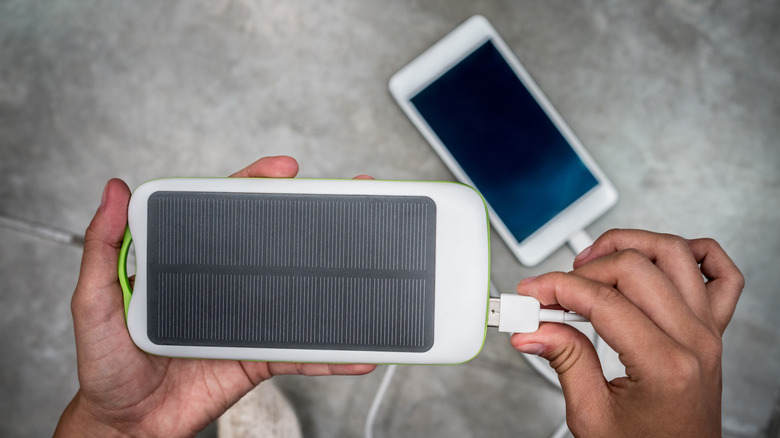
If you're accustomed to home charging speed, it can feel strange camping with solar gadgets. A standard turbo charger will take your phone's battery from zero to 50% in about thirty minutes. But most portable solar chargers are unable to achieve that speed, often requiring several hours of sunlight to provide an equivalent charge.
A 21-watt foldable solar panel, which is the sweet spot for camping, requires two to three hours of full sunlight to charge a modern smartphone under ideal conditions, though this time may vary depending on the weather. That takes planning, because you can't really charge the device while you're engaged in anything else. You need to keep an eye out for clouds or other things that can delay charging time and be prepared to alter your schedule accordingly.
Overall, solar-powered chargers are very susceptible to the whims of sunlight intensity, weather conditions, and a panel's quality. So if you're going camping with solar gadgets, you need to lower your expectations, since even a portable solar power bank that charges your phone on its own will still be slower than a conventional one.
Solar gadgets work best when paired with power banks
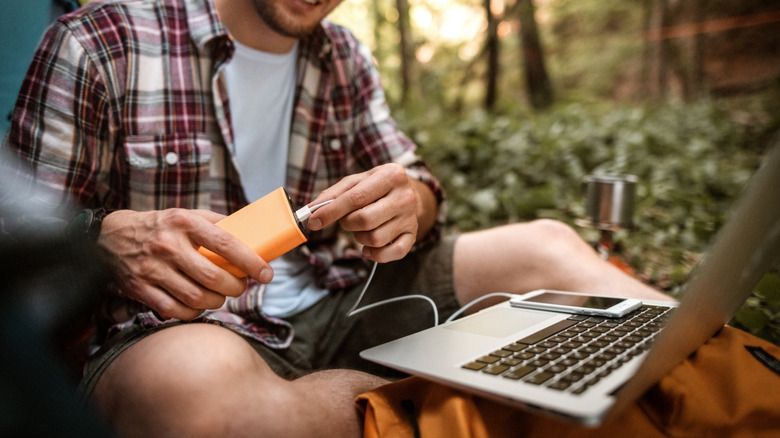
One of the main advantages of having some solar gadgets when camping is that you can use them as a complement to keep other devices you have functional. Instead of depending only on solar power to feed every gadget, for example, the best idea may be to combine them with conventional batteries or power banks. This way, the energy captured during the day keeps those batteries charged while you enjoy the outdoor experience without hurting the autonomy of the other gadgets that you have.
For instance, you can avoid carrying multiple portable batteries in your backpack during a camping adventure by making use of the solar panel to charge them all along the way. So while performing other activities during the day, the solar panel will be generating power to ensure that the power banks will be ready and available when you need them most, especially at night.