

The First Headphones Weighed Over 10 Pounds And Had Nothing To Do With Music
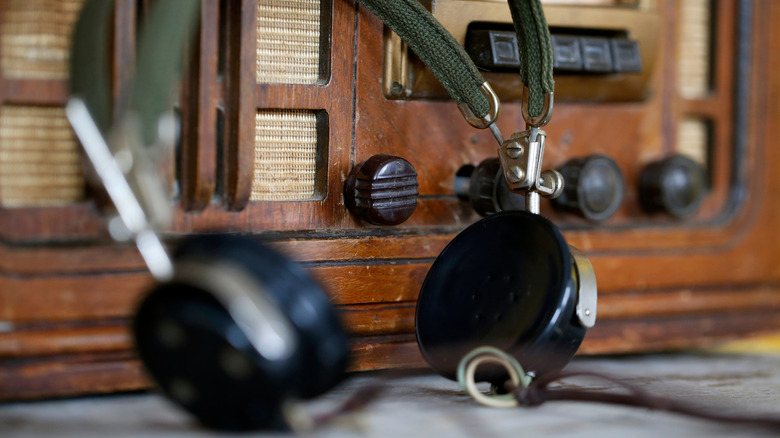
Peek at the specs of today's over-ear noise-canceling headphones like the AirPods Max 2 and you might be left in awe. Sporting complex chips, these devices provide real-time EQ and can digitally block out external noises. One of the biggest points of criticism is their weight — yet the 13.6-ounce AirPods Max 2 only seem heavy until you consider that the first headphones weighed about 10 pounds.
Invented by Ezra Gilliland in 1881, these monstrosities had little to do with music. Rather, the so-called "Gilliland Harness" was used by switchboard operators. Harness is actually the right word to describe the apparatus consisting of one earpiece that was connected to a phone and a microphone. The thing was so heavy that it was designed to rest on the operator's shoulder.
The next few iterations didn't really resemble modern audiophile headphones, either. A decade after the first headphones (or harness) debuted, one company designed a pair that rested on a literal rod. That's not the most unhinged detail, though. Electrophone offered a subscription service that allowed you to use those headphones to tune in to live performances in London via a switchboard.
What were the first real headphones?
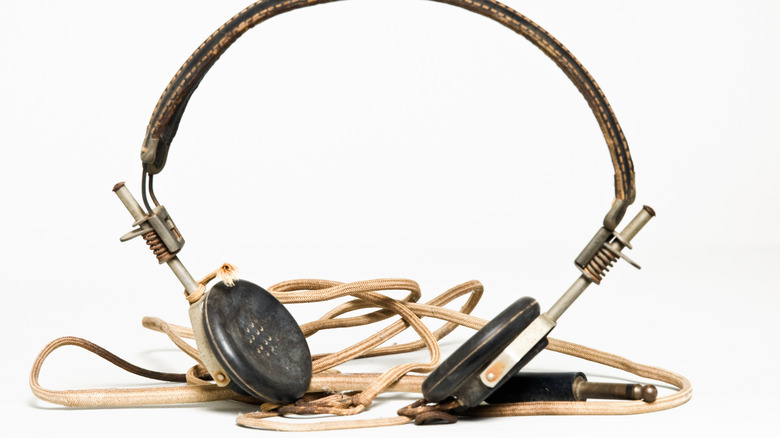
Though the first headphones weighed about 10 pounds, it took nearly a decade for someone to come up with a more lightweight option. As Londoners were tuning in to whatever was hot on the scene, Ernest Mercadier was busy patenting the first earbuds. These also had nothing to do with music, but they were eerily similar to the in-ears we have today, as the French inventor designed them with rubber covers in mind.
The first "real" headphones were invented in 1910. Sitting at a kitchen table, Nathaniel Baldwin just woke up one day and decided to revolutionize audio technology. The Utah-based inventor connected two padded ear cups with bands and thus created the first pair of headphones that could rest on the head. Because of the easy "operation" and the fact that Baldwin's invention didn't require external power, the U.S. Navy ordered 100 units.
It wasn't until 1937 that Eugen Beyer of Beyerdynamic (which is to this day one of the major audiophile headphone brands) finally created the first dynamic headphones. Beyer's design used a moving coil transducer, which allowed for quality music reproduction. While these did take off in professional settings, 1958 is the unofficial birth year of commercially available headphones designed for music.
Headphones hit the mainstream
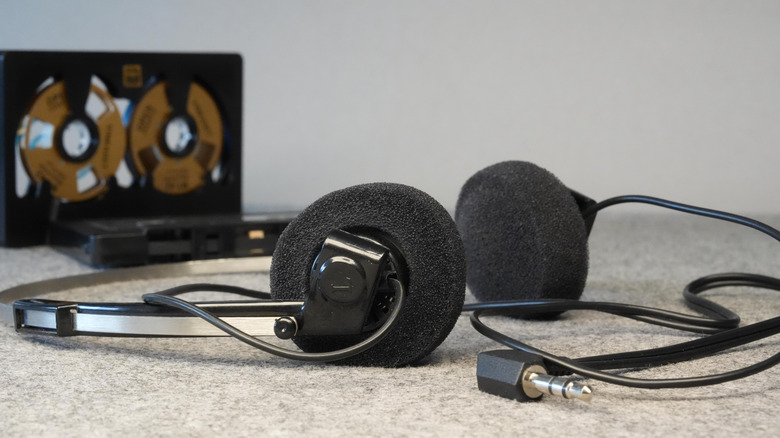
John Koss had a brilliant idea to bundle a record player and a pair of plastic headphones with foam earpads into a single package. These were nothing more than small speakers that didn't offer much in terms of audio quality, but they opened up the floodgates, so to speak. People started using headphones to listen to music.
The '60s brought in new developments, the most notable ones being wireless AM/FM headphones and the first open-back models, developed by none other than Sennheiser. Granted, the music-listening experience stayed pretty much the same, as you'd still be using headphones at home, connected to a stereo. This all changed in 1979 when Sony introduced the iconic Walkman, which made music portable. Considering that Sony moved north of 400 million units, headphones also saw a massive increase in popularity.
Subsequently, companies refined the designs and introduced new technologies. For example, Bose developed the first noise-canceling headphones in 1989, and Bluetooth finally took hold around 2004. That brings us to this day, when headphones can do everything from EQ adapting to blocking out external noises. The audio quality has also never been better, and the models are super comfy — so much that it's really easy to take the improvements for granted. The next time you feel as if your AirPods Max are too clunky and heavy, remember how heavy the first headphones were, and you'll feel a lot better about your modern-day disposition.