

Gorilla Glass Is Strong, But These Everyday Materials Can Still Scratch It
Corning's Gorilla Glass is a common name in the screen scene, with smartphone and smartwatch touchscreens made with its proprietary material having a reputation for being highly resilient against cracks and scratches. Gorilla Glass still regularly competes against the likes of Ceramic Shield when it comes to protecting smartphones. While this material is very effective at resisting the rigors of daily life — up to and including an occasional brush with your car keys — it's unfortunately not invulnerable, which has prompted some manufacturers to stop using Gorilla Glass. Corning's product has a critical weakness against fine particulate minerals like quartz, which also happens to be one of the most common minerals in the world.
Gorilla Glass is impressively hard, of that there can be no doubt. Thanks to the chemical exchange process that goes into its creation, it's stronger against drops and scratches than conventional glass. Even so, any material that is harder than this enhanced glass can still scratch it, and such materials can crop up in innocuous places like your own pockets. You can protect your screen with some defensive measures like a screen protector and regular dusting, but the threat can't be eliminated completely.
Loose sand or dust in your pocket could leave scratches
Objects, minerals, and materials can have their hardness ranked based on a scientific scale known as the Mohs scale. Your fingernails, for example, have a Mohs rating of around 2.5, not particularly hard, while a diamond has a Mohs rating of 10, borderline unscratchable. Gorilla Glass has a Mohs rating of around 6, which is above average and stronger than the metals used in coins or small pocket knives. This is why, if you attempt to scratch a Gorilla Glass screen with something like your car keys, it doesn't work; because the metal your keys are made of is softer than the Gorilla Glass. Gorilla Glass's particular level of hardness gives it that good degree of general surface resilience, while also leaving it flexible enough to resist the occasional sudden drop.
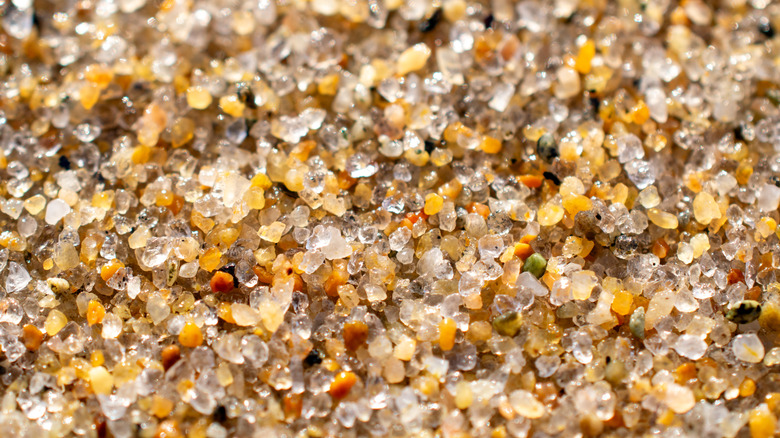
However, a particular mineral that ranks higher than Gorilla Glass on the Mohs Scale is quartz, with a rating of 7. Quartz is quite literally found everywhere, from dust to sand, both of which have a tendency to accumulate in your pockets. Because quartz is stronger than Gorilla Glass, even when in a fine particulate state, it's strong enough to scratch the glass's surface. Since the particulates are so small, the scratches are very fine — but if you're constantly pulling your phone out of a pocket that's full of grit, you may be scratching the surface of the screen every time, and those scratches gradually start to add up.
There are some safety measures you can take
Given that one of Gorilla Glass's most critical weaknesses is also one of the most plentiful minerals in the world, it may feel like there's nothing you can do to protect your screen against getting covered in scratches. However, there are a couple of protective measures you can still take.
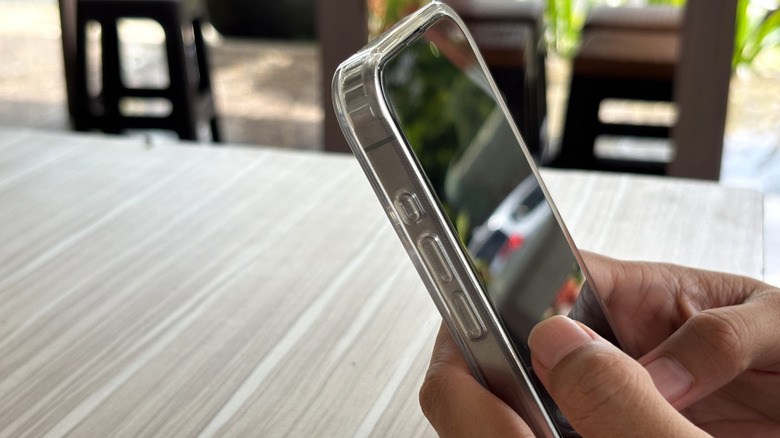
First and foremost, use a screen protector. While there is an assumption that screen protectors aren't necessary for Gorilla Glass displays given their advertised hardness, their weakness to quartz arguably necessitates them even more. A good screen protector can absorb the brunt of scratches and scuffs from daily usage, including micro-scratches from the dust or sand in your pocket. Plus, a screen protector can be easily and cheaply swapped out if it gets too scuffed up, as opposed to leaving your actual screen to endure the damage.
Additionally, whenever possible, you should try to keep your Gorilla Glass phone away from dusty or sandy environments. Clean the grit in your pockets out, wipe dust away from desks and nightstands, and don't place your phone screen down, especially on a sandy beach table.