

Lidl's New Battery Fixes One Of The Biggest Problems With Solar Panels
We may receive a commission on purchases made from links.
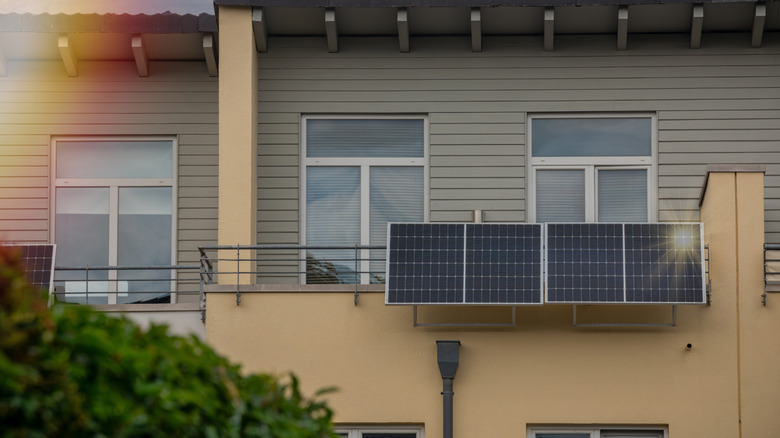
Residential solar systems can lose functionality without a backup battery for several reasons. For starters, most grid-tied solar arrays will go offline when the grid goes down during a major outage. Even if they continue to generate power, you'll still lose power in your home. Also, they actively generate power but have no way to store it to compensate for efficiency losses or for use at night, when they're not generating electricity at all. You can still leverage a solar panel array without batteries, and they're often cheaper and more accessible. That's mainly because backup battery solutions are expensive — you need $10,000 to $20,000 upfront to install a battery, and that's on top of what you'll pay for the solar panels and additional hardware. A German retailer, Lidl, may help combat high costs thanks to a more affordable yet capable battery.
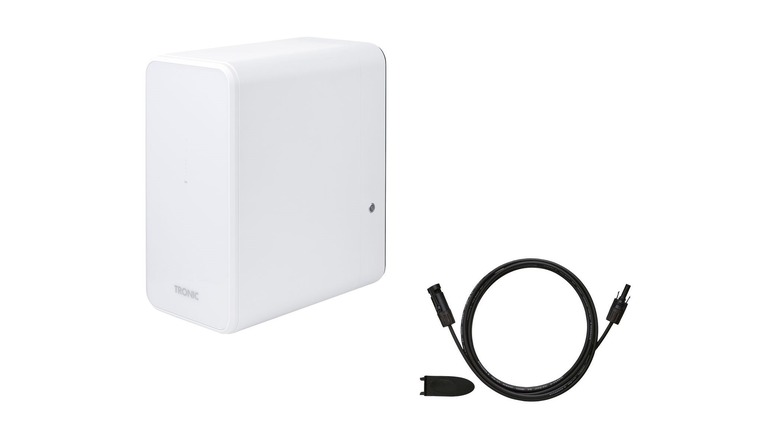
As reported by PV Magazine, Lidl is now offering a 2.24-kilowatt-hour lithium iron phosphate battery, compatible with balcony solar systems, under its Tronic brand. The battery has a 1,000-watt input and an 800-watt output, and costs around €299 in Germany, roughly $350 USD. A premium version, for $100 more, adds smart connectivity via Lidl's Home app. Alongside the battery, you'll need compatible panels and a microinverter to convert and send the power from the system to your home electronics.
In short, Lidl's Tronic battery offers a relatively low-cost, residential-friendly home backup option for customers who want to DIY their own solar solution. The fact it's designed to be small enough for a balcony is great, too, because anyone living in smaller spaces like apartments or condos can still benefit.
Balcony solar or plug-in solar is a good alternative
Before you go installing solar panels, even smaller panels or balcony-mounted ones, there are some important things you should know. They're a long-term investment and may have high upfront costs. You'll also want to consider storage solutions and assess your home and family's energy needs before choosing the system size and number of panels. Moreover, something you should know before installing panels is that not all roofs are suitable for them. In which case, a smaller system or balcony-based setup might be a viable alternative. And that's where Lidl's new battery comes into play. There are reports the retailer may start selling solar panels in the UK, as well. But even if not, you should be able to find compatible panels from third parties.
These piecemeal systems, even solar power generators and power stations that plug into solar, are referred to as balcony solar, plug-in solar, and plug-and-play solar systems — yes, there are quite a few terms for it. They're meant to be DIY-friendly, with options to personalize where they're installed, like a balcony or backyard, how big they are, and what you use them for. You don't have to tie them to your home's grid; you can use them as a backup or a separate power source. Places like California and New York have plans to restrict balcony-installed systems, with a cap on total output. It keeps them safe while ensuring they're compliant with local regulations.
Plug-and-play and DIY solar can be much more affordable. Case in point, Lidl's new battery. As per Plug-In Solar, the Lidl Tronic battery may even be a Marstek model in disguise.
Lidl's battery may not be available to everyone
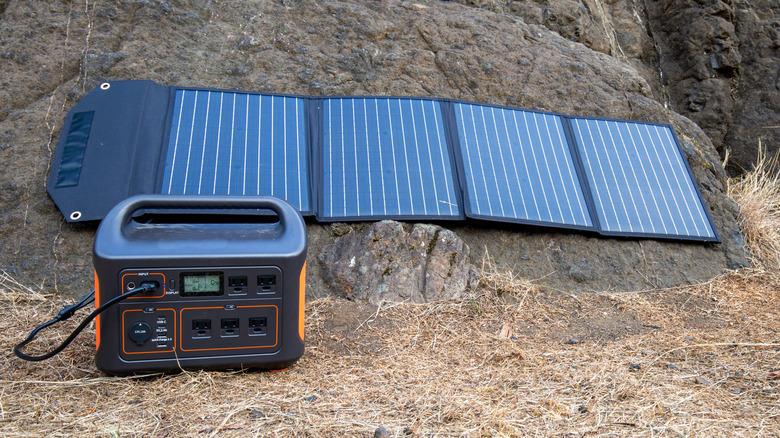
The unfortunate reality is that Lidl is currently bringing the battery to European customers, including in the UK, with no word on a U.S. release. While this particular battery model may not be available, you should know there are plenty of alternatives. Solar power generators and solar power stations are an excellent start. They're engineered as LiFePO4 batteries, with large capacities, reliable storage support, and a number of safety features, and many can plug directly into solar panels to charge from sunlight.
Examples include the EcoFlow DELTA 3 Plus for around $700, the Jackery Solar Generator 1000 v2 for $800, the Bluetti AC180 or Elite 100 V2 for $500 to $700, respectively or the Anker SOLIX C1000 Gen 2. All are within the same price range, at full price, let alone at a discount, and all are compatible with solar panels. You will have to identify which panel wattage works best per station, however.
In some cases, there are panels you can buy that will directly power devices via USB, such as charging a smartphone. If you didn't know, there are quite a few devices you can power with portable solar panels with the right setup. Ultimately, the good news is that there are other solutions if the Lidl battery isn't available in your area.