

How Far Should Your Phone Screen Be From Your Eyes?
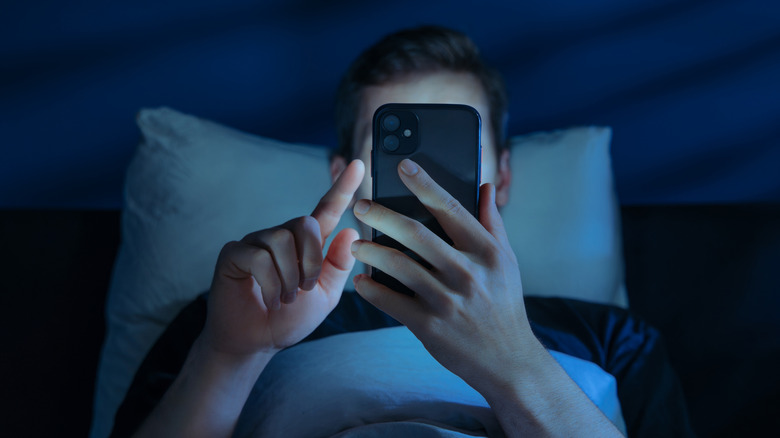
Staring at bright screens all day can harm your eyes and body in many ways, whether you're looking at computer monitors, TVs, or — yes — smartphone displays. It can lead to something called computer vision syndrome (CVS) or digital eye strain, which is caused by things like reduced blinking and frequent refocusing as your eyes scan onscreen material. CVS can entail symptoms like blurry vision, headaches, irritated eyes, fatigue, and more.
Unhealthy posture is another concern with long-term screen use; straining your neck to look at a monitor that's been mounted too low or high is a common posture issue, as is looking down at a smartphone display. Positioning a monitor too close or too far away from the eyes is among the biggest monitor placement mistakes almost everyone makes. However, maintaining a healthy distance from screens is crucial for fending off CVS, and that extends to your phone. Since phone screens are so much smaller than monitors, though, how far away should they really be from your eyes?
The American Optometric Association recommends keeping digital devices between 13 and 20 inches away from your face (via 20/20) — that's about an arm's length away. However, smartphones and tablets are commonly held 12 inches away from the face. Ultimately, if you want to reduce or prevent digital eye strain symptoms, you should increase smartphone viewing distance well beyond the typical 12 inches. Apple even launched a Screen Distance feature in both iOS 17 and iPadOS 17 that alerts you when it detects your screen is too close to your face.
Posture is also important

While screen distance is a big factor in mediating CVS, as well as proper ambient lighting in your environment, so is your posture. In fact, posture is just as important to think about as screen distance is, whether you're staring at a TV, computer monitor, laptop, or smartphone. There are quite a few ways you may be sitting at your desk wrong, like not keeping an upright posture or staying seated for too long. But even if you're not at a desk, you should follow proper posture hygiene when viewing other devices, especially smartphones and tablets. Otherwise, you could experience what's known as tech neck.
Tech neck is a form of chronic neck pain or soreness that stems from looking down at your phone at 45 degrees for long periods. When you crane your neck like that, it can create pressure on both your neck and spine, thus forcing the neck muscles to strain and the shoulder muscles to slump, leading to pain and stiffness. Holding your phone out in front of you at arm's length (instead of below your eyes) can both reduce tech neck and ease eye strain. If you find it difficult to keep your phone propped up like that, you can stack pillows on your lap to support your forearms. In addition, sitting upright with your head, hips, and spine fully aligned helps alleviate pressure.
If you don't want to hold your phone, using an elevated stand is a good solution. Laptop stands sometimes come with a phone insert or can be used with phones and tablets themselves. You can also find upright phone stands that work with pretty well any smartphone. If you want a more versatile option, you can buy a flexible smart phone holder arm that can clamp onto tables, desks, and other surfaces, all the while keeping your phone in place on a stand you can articulate for optimal comfort.