

Here's How Much Electricity A 3D Printer Actually Uses Per Hour
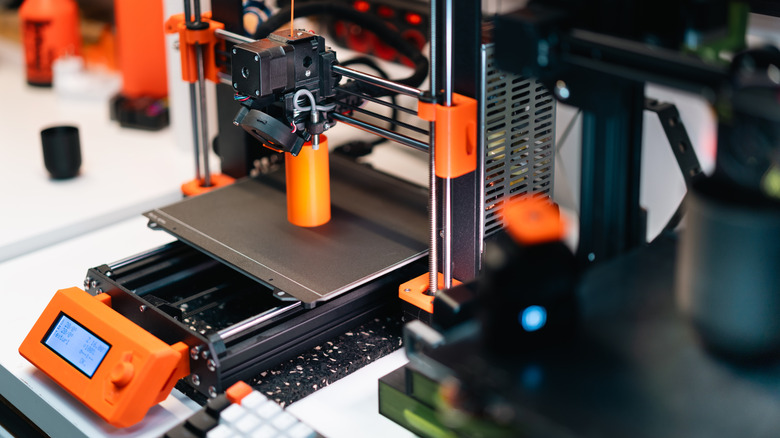
If you recently got a 3D printer or are planning to buy one, its electricity consumption is often a big concern. This becomes even more important if you are dealing with prints that take five to 10 hours or more. Since 3D printing is a relatively new technology and its widespread adoption is even more recent, many are not sure how much electricity a 3D printer uses. But as surprising as it may sound, running a 3D printer for hours at a stretch won't burn a hole in your pocket.
On average, a home 3D printer costs between one and ten cents per hour in electricity. Of course, there are several factors at play, including the 3D printer you are using, the type of filament, average operating temperature, and whether you employ any energy-saving techniques. But even a 10-hour print from a printer averaging 120 watts of power usage over that time figures to cost about 22 cents ($0.216) if we take the electricity cost as 18 cents per kilowatt-hour (kWh), a typical price in the United States. The cost of electricity for running this printer 10 hours every day for an entire month would be $6.48 ($0.216 times 30 days). That's a fraction of the cost of the printer or what you will spend on filament.
So, if electricity use was holding you back from getting a 3D printer, it probably shouldn't anymore. Remember, 3D printers have a much lower electricity consumption than a microwave or room heater. These common household appliances typically operate at 1200-1500 watts.
Calculating the hourly electricity cost
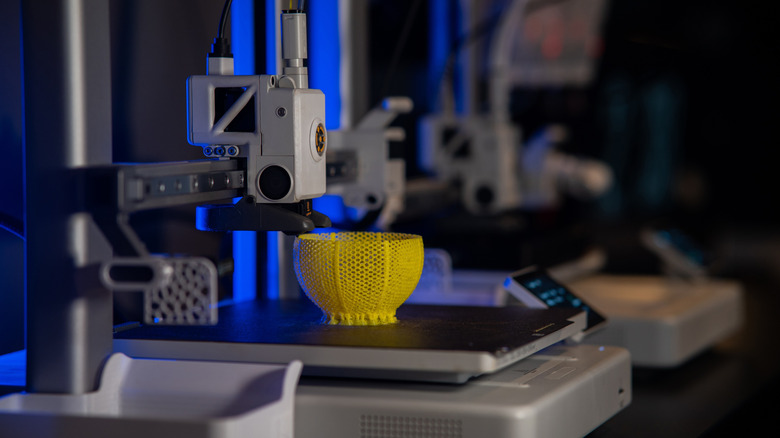
Let's understand how the hourly electricity cost of a 3D printer, or any electrical appliance, is calculated. It's a simple formula. You divide the average power rating in watts (W) by 1000 and then multiply it by the electricity rate in your area, usually expressed in kilowatt-hours, or kWh. Let's take FDM (Fused Deposition Modeling) printers, for example, which have an average power draw of 60-150 W. Even if we were to calculate based on the upper limit (150 W), the total electricity cost per hour amounts to $0.027 (150/1000 x $0.18) using the average kWh cost in the United States (roughly). You could also use a smart plug for a more accurate reading of how much power your specific printer actually uses. You can then use that number in the formula explained earlier to find out the cost.
There are different factors affecting the electricity consumption of a 3D printer. The most important is size, since a bigger 3D printer will have a larger bed, and maintaining its temperature will use more electricity. Keep in mind that your 3D printer's heated bed and hot end are the two most power-consuming components. The printer bed needs to maintain an optimal temperature to prevent warping, and the hot end is responsible for melting the filament.
Your choice of filament matters too. For instance, PLA, or polylactic acid, prints at a lower nozzle temperature (190-220 degrees Celsius) than ABS, or Acrylonitrile Butadiene Styrene (220-250 degrees Celsius), lowering electricity use. Additionally, you don't necessarily need a heated bed for PLA, or even if you do, 50-60 degrees Celsius is the recommended range. On the other hand, you need a bed temperature of 80-110 degrees Celsius with ABS, which again increases the power consumption.
Ways to reduce energy consumption of a 3D printer
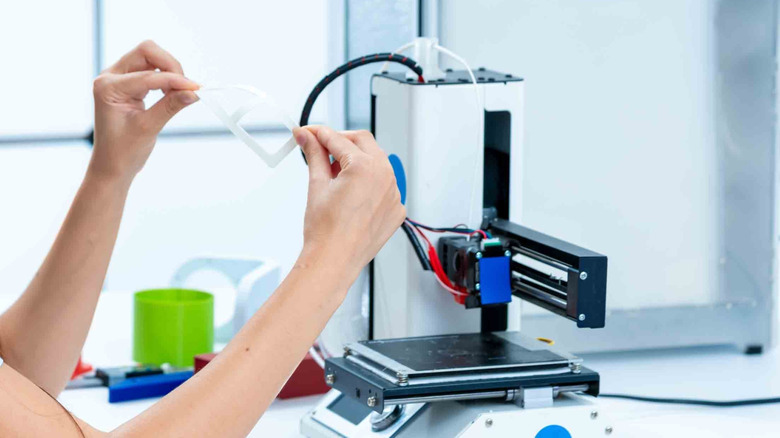
Although 3D printers are already fairly energy efficient, if you run them overnight or own multiple printers, there are smart ways to minimize their energy consumption even further. The easiest option is to adjust the print settings. For example, you can lower the temperature of the hot end and heated bed. Of course, this has to be within the filament's rated range, but even a small change can make a difference in energy use over the long haul. Switching to PLA, which requires lower temperatures, helps too. And if possible, use an enclosure for your 3D printer. It will trap heat, reducing the amount of energy required to maintain optimal temperatures in the heated bed.
You should also optimize your printing strategy. For instance, grouping multiple smaller prints into a single job can reduce heating cycles, translating into power savings. Along the same lines, you can lower the infill settings. With a lower infill percentage, the models will print faster, saving you money on every print. Remember, your 3D printer's location and regular maintenance matter too.
All that said, it's important to realize that electricity costs are a fraction of the expenses associated with 3D printing. The biggest investment is the 3D printer itself, followed by the filament costs, electricity consumption, regular maintenance, and finally, nozzle replacements.