

5 Of The Worst Places To Set Up A 3D Printer
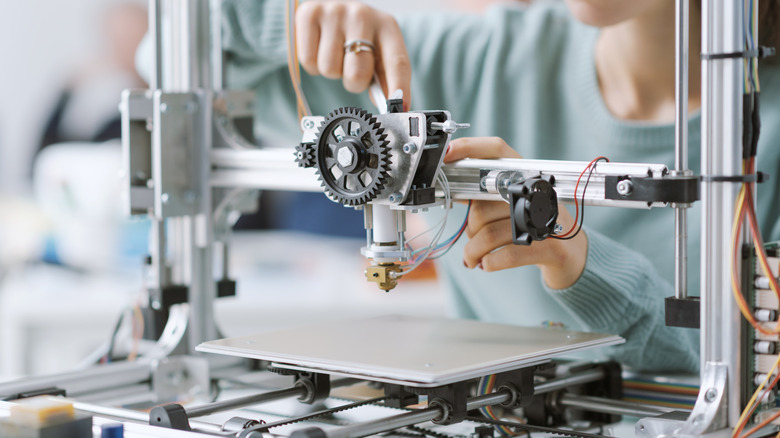
Buying a 3D printer is just the first step. You need to correctly set it up too. When it comes to placing a 3D printer, there are lots of factors at play, especially relating to aspects like health, safety, and convenience. That makes some areas of the house or workspace perfect for a 3D printer, while rendering others a major risk.
For instance, experts have long warned about setting up 3D printers in bedrooms, as prolonged exposure to harmful emissions from the printer puts your health at risk. Similarly, putting 3D printers in areas that see frequent changes in temperature, say near a window or air vent, impacts the print quality, as 3D printers operate best in spaces with stable temperatures.
Whether you're working with quick prints or want to operate the 3D printer overnight, a proper setup is critical to ensuring high-quality prints, minimizing health and safety risks, and offering peace of mind. The placement is just as important as picking the best 3D printer or the right filament.
Your bedroom
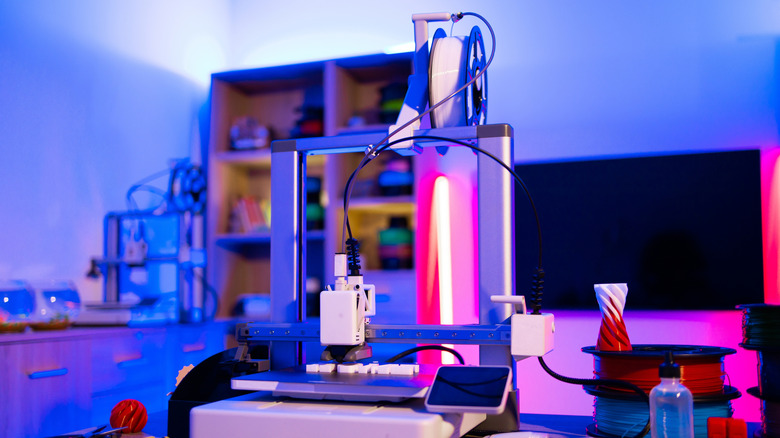
Your bedroom may seem like the perfect place to set up a 3D printer. It'll always be right there, allowing easy access throughout the day. Whether you want to monitor an ongoing print or start a new one in the middle of the night, the 3D printer will be within arm's reach. But your bedroom is the worst place to set up a 3D printer.
One of the things you must know about 3D printers is that they emit harmful fumes. And if you're in close proximity to it for extended periods, it's a major health risk. These emissions, to a certain degree, depend on the filament used. Studies suggest that the higher the temperature required to melt the filament, the more the emissions. This means that filaments like ABS will produce more emissions compared to PLA. Remember, they're both toxic, though PLA is considered somewhat safer than ABS. So, whether you're using ABS or PLA, it's best to always place the 3D printer in a well-ventilated area. As for avoiding exposure to particles generated during the printing process, you can opt for 3D printers that feature enclosures.
Even if we were to ignore the health risks, setting up a 3D printer inside your bedroom impacts your sleep. That's because 3D printers make noise and generate heat. When operated for extended hours at night, it becomes more than an inconvenience, affecting your comfort level. Of all the places inside your home, the bedroom should be the last to set up a 3D printer.
Kitchen
Your kitchen too might seem like a convenient area to place a 3D printer. It's well-lit, has proper ventilation, and plenty of stable surfaces. But it's another place you should never set up a 3D printer, and there are several reasons why.
First, harmful fumes and emissions from the printer can contaminate items around it. Similarly, the kitchen itself has airborne impurities like grease, food particles, and more, which can stick to components, affecting the normal functioning of your printer. You'll also be forced to clean the 3D printer more frequently, a task that can simply be avoided by placing it in a relatively cleaner space.
Additionally, the kitchen has high moisture levels, and humidity affects the filaments. Even under normal conditions, it's advised to store filaments in airtight containers with a few packets of silica gel to avoid moisture buildup. Then comes temperature fluctuation. While you're cooking, the temperature rises quickly, and when you're done, it falls back down just as fast. Your 3D printer can't handle this well, and it shows up in the quality of prints.
Common areas with frequent movement
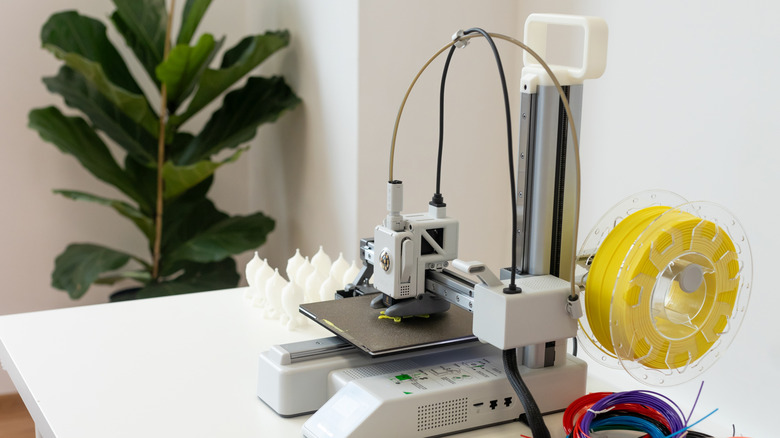
When it comes to common areas, say, the living room or a hallway, these are again bad choices to place a 3D printer. That's because these areas see a lot of movement throughout the day, which exposes your printer to continuous vibrations. When that happens, the prints may show signs of misalignment between layers. Keep in mind that 3D printing is supposed to be a precise operation, and ideally shouldn't be exposed to external vibrations of any kind.
Other than that, if you have kids or pets in the house, placing it in common areas increases the risk of someone accidentally running into the 3D printer. While that will most certainly affect the ongoing job, there's also the risk of damage to the printer itself in case of a major collision or if it topples.
You should ideally place the 3D printer in a garage, laundry room, or other place that doesn't see a lot of movement. And make sure to install exhaust fans to remove ultrafine plastic particles and other harmful emissions. If you want to monitor the ongoing job, install a top-rated security camera. Or to save money, you can repurpose an old webcam into a security camera.
Near windows and vents
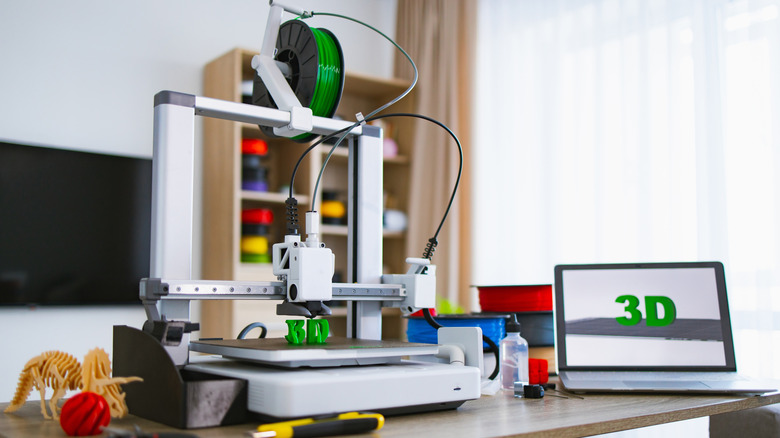
Placing your 3D printer near a window may seem like a smart move, given all the talk around ensuring proper ventilation. But it's also not the right choice for three reasons. First, areas near windows are more susceptible to temperature changes. They will be warmer during the day and cooler at night, compared to the rest of the house, which makes it a bad place for 3D printers. It's best to go with places where temperatures remain largely stable. Also, make sure that the printer is not sitting under sunlight.
Second, if the 3D printer is placed near an open window or an operational vent, the sudden gush of air may cause warping. That's obviously something you don't want. Lastly, the 3D printer must be kept away from dust, and that's why it shouldn't be placed near a window. Like any other device, dust accumulation will reduce the lifespan of your 3D printer, as well as lower the quality of prints.
While ventilation is important, uncontrolled airflow is not the solution to it. On the contrary, it creates more problems. That said, you don't necessarily have to move the printer to another room, but just away from the window or vent.
Uneven, unstable, or small surfaces
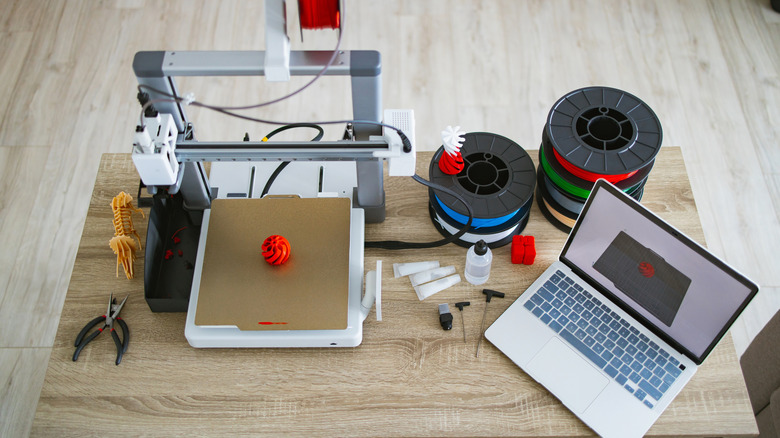
While this may feel obvious, it's still one of the most common 3D printer mistakes. It's vital to place the printer on a flat, even surface. Even a slight tilt can cause parts to shift during printing. The surface needs to be stable too. You should ideally go with heavy tables or desks that remain steady and don't wobble. If there's a lot of vibration or foot traffic, you can use dampening pads to minimize the effects. An uneven or unstable surface is also a safety risk, as the printer may fall due to sudden movements.
Additionally, the space needs to be sufficiently big. While most people aim for a surface big enough to house the printer, you also need space around it. This ensures easy cleaning, and prevents accidents. Besides, 3D printers often create lots of mess, and constrained spaces make cleaning all the more difficult.
If you're actively using the printer, you'll also need storage space for filaments or resins, along with other 3D printer essentials. It's vital to plan all this in advance, or you run the risk of poor print quality, lots of frustration, and even accidentally damaging the 3D printer.