

Stephen King Sued To Have His Name Removed From This '90s Pierce Brosnan Sci-Fi Movie
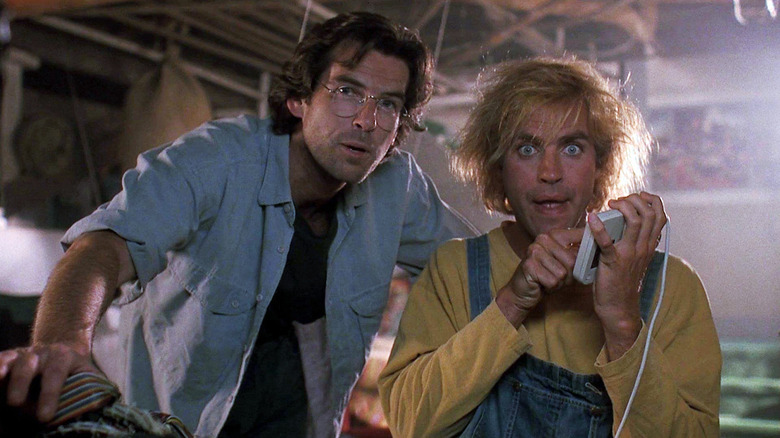
He might be considered a master storyteller, but some of Stephen King's works haven't received the best adaptations. There's highs like "The Dead Zone," "IT: Welcome to Derry" or "The Shawshank Redemption," and lows like "Dreamcatcher," and "Maximum Overdrive." However, only one "adaptation" so offended the author himself that he went as far as to take the studio responsible to court. Twice.
In 1992, New Line Cinema released "The Lawnmower Man," starring Jeff Fahey and Pierce Brosnan, three years before Brosnan got his license to kill as James Bond. The story followed Dr. Lawrence "Larry" Angelo (Brosnan), who uses his mentally challenged gardener, Jobe (Fahey), as a guinea pig to trial virtual reality programs, along with a bucket load of drugs to increase his intelligence. Naturally, things go sideways when Jobe begins to show not only signs of immense intellectual change but also superhuman powers and a need to become a prominent force in the digital world.
Sounds good, right? Well, the issue with the film was that it was marketed as "Stephen King's The Lawnmower Man," when in reality the plot matched the author's short story only in title. Director Brett Leonard and co-writer Gimel Everett had conjured a tale about a meek individual turned into a super genius, but King's short was unlike anything in the final product. If you think "Forrest Gump" crossed over with "The Matrix" was a wild idea, wait until you experience a cultist goat man eating someone's lawn.
Stephen King's original story was nothing like The Lawnmower Man
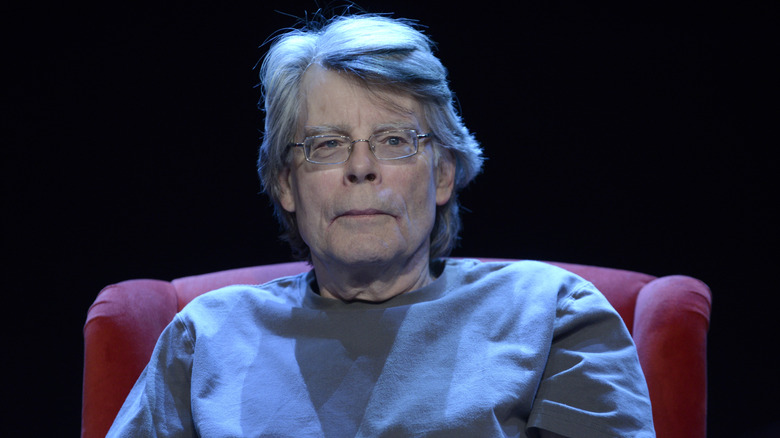
King's "The Lawnmower Man" was a short story originally published in a 1975 issue of "Cavalier" magazine, before being included in his 1978 short story collection "Night Shift." There wasn't a microchip or technological advancement in sight. Instead, King's initial tale followed a simple homeowner, Harold Parkette, who, after a traumatic event in his garden the year before, had left it unattended, resulting in it becoming overgrown. Accepting that enough is enough, he sees a newspaper ad for "Pastoral Greenery and Outdoor Services" and gets a visit from an offensive, overweight freelancer who has incredibly strange methods for getting the job done.
Besides having a large lawnmower that can operate on its own, the lawnmower man of this story strips naked and follows behind the tool on all fours, eating the grass clippings it leaves behind. It turns out that the process is part of a ritualistic act the man, who's revealed to be a satyr, performs to pay respects to the Greek God, Pan. With his secret exposed, the lawnmower man brutally kills his customer, leaving bits of him all over the garden.
It's understandable, then, why, when the film was released, King hit back with a lawsuit against New Line (via The Associated Press) for stamping his name on a movie that bore zero resemblance to his work. What came as a real shock, though, was that New Line ran into more bother with King when the film arrived on home video.
New Line went two rounds with Stephen King and lost big
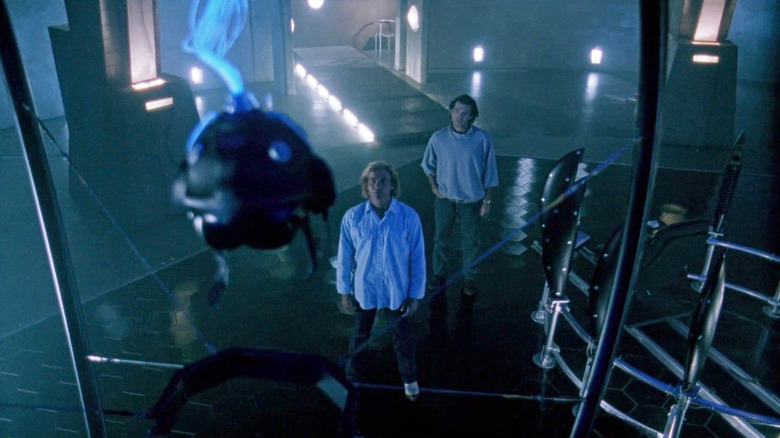
Upon learning how different the movie version of "The Lawnmower Man" was from his own story, King took New Line to court for profits from the film and all related marketing, seeking to have his name removed. The author's demands were met, and he also received $2.5 million in a final settlement. Unfortunately, though, King's issues with "The Lawnmower Man" weren't over, as the studio went back and reapplied his name when the movie arrived on video.
Once again titled as "Stephen King's The Lawnmower Man," the studio and the author whose story they barely adapted took the legal route again, with the former being held in contempt of court. While it marked yet another win for King, it didn't prove to be that much of a setback for the movie or its future plans.
Four years later, "The Lawnmower Man 2: Beyond Cyberspace" arrived in theaters, with King credited only for creating some of the characters. The new film leaned even more into the virtual reality element, with Jobe (this time played by Matt Frewer) becoming an even more powerful digital presence. The movie was a box office bomb, earning only $2.4 million on a $15 million budget. Nevertheless, the original film has remained a cult classic, even without having earned King's blessing.