

What Makes International Google Pixels Different From American Ones?
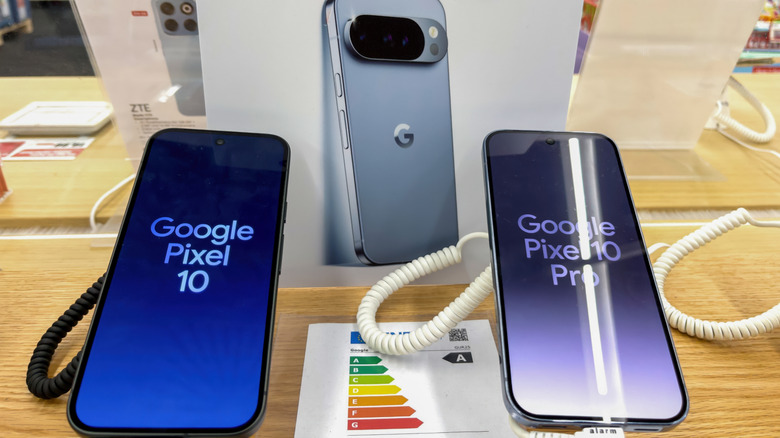
It's reasonable to expect a specific phone model to have the same features regardless of the country you're buying it in. But for the Pixel 10 lineup, that isn't the case. While the international versions of the Pixel 10, 10 Pro, and 10 Pro XL include the physical SIM card slot, as usual for the company's smartphone lineup, American phones drop the slot and fully embrace eSIM for the first time.
Other phone brands sell their products with slight variations in specifications in different regions. For instance, European iPhones are very different from U.S. models at the hardware and software level.
Google announced the 10th-generation Pixel 10 series, alongside the Pixel 10 Pro Fold, Pixel Watch 4, and Pixel Buds 2a at its Made By Google event held in August 2025. The new devices ship with a handful of improvements, including a new Tensor G5 chip under the hood and up to 25 W Qi2.2 wireless charging. But beyond all the cool new features that the Android manufacturer highlighted at its event, this change to SIM cards Google made was silent and easy to miss. Using an eSIM over a physical SIM card has its advantages and disadvantages, but Google cited different reasons when asked why it decided to ditch the slot on Pixel 10 series phones in the U.S.
Why Google removed the physical SIM card slot from the American Pixel 10 phones
In a response to PC Mag, which inquired about Google's removal of the physical SIM, company representatives said they had to choose between including components for mmWave 5G support and a SIM slot due to the limited space inside the devices. Ultimately, they had to make the trade-off and ditch the slot because, according to the company, carriers in the U.S. require phones to have mmWave 5G support to be sold, as it offers the fastest wireless speeds.
Since international Pixel 10 series phones don't need mmWave 5G support, they retained the physical SIM slot. Aside from the mmWave trade-off, Google notes that 70% of U.S. Pixel owners already use eSIM only, hinting that they have already ditched physical SIM cards, unlike the rest of the world. That was another reason to retain the slot in international markets.
Google also told Android Central that the move helped it offer its "cleanest design yet," which doesn't have any SIM tray or mmWave antenna cutout. While the removal of the SIM card slot was meant to accommodate mmWave 5G components, Google suggested the extra space could be used for other improvements as well. In its statement to Android Central, the company explained that Pixel 10 phones without SIM slots have more room for battery and other features.