

New Law Would Require A Recording Light On All Smart Glasses Sold And Used In One State
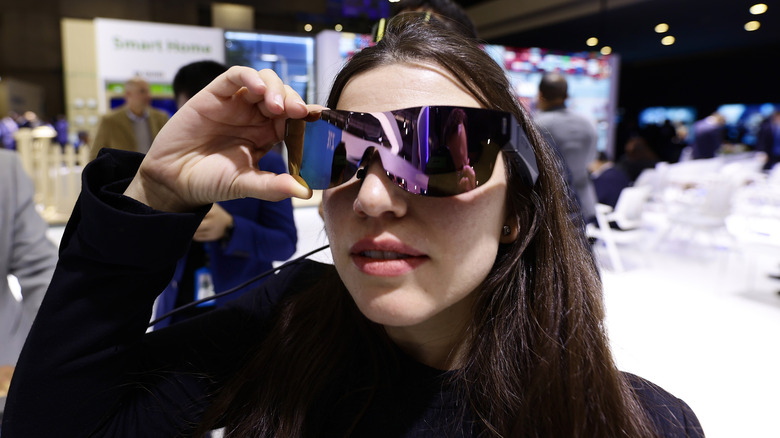
A new law introduced in Pennsylvania would require manufacturers and retailers to include an indicator light on any new smart glasses or other wearable recording devices built or sold in the state. It would also make it illegal to disable the indicator after the wearable was sold (though you may want to brush up on ways to tell if you're being recorded by smart glasses regardless).
House Bill 2603 was introduced to the Pennsylvania House of Representatives, the lower chamber of Pennsylvania's state legislature (the General Assembly), on June 5 by Representative Joe Ciresi. In a co-sponsorship memo, Ciresi makes it clear that smart glasses are the primary target. However, the specific language of the bill is much broader, and includes any wearable device that can record or transmit data.
Smart glasses "have the potential to change the way we work and communicate with each other," Ciresi says in the memo, and the potential to be "abused by bad actors." He goes on to say that the burden lies with the legislature to ensure that devices like smart glasses don't enable users to violate existing privacy and security guidelines (the bill is an amendment to existing wiretapping and electronic surveillance laws), though the goal isn't to unduly burden tech companies.
What the bill does

The aim of the bill, as Ciresi's co-sponsorship memo makes clear, is to ensure smart glasses made in PA include a visual indicator that shows when they're actively recording. The text of the bill clarifies that the indicator can be either a "light or device," as long as it's active and visible while a recording is being captured.
Importantly, the bill doesn't specify that this requirement only applies to smart glasses. It broadly defines the wearables that would be affected as any "device or apparatus that's designed to be worn on or attached to the body that has the capacity to intercept and make sound or video recordings or transmit data received by the device to another device, the Internet or any other cloud-based service." Manufacturers and retailers will need to inform consumers of the law in writing included with the wearable.
The bill also specifies that users are required to have such a visual indicator active anytime they're recording. It also includes language that bars users of such devices from recording another individual without their explicit permission "in any area where the other individual has a reasonable expectation of privacy."
Exceptions and penalties
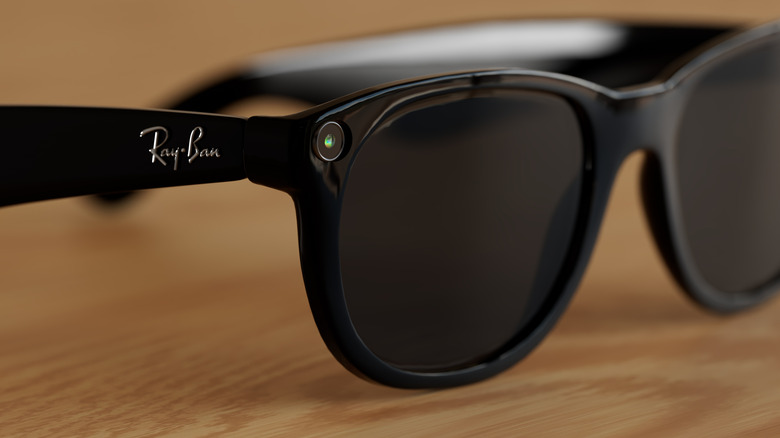
Though the law forbids individual users from using a wearable recording device without a visual indicator, under the "Exceptions and penalties" section, only retailers and manufacturers are mentioned. If a retailer gets caught in violation, they'll first get a written warning, while a second violation will carry a fine of up to $500, and a third up to $1,000.
For manufacturers, penalties are steeper. There's no written warning, and the first violation carries a $500 penalty for each unit made. That increases to between $750 and $1,000 per unit for a second infringement within a 12-month period, and $1,000 to $1,500 per unit for a third. The act makes exception for law enforcement conducting a criminal investigation, as well as Departments of Corrections and corrective facility personnel under the broader language "for security purposes."
Smart glasses recording functionality has long been a source of controversy for manufacturers like Meta and Google (which is wading back into the smart glasses market despite the cancellation of Glass). Meta's drawn fire for suggesting it might build facial recognition software directly into its Meta Ray-bans. There have also been multiple reports from women of smart glasses being used to record them in public without their consent.