

Transparent Or Black: Which Solar Panel Is Better?
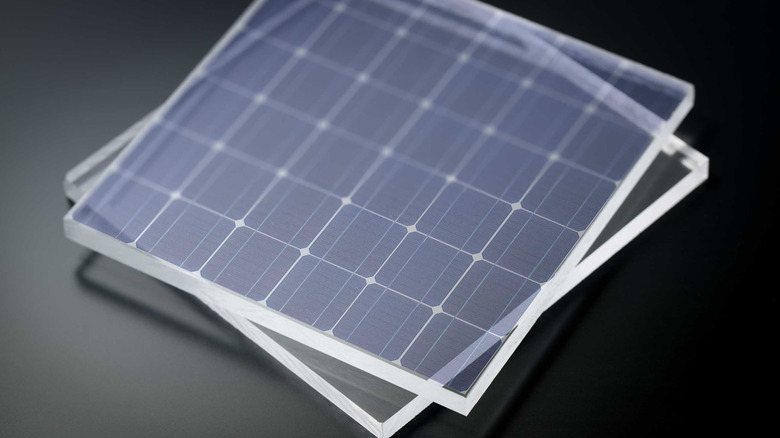
We are all used to seeing black solar panels mounted on the roofs and on the ground. However, over the last few years, transparent solar panels have emerged as a viable option for integrating solar more seamlessly into a building's architecture. Transparent solar panels, which are sometimes also referred to as clear solar panels, can range from being completely transparent to tinted. This enables them to pass the visible light while capturing ultraviolet (UV) and infrared (IR) wavelengths of the sunlight.
Rather than trying to leverage the limited roof and ground space, transparent panels enable solar integration into the glass facades of skyscrapers and into window panes. However, if you're thinking about installing solar panels, you may wonder whether there are any drawbacks to these transparent panels and how they are different from the more traditional black solar panels. While there are some obvious aesthetic advantages and more deployment flexibility, they do trail the best black solar panels in terms of efficiency and value.
Black solar panels have superior efficiency
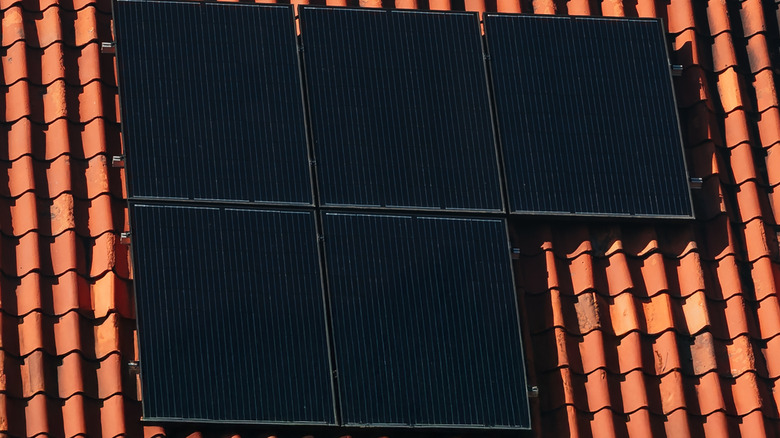
Transparent panels, which were first conceptualized in the late 1970s but didn't reach a functional panel stage until 2014, differ quite a bit from their conventional black counterparts, not just in their material of construction, but also in terms of their efficiency and the ability to absorb sunlight. Typically made using transparent photovoltaic glass (TPV), the efficiency of the clear solar panels generally depends on their transparency. Completely transparent panels are the least efficient, offering only about 1 to 5%, whereas semi-transparent panels can have 7 to 12% efficiency. That said, Korean researchers have managed to bring the efficiency of translucent panels up to 22%; however, these panels are yet to reach the mass production stage.
In comparison, standard black or monocrystalline solar panels, which are made using high-purity single-crystal silicon, deliver better efficiency of up to 24%. Still, unlike the fully transparent panels that can transmit much of the visible light, black solar panels don't allow any light to pass.
Transparent solar panels have a higher cost
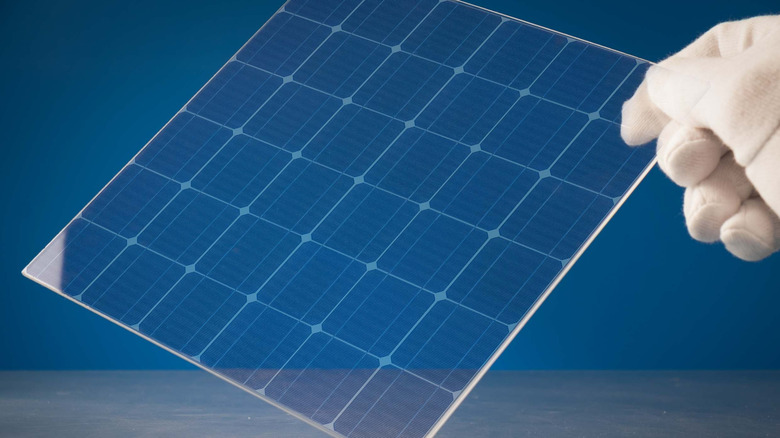
Besides the efficiency drawback, the transparent solar panels have a higher cost. Since residential clear solar panels aren't as widespread as black or blue solar panels, it can be tricky to offer an easy price comparison. According to A1 SolarStore, the pricing for transparent panels is estimated to range from $25 to $150 per square foot, which is about two to four times more than their traditional counterpart.
The cost and efficiency difference between the transparent and black panels makes the former less suitable for regular home use, as they may not provide a return on your investment in their lifetime. Given their limited efficiency, you will need significantly more transparent panels to get a reasonable power output. For the majority of residential customers who will either be mounting solar panels on their roof or in an empty ground space, black panels are the better choice. Transparent panels also make most sense for commercial buildings, which have large glass façades that can be leveraged for solar integration.